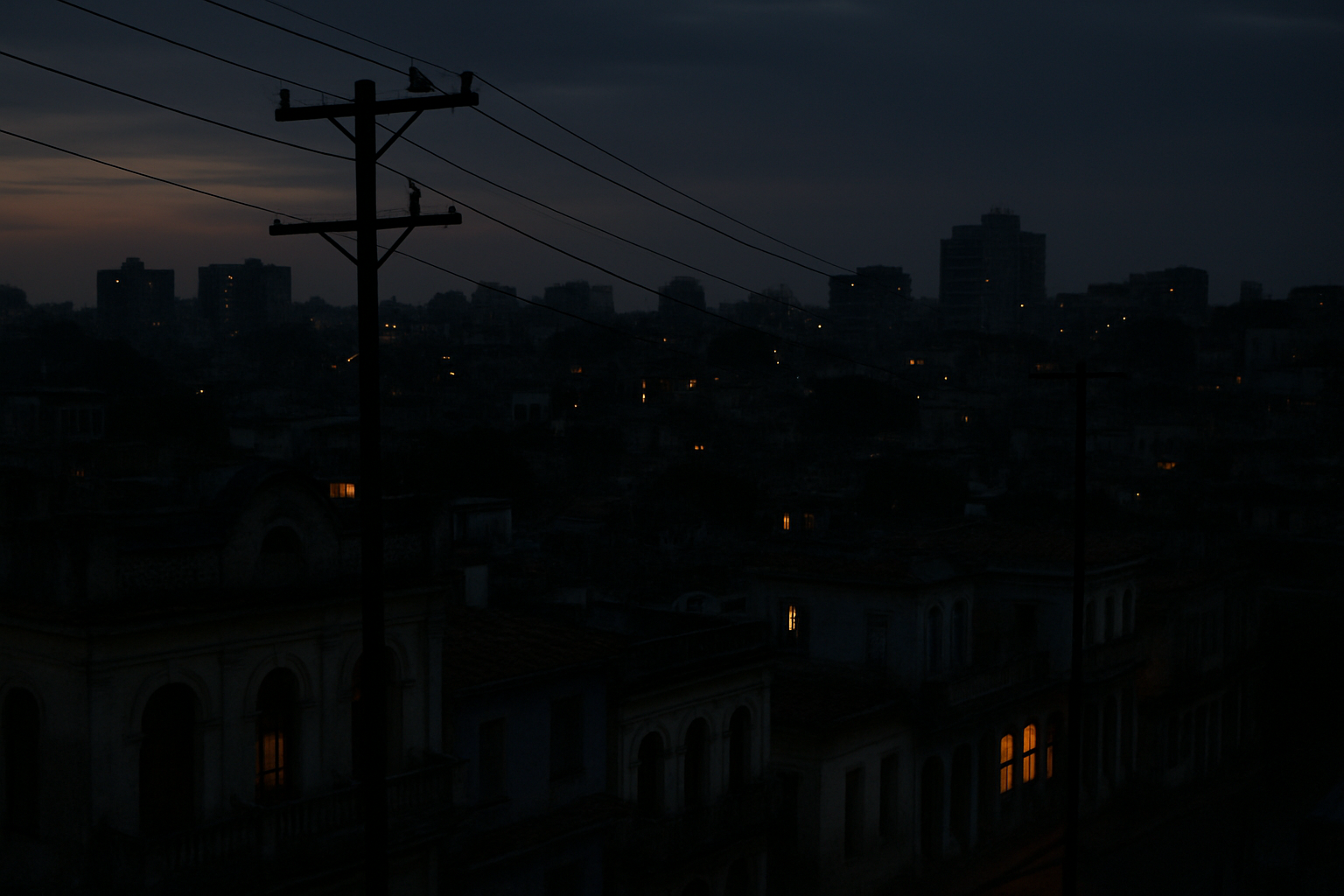
Cuba's energy crisis has reached critical levels in February 2026, with the government implementing drastic measures including extended blackouts, suspended public transport, and semi-paralyzed universities, while Mexican President Claudia Sheinbaum announced humanitarian aid will arrive "no later than Monday" amid escalating diplomatic tensions with the United States.
The island nation is grappling with fuel shortages that have forced Cuban authorities to implement what observers describe as reminiscent of the "Special Period" crisis of the 1990s. The package of government decisions, though not yet presented comprehensively, includes unprecedented restrictions on daily life across multiple sectors.
Universities and Transport Grinding to a Halt
Cuban universities have been semi-paralyzed as part of the government's response to the fuel shortage crisis, according to reports from Cubanet. Public transportation services have been suspended in various regions, leaving millions of Cubans struggling with mobility challenges that compound the daily hardships caused by power outages.
The measures represent the most severe restrictions implemented since the collapse of the Soviet Union left Cuba without its primary energy supplier three decades ago. The current crisis has been exacerbated by reduced Venezuelan crude oil shipments, which previously provided crucial energy supplies to the island.
Extended Blackouts Affecting Millions
Power outages have intensified across Cuba, with reports indicating that 3.4 million people in eastern provinces, including Santiago de Cuba, were affected by a massive blackout following the failure of the Holguín substation. The electrical grid's vulnerability has been further exposed as oil reserves dwindle to just 15-20 days of supply.
"The situation has deteriorated significantly, with blackouts now lasting longer and affecting more areas simultaneously,"
— Energy sector analyst
The power crisis comes amid an Arctic weather pattern that has paradoxically affected the Caribbean, with Cuba recording its coldest temperature ever at 0°C at the Indio Hatuey weather station, adding heating demands to an already strained energy system.
Diplomatic Overtures Amid Crisis
In a two-hour televised address to the nation on February 5, Cuban President Miguel Díaz-Canel declared his government's willingness to engage in dialogue with the United States. This represents a significant diplomatic opening amid the ongoing energy crisis and escalating economic pressure from the Trump administration's renewed sanctions policy.
The Cuban president's statement came after the White House intensified pressure following the capture of Venezuelan leader Nicolás Maduro and his wife Cilia Flores on January 3. Trump's administration has threatened tariffs on countries supplying oil to Cuba, particularly targeting Mexico and Venezuela, as part of a return to the "maximum pressure" tactics from his first presidency.
Mexico's Humanitarian Response
Mexican President Claudia Sheinbaum announced that humanitarian aid will be sent to Cuba "no later than Monday," emphasizing that Mexico's priority is avoiding negative impacts on its own territory while maintaining its commitment to humanitarian assistance. The announcement comes amid Trump administration threats to impose tariffs on Mexico if it continues energy cooperation with Cuba.
Sheinbaum has previously warned that oil supply cutoffs would cause a humanitarian crisis, to which Trump responded, "There doesn't have to be a humanitarian crisis." The Mexican government's decision to provide aid demonstrates the delicate balance Latin American countries must navigate between U.S. trade relationships and regional solidarity.
Historical Context and Current Stakes
The current energy crisis recalls Cuba's "Special Period" (Período Especial) of the 1990s, when the collapse of the Soviet Union led to severe economic hardship and energy shortages. However, the current situation is compounded by additional factors including infrastructure decay, climate change impacts, and intensified international isolation.
Cuba's oil production has collapsed from a historical peak of 3 million barrels daily to approximately 700,000 barrels, making the country heavily dependent on imports, particularly from Venezuela. The reduction of Venezuelan crude shipments to zero has left Cuba scrambling for alternative energy sources.
Regional and International Implications
The crisis is forcing regional powers to choose between U.S. economic relationships and humanitarian concerns for Cuba. Brazil and EU nations have expressed cautious support for diplomatic engagement, while the situation tests the effectiveness of Trump's renewed "maximum pressure" campaign.
The energy crisis occurs within a broader context of global energy volatility, with natural gas prices surging 24% in Europe and 78% in the United States during the same period. However, Cuba's isolation from international energy markets makes it particularly vulnerable to supply disruptions.
Humanitarian Impact
The extended blackouts and transport suspensions are having severe impacts on daily life for Cuba's 11 million inhabitants. Healthcare services, already strained by years of economic difficulties, face additional challenges from power outages affecting hospitals and medical facilities. Educational institutions operating at reduced capacity further limit opportunities for Cuban youth.
Food distribution networks have been disrupted by transport limitations, potentially exacerbating food security issues that have plagued the island for years. The combination of energy shortages and unusual cold weather has created a particularly challenging situation for vulnerable populations, including the elderly and families with young children.
Looking Ahead
The effectiveness of Mexico's humanitarian aid and any potential U.S.-Cuba dialogue will be closely watched as indicators of whether diplomatic solutions can alleviate the crisis. Cuba's willingness to engage with Washington, coupled with the Trump administration's mixed signals on negotiations, suggests that the coming weeks could be crucial for the island's energy future.
The crisis also highlights the vulnerability of small island states to energy supply disruptions and the complex interplay between geopolitics, energy security, and humanitarian concerns in the Caribbean region. As climate change continues to affect weather patterns and energy demands, Cuba's experience may serve as a cautionary tale for other energy-dependent nations in the region.
With Mexico's aid expected to arrive imminently and diplomatic channels potentially opening, the resolution of Cuba's energy crisis will depend on a combination of immediate humanitarian assistance, potential policy changes in Washington, and the island's ability to diversify its energy sources in the long term.