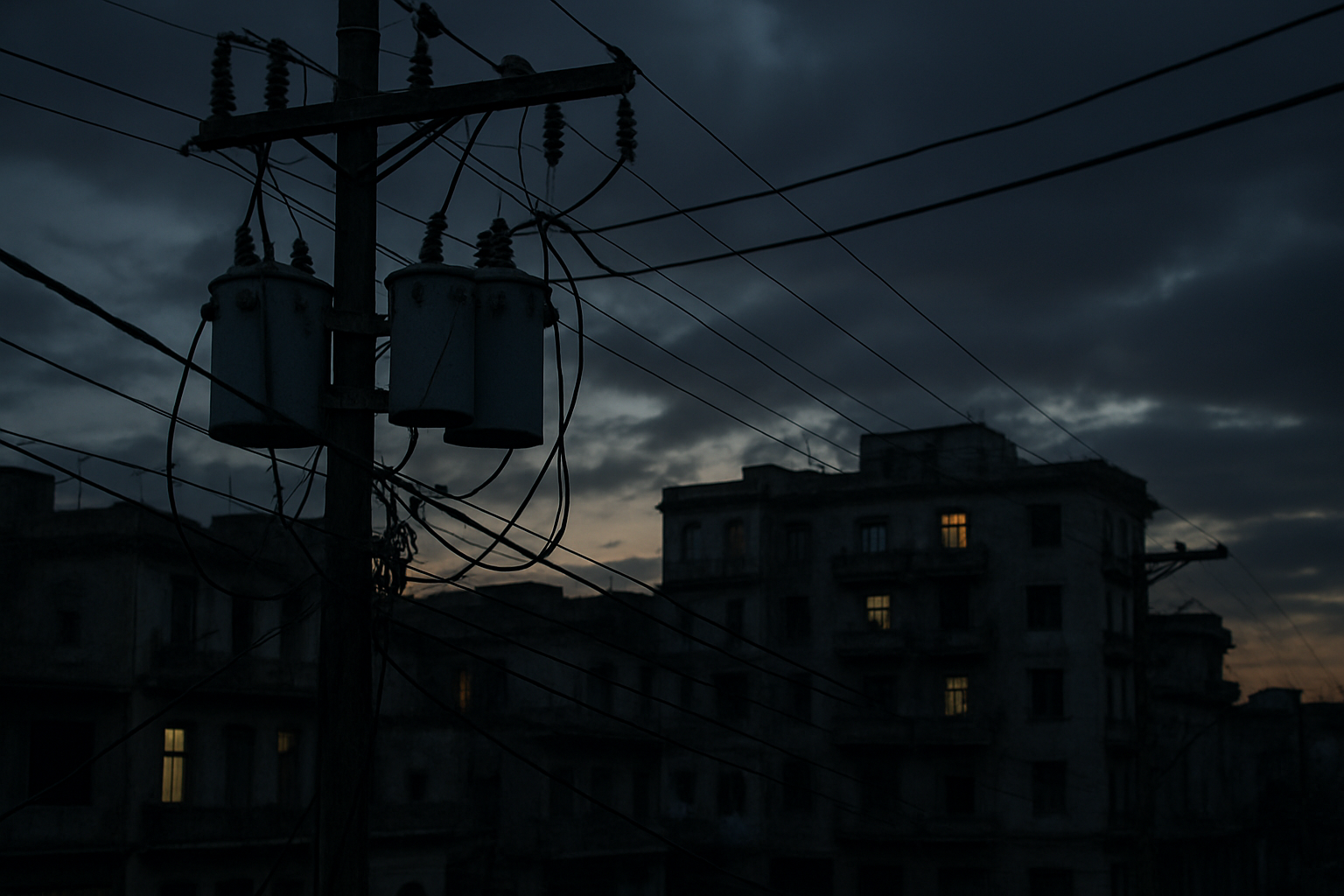
Cuba's energy crisis has reached unprecedented levels as rolling blackouts affect 59% of the country while the peso collapsed to a historic low of 500 units per U.S. dollar, marking the island's worst economic emergency since the 1990s "Special Period."
The crisis escalated dramatically this week as Cuban authorities warned that aviation fuel reserves would be depleted within 24 hours, threatening complete isolation from international air travel. Major airlines including Air Canada and WestJet have already suspended operations, while Russian carriers Rossiya Airlines and Nordwind announced indefinite flight suspensions due to fuel unavailability at Cuban airports.
Massive Blackouts Cripple Daily Life
According to state electricity company Unión Eléctrica (UNE), scheduled blackouts are now affecting 51% of Cuba's 11 million population during peak evening hours. The energy shortfall has forced the government to implement emergency measures including four-day work weeks for government employees, reduced public transportation, and semi-virtual university classes.
The situation deteriorated further when 3.4 million people in eastern provinces lost power following the failure of the Holguín electrical substation. Healthcare services have been severely impacted, with hospitals suspending non-emergency surgeries and medical staff facing transportation difficulties.
"The prolonged daily blackouts are undermining the economy, which has contracted more than 15% since 2020,"
— Official Cuban government figures
Economic Collapse Accelerates
The Cuban peso's depreciation to 500 units per dollar represents a catastrophic 15% drop in just one week, according to the independent media outlet El Toque, which tracks the informal exchange rate. This historic low comes amid mounting pressure from Washington following President Trump's January 30 executive order threatening 25% tariffs on countries that supply oil to Cuba.
Oil reserves have dwindled to just 15-20 days of supply after Venezuelan crude shipments were completely halted and Mexico suspended deliveries to avoid U.S. economic retaliation. Cuba's domestic oil production has collapsed from 3 million barrels daily at its peak to just 700,000 barrels currently.
Tourism Industry Faces Devastation
The crisis has devastated Cuba's crucial tourism sector, with major Spanish hotel chains including Meliá and Iberostar closing facilities in Varadero and along the northern coast. Canadian authorities issued a "high degree of caution" travel advisory, effectively ending the winter tourism season as thousands of visitors face evacuation or stranding.
The aviation fuel shortage represents the most severe threat to Cuba's connectivity since the 1962 missile crisis. With zero Jet A-1 fuel available through March 11, 2026, the island faces complete aviation isolation affecting approximately 400 weekly flights and 70,000 scheduled seats.
Population Adapts to Crisis Conditions
Cuban citizens are adapting to the deteriorating conditions by turning to alternative energy sources. Many are purchasing charcoal for cooking despite its high cost relative to average wages, while those with financial means are investing in solar panels in a rapidly growing market for renewable energy solutions.
Care homes and households alike are adjusting to constant power cuts, with some residents recalling the severe shortages of the 1990s "Special Period" that followed the Soviet Union's collapse. However, the current crisis is viewed as more severe due to its deliberate nature through U.S. economic pressure rather than external economic collapse.
International Response and Humanitarian Aid
Mexico has deployed its largest humanitarian operation with naval vessels Papaloapan and Isla Holbox carrying 814 tons of emergency supplies from Veracruz. President Claudia Sheinbaum emphasized that Mexico "won't allow its territory to be used to pressure other nations," though the country suspended oil shipments to avoid U.S. tariffs.
European media has characterized the situation as a "deliberately engineered humanitarian emergency," raising questions about the effectiveness and ethics of economic pressure campaigns targeting entire civilian populations.
Historical Context and Comparisons
The current crisis exceeds the severity of the 1990s "Special Period" in several key ways. Unlike the previous emergency, which resulted from the external collapse of the Soviet Union, today's crisis stems from deliberate U.S. policy designed to pressure the Cuban government through economic isolation.
The complete disruption of aviation connectivity represents the most comprehensive isolation since the 1962 Cuban Missile Crisis, when the island maintained some international air links despite tensions.
"Cuba is attempting total asphyxiation of our economy through these measures,"
— President Miguel Díaz-Canel
Geopolitical Implications
The crisis tests the limits of U.S. economic coercion as a diplomatic tool while forcing Latin American countries to choose between maintaining trade relationships with Washington and providing humanitarian assistance to Cuba. Russia has condemned what it calls "economic strangulation," but practical assistance remains limited due to international sanctions pressure.
Airlines are exploring contingency routing through Mexico and the Dominican Republic, similar to adaptations made during the 1990s crisis, though current fuel shortages make even these alternatives challenging to implement.
Looking Ahead
With no timeline identified for the restoration of fuel supplies or the lifting of U.S. pressure measures, Cuba faces the prospect of extended isolation. The crisis requires either a diplomatic breakthrough, alternative supply arrangements that circumvent U.S. threats, or fundamental changes to Cuba's energy infrastructure.
The coming weeks will determine whether innovative solutions emerge or whether Cuba enters a sustained period of economic siege unprecedented in modern history. The international community faces a test of how to respond to economic coercion that affects entire civilian populations beyond traditional political objectives.
As the energy crisis deepens and economic pressures mount, Cuba's 11 million inhabitants continue to adapt to increasingly difficult conditions while the world watches to see if diplomatic intervention can prevent further humanitarian deterioration on the Caribbean island.