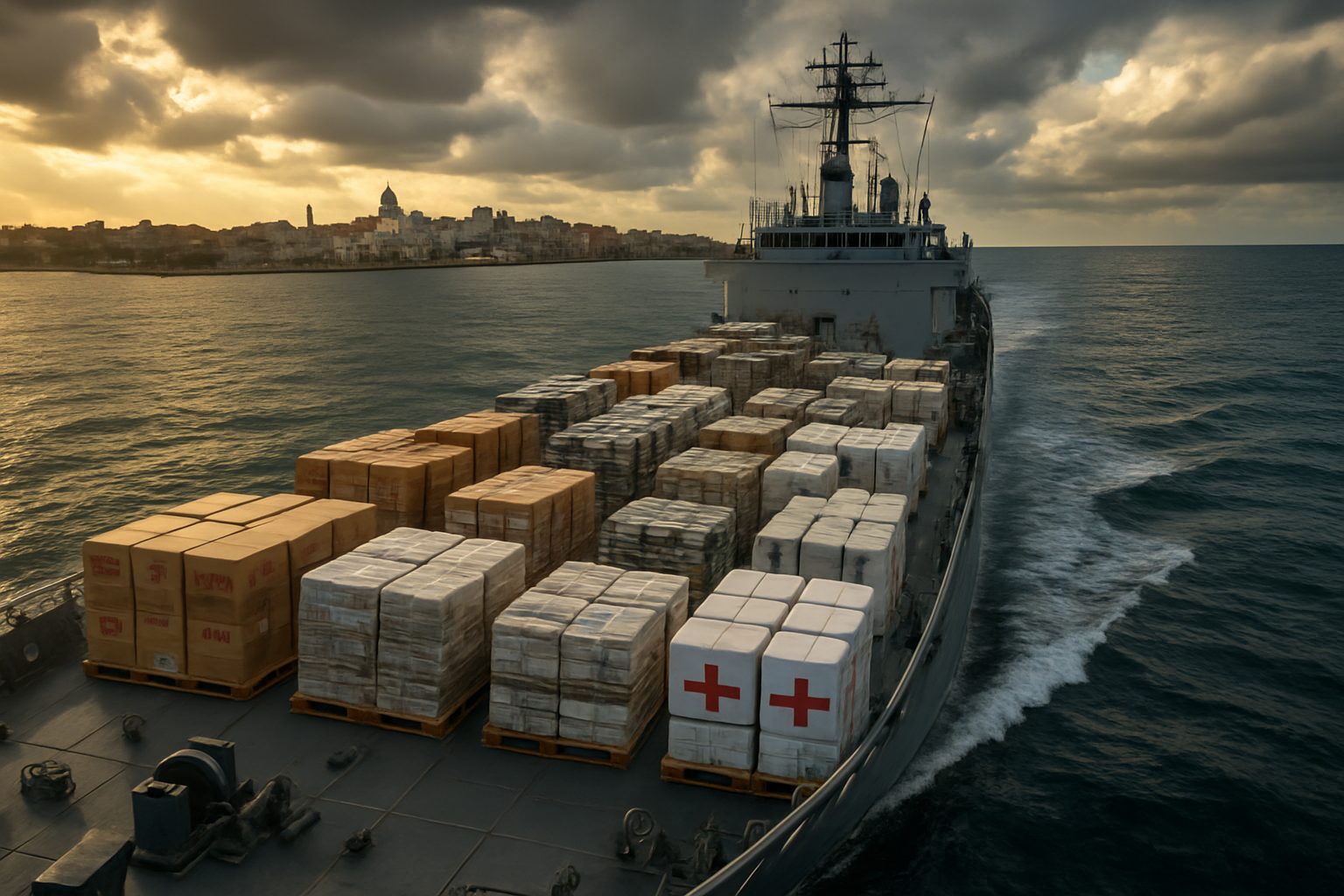
Cuba's aviation industry faces an unprecedented crisis as the government warned airlines on Sunday that the country will run out of aviation fuel within 24 hours, according to industry sources speaking to EFE news agency. The announcement comes as Mexico launches its largest humanitarian aid operation to the island, with two naval vessels carrying 814 tons of supplies departing from Veracruz port.
Industry sources confirmed to EFE that the Cuban government issued the stark warning to airlines on Sunday, informing them that by Monday, the country would have no aviation fuel remaining. This development marks a critical escalation in Cuba's ongoing energy crisis, which has already forced the implementation of drastic emergency measures across the island.
The fuel shortage represents the latest chapter in Cuba's deepening economic crisis, which has intensified dramatically since the Trump administration's renewed "maximum pressure" campaign targeting the island's energy supplies. The crisis has reached such severity that the government announced comprehensive emergency measures earlier this week, including extended blackouts and reduced public transportation.
Mexico's Humanitarian Response
As Cuba's crisis deepens, Mexico has mobilized its largest humanitarian aid operation to the island in recent memory. Two Mexican Navy vessels, the Papaloapan and Isla Holbox, departed from Veracruz port on Sunday carrying 814 tons of essential supplies, according to Mexico's Ministry of Foreign Affairs.
The humanitarian aid package represents a significant commitment from Mexican President Claudia Sheinbaum's administration, which announced the assistance last week despite mounting pressure from the Trump administration's threats to impose tariffs on countries providing oil to Cuba. The aid shipment includes food supplies and other essential goods desperately needed by the Cuban population.
Danish media outlets confirmed that Mexico is sending over 800 tons of emergency aid to crisis-stricken Cuba, highlighting the international attention the island's deteriorating situation has attracted. The operation demonstrates Mexico's commitment to maintaining humanitarian ties with Cuba despite potential economic consequences from the United States.
Escalating Energy Crisis
Cuba's aviation fuel shortage is part of a broader energy crisis that has crippled the island's economy and daily life. According to previous reports, the island announced a harsh emergency plan this week designed to help the country survive without imports of crude oil and petroleum derivatives.
The crisis has its roots in the Trump administration's January 30, 2026 executive order threatening tariffs on countries supplying oil to Cuba. This policy has effectively forced traditional suppliers like Mexico and Venezuela to suspend oil deliveries, despite humanitarian concerns about the impact on Cuba's population.
The island's oil reserves have dwindled to dangerous levels, with previous estimates suggesting only 15-20 days of supply remaining. The aviation fuel shortage now threatens to completely isolate Cuba from international air travel, potentially affecting tourism, medical evacuations, and essential supply deliveries.
Impact on Airlines and Tourism
The aviation fuel crisis poses severe challenges for airlines operating routes to and from Cuba. International carriers will need to make contingency plans for refueling, potentially requiring stops at alternative airports or carrying additional fuel for return flights.
Cuba's tourism industry, already severely impacted by the broader energy crisis, faces another devastating blow. Canada recently issued a "high degree of caution" travel advisory for Cuba, citing infrastructure challenges, fuel shortages, and basic goods availability issues. The aviation fuel shortage could effectively ground tourist flights, delivering a crushing blow to one of Cuba's few remaining sources of foreign currency.
The crisis has already affected major tourist resorts, with several Spanish and Canadian hotel chains forced to close facilities due to transportation difficulties for staff and guests. The aviation fuel shortage threatens to extend these impacts across the entire sector.
Broader Emergency Measures
Cuba's aviation fuel warning comes amid a comprehensive package of emergency measures implemented to cope with the energy crisis. These include:
- Four-day work weeks for government employees to reduce energy consumption
- Massive reduction in public transportation services
- Semi-virtual university classes to minimize travel requirements
- Strict fuel rationing with severe gasoline limits for private vehicles
- Scheduled blackouts affecting over 50% of the population during peak evening hours
The measures represent the most severe restrictions since the "Special Period" of the 1990s, when the collapse of the Soviet Union forced Cuba into a prolonged economic crisis. However, the current situation differs significantly as it results from deliberate U.S. policy pressure rather than the collapse of an external supporter.
International Implications
The Cuban crisis has broader implications for regional diplomacy and international law. Mexico's decision to provide humanitarian aid despite U.S. pressure demonstrates the limits of American economic coercion in Latin America. President Sheinbaum has repeatedly emphasized that Mexico will not allow its territory to be used as a launching pad for pressuring other nations.
The crisis also highlights the humanitarian consequences of economic sanctions and pressure campaigns. European media outlets have characterized the situation as a "deliberately engineered humanitarian emergency," raising questions about the effectiveness and morality of using economic pressure to achieve political objectives.
"This crisis represents a test of the limits of economic coercion as a diplomatic tool with serious humanitarian implications."
— European Policy Analyst
Regional Response and Solidarity
Mexico's humanitarian aid operation reflects broader regional solidarity with Cuba despite U.S. pressure. The two Mexican Navy vessels represent both a practical response to humanitarian needs and a symbolic assertion of Mexico's sovereignty in foreign policy decisions.
The aid operation also demonstrates the complexity of U.S.-Latin American relations under the renewed Trump administration. While the U.S. threatens economic consequences for countries maintaining energy cooperation with Cuba, humanitarian aid presents a different category that Mexico has chosen to maintain.
The crisis has attracted international attention from organizations monitoring the humanitarian situation. The intersection of energy policy, diplomatic pressure, and humanitarian needs creates a complex scenario that will likely influence regional relations for months to come.
Looking Forward
As Cuba's aviation fuel runs out and the broader energy crisis continues, the island faces unprecedented isolation and economic hardship. The Mexican humanitarian aid, while significant, addresses only immediate needs rather than the underlying energy supply crisis.
The situation requires monitoring for several key developments: whether other countries will follow Mexico's lead in providing humanitarian assistance, how airlines adapt to the fuel shortage, and whether the U.S. will modify its pressure campaign in light of the humanitarian consequences.
The crisis also serves as a test case for the effectiveness of economic pressure campaigns in achieving political objectives while managing humanitarian fallout. The international community's response will likely influence similar situations in other regions where economic pressure intersects with humanitarian needs.
For Cuba's 11 million inhabitants, the immediate priority remains surviving the current emergency while hoping for either a resolution of the underlying diplomatic crisis or sufficient international humanitarian support to mitigate the worst effects of the energy shortage.