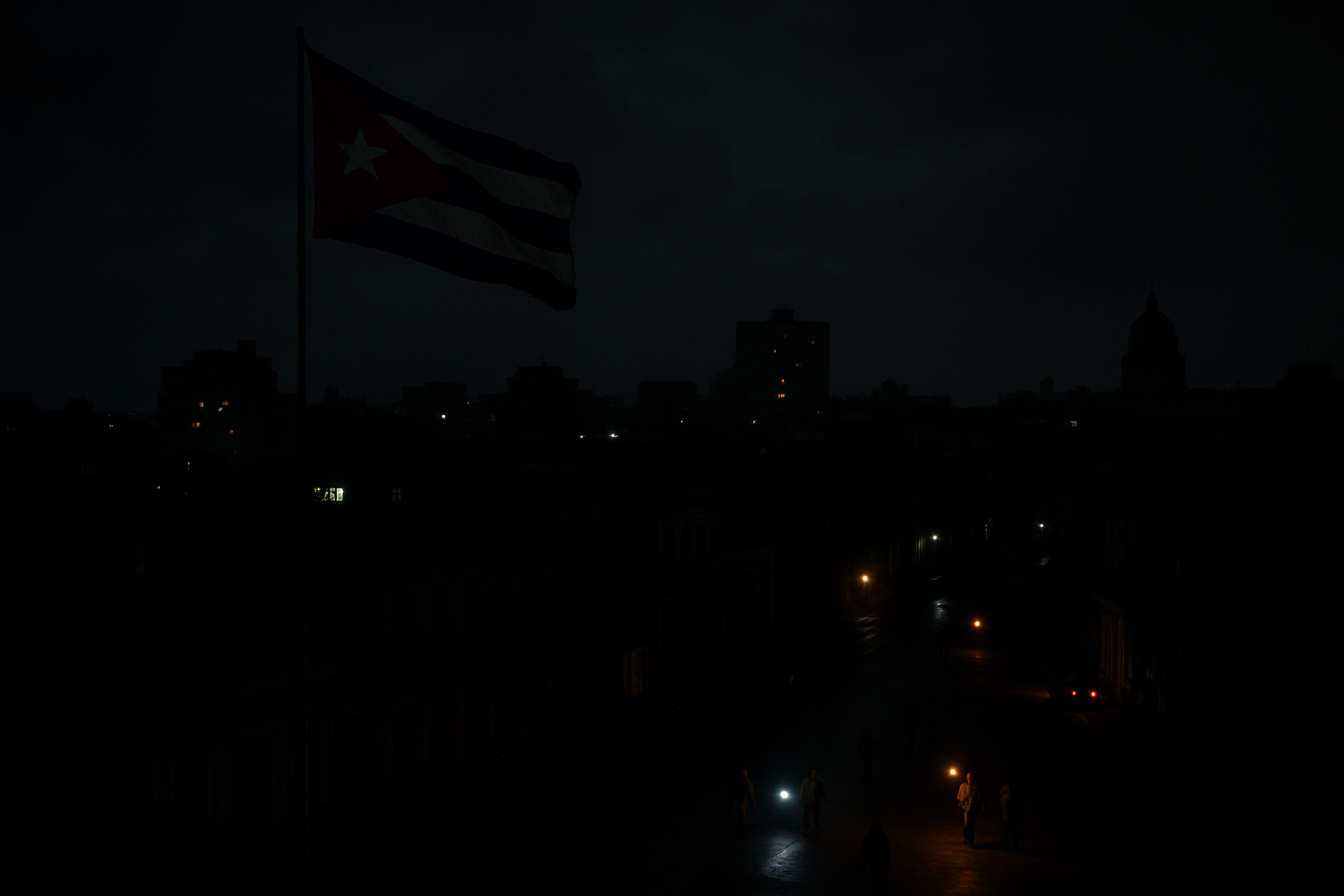
Cuba experienced another catastrophic nationwide blackout on March 17, 2026, as the entire National Electric System (SEN) disconnected, plunging over 10 million inhabitants into darkness in the sixth major power grid collapse since late 2024.
The complete failure of Cuba's electrical infrastructure represents the latest devastating blow to an island nation already reeling from the worst energy crisis since the 1990s "Special Period." The blackout coincided with a 6.0 magnitude earthquake that struck the eastern provinces, creating a dual crisis that has left the Caribbean nation struggling to maintain basic services for its population.
Antonio Guiteras Plant Failure Triggers System Collapse
According to the Ministry of Energy and Mines, the nationwide blackout originated from a failure at the Antonio Guiteras thermoelectric power plant in Matanzas province, Cuba's primary electricity generation facility. The plant's unexpected shutdown created a cascading failure across the national electrical grid, demonstrating the precarious state of Cuba's aging energy infrastructure.
This marks the sixth major system-wide electrical failure affecting Cuba's 11 million inhabitants since the end of 2024, highlighting the accelerating deterioration of the country's power generation capabilities. The timing of the blackout, occurring just hours after a significant earthquake, has compounded recovery efforts and emergency response capabilities.
Unprecedented Energy Crisis Context
The latest blackout unfolds against the backdrop of Cuba's most severe energy emergency in over three decades. Since early 2026, the island has faced a perfect storm of energy-related challenges that have systematically dismantled its ability to meet basic electricity demands.
Currently, 51% of Cuba's population—approximately 5.5 million people—were already experiencing scheduled blackouts during peak evening hours before the total system failure. Oil reserves have dwindled to a critical 15-20 day supply, while domestic production has collapsed from 3 million to just 700,000 barrels daily.
The crisis has been exacerbated by the complete halt of Venezuelan crude oil shipments and the suspension of Mexican petroleum deliveries. These supply disruptions followed the Trump administration's January 30, 2026 executive order threatening 25% tariffs on countries that supply oil to Cuba, effectively creating what Cuban President Miguel Díaz-Canel has called "total asphyxiation."
Infrastructure Breakdown and Humanitarian Impact
The systematic collapse of Cuba's infrastructure extends far beyond electricity generation. The transportation system has virtually ceased functioning, with buses unable to operate and crowds waiting indefinitely at major transit hubs like the Viaducto in Havana, carrying backpacks and water bottles as they face uncertain commutes.
Healthcare systems across the island are operating under extreme stress. Hospitals have suspended non-emergency surgeries, medical staff cannot reach their facilities, and power outages threaten the storage of essential medicines and the operation of critical medical equipment. In the eastern provinces, 3.4 million people have been particularly affected by repeated failures of the Holguín substation.
The government has implemented unprecedented emergency measures in response to the crisis. These include four-day work weeks for government employees, the closure of 90% of gas stations, the suspension of public transportation, and the shift to semi-virtual classes for universities. Even sugar harvests, traditionally vital to Cuba's economy, have been halted due to fuel shortages.
Tourism Industry in Free Fall
Cuba's crucial tourism sector has collapsed entirely under the weight of the energy crisis. Major international hotel chains including Meliá, Iberostar, and Blue Diamond have closed their facilities in Varadero and along the northern coast, unable to guarantee basic services to guests.
The situation became critical when Cuba experienced complete aviation isolation from February 10 through March 11, 2026, with zero jet fuel available at all nine major airports. This unprecedented aviation blockade forced the evacuation of over 25,000 tourists, including 21,000 Canadians and 4,000 Russians.
Major airlines including Air Canada, WestJet, Air Transat, and Russian carriers Rossiya and Nordwind suspended all operations to Cuba. Canada issued a "high degree of caution" travel advisory, effectively ending the crucial winter tourism season that typically brings hundreds of thousands of visitors to the island.
International Response Divided
The international community has responded with a mixture of humanitarian concern and geopolitical calculation to Cuba's crisis. Russia has condemned what it terms the "economic strangulation" of Cuba and has pledged to send oil aid as humanitarian assistance, though no specific timeline or volumes have been provided.
European observers have characterized the situation as a "deliberately engineered humanitarian emergency," with several media outlets noting the systematic nature of the pressure campaign. Former UK Labour leader Jeremy Corbyn has announced plans for an international flotilla to challenge the oil blockade, while China has demanded that the United States immediately cease its pressure campaign.
Mexico has attempted to balance humanitarian concerns with economic pressures, maintaining aid shipments totaling 814 tons of supplies via naval vessels Papaloapan and Isla Holbox while suspending oil deliveries to avoid U.S. retaliation. President Claudia Sheinbaum has stated that Mexico "won't allow its territory to be used to pressure other nations," but has been forced to comply with U.S. demands to avoid tariffs.
Maximum Pressure Campaign Success
The Trump administration's "maximum pressure" campaign against Cuba has achieved what officials describe as "total energy supply severance." The January 30 executive order threatening 25% tariffs on any country supplying oil to Cuba has effectively isolated the island from its traditional energy partners.
Venezuela, under its interim government following Nicolás Maduro's removal in January 2026, has prioritized rebuilding relations with the United States over maintaining energy supplies to Cuba. Mexico, despite historical solidarity with Cuba, has suspended oil shipments to avoid economic retaliation from Washington.
The campaign represents an evolution of traditional sanctions into what experts describe as comprehensive economic siege warfare. The Cuban peso has collapsed to a historic low of 500 units per dollar, representing a 15% weekly decline, while the economy faces systematic disruption across all sectors.
Civil Unrest and Political Pressure
The energy crisis has triggered unprecedented civil unrest in Cuba, marking the most significant challenge to the Communist Party's authority since the 1959 revolution. Between March 13-14, protesters stormed and ransacked Communist Party headquarters in Morón, Ciego de Ávila province, chanting "¡Libertad!" (Freedom) while burning party materials and furniture in the streets.
This represented the first successful attack on a major party facility since the revolution, signaling a dramatic escalation in popular resistance to government authority. The incident occurred alongside widespread "cacerolazos" (pot-banging protests) in multiple cities, with protesters using cellphone flashlights during blackouts while confronting police.
The government has responded by shifting its priorities to "defense of internal order," acknowledging that maintaining political control has become as critical as addressing the energy crisis itself.
Historical Significance and Regional Implications
The current crisis has surpassed the severity of Cuba's 1990s "Special Period" through systematic targeting rather than external collapse. Unlike the earlier crisis, which followed the Soviet Union's dissolution, the current emergency results from deliberate U.S. policy designed to pressure the Cuban government.
The complete aviation connectivity severance represents the most comprehensive isolation since the 1962 Cuban Missile Crisis. For the first time in decades, Cuban-American families have been completely separated, with medical evacuation capabilities eliminated and essential supply chains severed.
Experts view Cuba as a laboratory for testing 21st-century economic warfare capabilities, with the success or failure of the pressure campaign likely to influence American approaches to similar challenges globally. The crisis serves as a template for how economic coercion can affect entire civilian populations beyond traditional targeted sanctions.
Recovery Prospects and International Implications
Cuban authorities have not provided any timeline for restrictions removal or crisis resolution. Energy experts warn that Cuba may be approaching a "zero hour" without immediate intervention, as the country lacks sufficient reserves to maintain basic services.
Resolution of the crisis would require either a diplomatic breakthrough between Cuba and the United States, alternative supply arrangements that circumvent U.S. pressure, or fundamental changes to Cuba's energy infrastructure. International observers note that the situation tests the limits of economic coercion as a diplomatic tool and raises questions about collective punishment of civilian populations.
The precedent established by Cuba's isolation may influence future territorial disputes, democratic transitions, and great power competition management globally. As the world watches, the crisis represents a watershed moment in determining whether economic warfare can achieve political objectives without triggering broader humanitarian emergencies.
For now, millions of Cubans remain in darkness, uncertain when the lights will return, as their government confronts the most serious challenge to its survival since the revolution nearly seven decades ago.