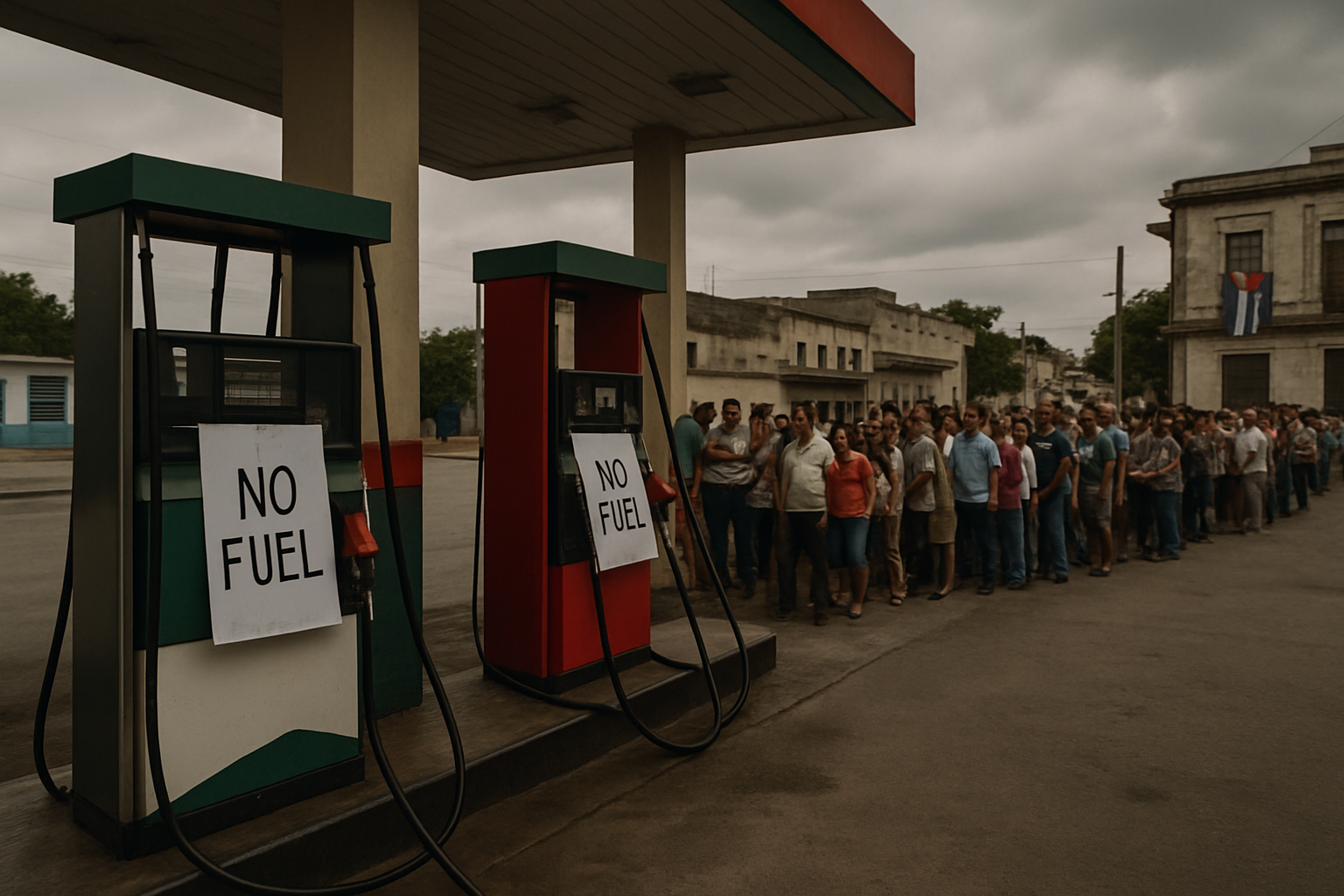
Cuba has reached a critical juncture in its ongoing energy crisis as aviation authorities officially confirmed that all nine major airports will have zero jet fuel availability from February 10 through March 11, 2026, effectively isolating the Caribbean island from international air travel for a full month.
The unprecedented aviation blockade represents the most severe escalation of Cuba's energy emergency since President Trump's January 30 executive order threatening 25% tariffs on countries supplying oil to the island. This ultimatum has successfully forced Venezuela and Mexico to completely halt their petroleum shipments, leaving Cuba's oil reserves at a critical 15-20 days supply.
Complete Aviation Shutdown
Cuban aviation officials issued NOTAM (Notice to Airmen) alerts on Sunday night, warning international carriers that Jet A-1 fuel would be unavailable at airports including José Martí International Airport in Havana, Santiago de Cuba, and Varadero. The crisis affects nearly 400 weekly flights and 70,000 scheduled passenger seats, representing the most comprehensive aviation isolation since the Soviet collapse in 1991.
Major Canadian airlines responded immediately to the crisis. Air Canada and WestJet officially suspended all flights to Cuba on Monday, announcing emergency repatriation operations for stranded passengers. "Aviation fuel will not be commercially available at the island's airports," Air Canada confirmed in an official statement. The airline is now operating empty aircraft to Cuba with increased fuel loads to avoid Cuban refueling requirements, bringing home an estimated 21,000 Canadian tourists who represent nearly half of Cuba's current foreign visitor base.
Venezuelan state airline Conviasa has also rescheduled its Cuba routes, as reported by El Nacional, with other Latin American and Spanish carriers exploring contingency routing through Mexico and the Dominican Republic to maintain Caribbean connectivity.
Trump's Maximum Pressure Campaign
The current crisis stems directly from the Trump administration's renewed "maximum pressure" campaign against Cuba. The January 30 executive order threatening punitive tariffs on countries supplying oil to Cuba has achieved what previous sanctions could not: complete energy supply severance.
Mexico, previously Cuba's most reliable energy partner under President Claudia Sheinbaum, suspended oil shipments in early February to avoid U.S. economic retaliation. "Mexico will not allow its territory to be used to pressure other nations," Sheinbaum stated, while simultaneously dispatching humanitarian aid via naval vessels Papaloapan and Isla Holbox carrying 814 tons of food and medical supplies.
Venezuela, Cuba's traditional energy lifeline, completely halted crude shipments following the political transition that removed Nicolás Maduro from power in January 2026. The new interim government under Acting President Delcy Rodríguez has prioritized normalizing relations with the United States over maintaining Cuba's energy security.
Humanitarian Crisis Deepens
The energy shortage has created a cascading humanitarian emergency affecting all aspects of Cuban society. The state electricity company Unión Eléctrica (UNE) reports that 51% of Cuba's 11 million inhabitants are experiencing scheduled blackouts during peak evening hours. The crisis has forced the government to implement unprecedented emergency measures:
- Four-day work weeks for government employees
- Semi-virtual university classes
- Suspension of non-emergency surgeries at hospitals
- Closure of 90% of provincial gas stations
- Halting of sugar harvests
- Cancellation of international conferences
The healthcare system faces particular strain, with hospitals struggling to maintain critical equipment during power outages and medical staff unable to reach work due to transportation paralysis. Eastern provinces have been especially affected since the failure of the Holguín electrical substation, leaving 3.4 million people without power for extended periods.
"What we are experiencing is not humane. This crisis goes beyond politics—it's about basic survival for millions of Cuban families."
— Local resident interviewed by CBC News
Tourism Industry Collapse
Cuba's crucial tourism industry has entered what analysts describe as "complete devastation." Major Spanish hotel chains including Meliá and Iberostar have shuttered facilities in Varadero and along the northern coast, citing staff transportation difficulties and infrastructure failures. Canadian hospitality giant Blue Diamond has similarly closed operations, stranding guests and leaving thousands of tourism workers unemployed.
Canada issued a "high degree of caution" travel advisory for Cuba, prompting widespread trip cancellations and forcing airlines like WestJet and Sunwing Vacations to monitor the situation closely. The advisory warns of "infrastructure challenges, fuel shortages, and basic goods availability issues," effectively ending Cuba's winter tourism season.
The Vatican has also been affected, with Cuban bishops canceling a scheduled meeting with Pope Leo XIV, citing concerns about return travel arrangements amid the aviation crisis.
International Response and Diplomatic Isolation
The international community has watched with concern as Cuba's situation deteriorates. Russia's presidential spokesman Dmitry Peskov condemned what he called the U.S. policy of economic strangulation, stating it is "wrong when one country strangles another," particularly noting the impact on medical transportation and emergency services.
France 24 interviewed Cuban historian Professor Lillian Guerra from the University of Florida, who characterized Trump's approach as an attempt to "reverse history" and push Cuba back to pre-revolutionary conditions. European media outlets have widely characterized the crisis as a "deliberately engineered humanitarian emergency."
The crisis has created unprecedented diplomatic challenges, with Cuban-American families effectively separated from relatives on the island due to the complete elimination of commercial air travel. Medical evacuation capabilities have been eliminated, raising concerns about emergency healthcare access for both Cuban citizens and any remaining foreign nationals.
Historical Context: Beyond the Special Period
Cuban officials and international observers consistently note that the current crisis exceeds even the severity of the 1990s "Special Period"—Cuba's previous worst economic emergency following Soviet collapse. However, unlike that crisis, which resulted from external political collapse, the current emergency stems from deliberate U.S. policy designed to achieve "total asphyxiation" of Cuba's economy, as President Miguel Díaz-Canel has described it.
During the Special Period, Cuba maintained limited international connectivity despite severe economic hardship. The current aviation fuel depletion represents an unprecedented level of isolation, effectively cutting Cuba off from the global community for the first time since the 1962 Cuban Missile Crisis.
Cuba's domestic oil production has collapsed from a peak of 3 million barrels daily to just 700,000 barrels, making the island entirely dependent on imports for aviation fuel and essential energy needs.
Regional Implications
The Cuban crisis has broader implications for Caribbean regional stability and international aviation networks. Airlines serving the Caribbean are being forced to explore alternative routing through Mexico and the Dominican Republic, significantly increasing operational costs and reducing service efficiency.
The crisis tests the limits of economic coercion as a diplomatic tool, raising questions about collective punishment of civilian populations. Regional aviation disruption affects not just Cuba but the entire Caribbean basin, as carriers must restructure networks to maintain connectivity to other island nations.
Mexico's position exemplifies the difficult choices facing Latin American nations: maintaining regional solidarity versus avoiding U.S. economic retaliation. Despite sending humanitarian aid, Mexico's oil suspension demonstrates the effective reach of American economic pressure throughout the hemisphere.
Looking Forward
As Cuba enters its second week of aviation isolation with no clear resolution in sight, the international community faces a test of its response to economic coercion affecting entire civilian populations. The crisis requires either a diplomatic breakthrough, alternative supply arrangements that can circumvent U.S. pressure, or fundamental changes to Cuba's energy infrastructure.
The coming weeks will determine whether international intervention can provide relief or if Cuba will face an extended period of isolation that could reshape not only the island's future but also set dangerous precedents for economic warfare in the 21st century.
The humanitarian consequences continue to mount as millions of Cubans face the prospect of weeks without reliable power, transportation, or connection to the outside world. What began as an energy crisis has evolved into a comprehensive test of a small nation's ability to survive under unprecedented economic pressure in the modern global system.