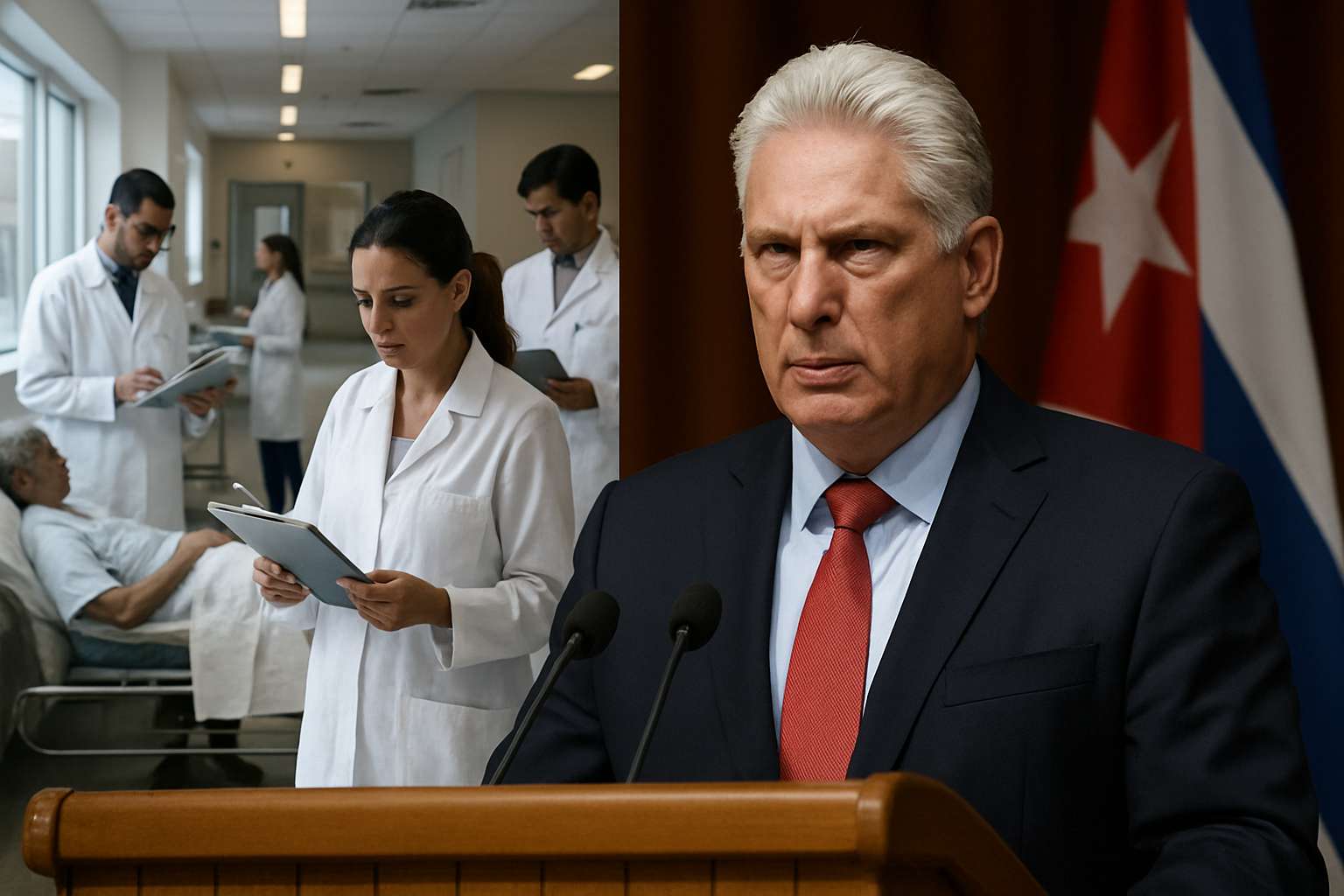
Cuba's government confronts escalating political pressure for fundamental state reforms while facing explosive allegations about the true nature of its international medical missions, as new revelations expose a complex web of intelligence operations disguised as healthcare diplomacy amid the island nation's ongoing economic and energy crisis.
President Miguel Díaz-Canel's administration is grappling with unprecedented calls for state intervention reform while simultaneously defending the integrity of Cuba's celebrated medical missions abroad following shocking allegations from former Bolivian government officials that challenge the humanitarian narrative of these programs.
State Intervention Crisis Deepens
Political analysts are intensifying pressure on the Cuban government to address what they describe as a "deep crisis" requiring fundamental state intervention reforms. President Díaz-Canel's proposals for resolving the country's mounting challenges face criticism from multiple quarters, with observers arguing that the current approach fails to address underlying structural problems plaguing the island nation.
The calls for state intervention come as Cuba continues to struggle with severe economic challenges, including critical energy shortages, currency devaluation, and infrastructure deterioration. The government's response to these crises has drawn scrutiny from both domestic and international observers who question whether current policies are adequate to address the scale of the challenges facing the Cuban people.
"The proposal by President Miguel Díaz-Canel to resolve the deep crisis the country faces requires more than surface-level adjustments—it demands fundamental reconsideration of state intervention mechanisms."
— Ariel Hidalgo, Political Analyst
Medical Mission Intelligence Allegations
Perhaps more damaging to Cuba's international reputation are explosive allegations made by Erick Foronda, former private secretary to ex-Bolivian President Jeanine Áñez, who claims that Cuba's medical missions to Bolivia were substantially infiltrated by intelligence operatives rather than genuine healthcare professionals.
According to Foronda's testimony, 75% of the medical personnel deployed to Bolivia were not actual doctors but rather Cuban intelligence agents operating under medical cover. This revelation, if substantiated, would represent a massive deception undermining Cuba's carefully cultivated image as a global leader in medical diplomacy and humanitarian assistance.
The allegations suggest that Evo Morales and his successor "gifted 450 million dollars" to Havana while inviting Cuban assistance to "help build a surveillance system centered on controlling the opposition." This characterization transforms Cuba's medical missions from humanitarian endeavors into sophisticated intelligence operations designed to advance Cuban geopolitical interests while generating substantial revenue for the cash-strapped island economy.
Healthcare System Under Pressure
The medical mission controversy emerges at a particularly challenging time for Cuba's domestic healthcare system, which has long been a source of national pride and international recognition. The island's healthcare infrastructure faces mounting pressures from the ongoing economic crisis, energy shortages, and resource constraints that have affected medical services across the country.
Cuba's healthcare system, once considered a model for developing nations, now confronts significant challenges in maintaining service quality while continuing to export medical expertise abroad. The revelation that substantial numbers of these exported "medical professionals" may have been intelligence operatives raises serious questions about resource allocation and the true priorities of Cuban healthcare policy.
Healthcare facilities across Cuba have experienced disruptions due to power outages, supply shortages, and infrastructure deterioration. Medical equipment maintenance has become increasingly difficult due to international sanctions and foreign currency shortages, while pharmaceutical supplies face regular interruptions.
International Medical Diplomacy at Stake
Cuba's medical diplomacy program has been a cornerstone of the country's foreign policy for decades, providing healthcare services to dozens of countries while generating crucial foreign exchange for the Cuban economy. The program has been particularly active in Latin America, Africa, and the Caribbean, where Cuban medical personnel have provided essential healthcare services in underserved regions.
However, Foronda's allegations cast a shadow over the entire enterprise, suggesting that what many recipient countries believed to be purely humanitarian assistance was actually a sophisticated intelligence gathering operation. This revelation could fundamentally alter how partner countries view Cuban medical assistance and may impact future cooperation agreements.
The financial aspect of these arrangements also raises questions about transparency and accountability. If Cuban medical missions were indeed generating hundreds of millions of dollars while simultaneously serving intelligence purposes, this would represent a significant departure from the humanitarian narrative that has long justified these programs.
Economic Context and Resource Allocation
The medical mission controversy occurs against the backdrop of Cuba's severe economic challenges, including critical shortages of fuel, food, and essential supplies. The Cuban government has implemented emergency measures including reduced work weeks, transportation restrictions, and energy rationing that have affected daily life across the island.
The allegation that Cuba received 450 million dollars from Bolivia through medical mission arrangements highlights the crucial role these programs play in Cuba's foreign exchange earnings. This economic dimension adds complexity to questions about whether these missions primarily served humanitarian, intelligence, or financial purposes.
Cuba's domestic healthcare system requires substantial investment in infrastructure, equipment, and supplies to maintain service quality. The diversion of genuine medical expertise to international missions, particularly if significant numbers of deployed personnel were not actual healthcare professionals, raises questions about resource allocation priorities during a period of domestic healthcare challenges.
Regional Security Implications
The intelligence allegations carry significant implications for regional security and diplomatic relations throughout Latin America. If substantiated, these claims would suggest that Cuba used medical diplomacy as cover for sophisticated intelligence operations targeting host country political systems and opposition movements.
Bolivia's experience, as described by Foronda, involved not only medical personnel deployment but also assistance in building surveillance systems designed to monitor and control political opposition. This characterization transforms Cuban medical assistance from humanitarian aid into a tool of authoritarian governance and political control.
Other countries that have hosted Cuban medical missions may now question whether similar intelligence activities occurred within their borders. This could lead to diplomatic tensions and reevaluation of existing medical cooperation agreements with Cuba.
Systemic Vulnerabilities Exposed
The dual challenges of state intervention demands and medical mission allegations expose deeper systemic vulnerabilities within the Cuban system. The concentration of power within state institutions may have facilitated both the economic policy failures driving calls for reform and the alleged misuse of medical diplomacy for intelligence purposes.
Cuba's reliance on international medical missions for foreign exchange has created dependencies that may have compromised the integrity of these programs. The pressure to generate revenue while maintaining Cuba's international image may have led to the alleged blurring of lines between humanitarian assistance and intelligence operations.
The healthcare system's challenges reflect broader infrastructure and resource allocation problems that affect multiple sectors of Cuban society. Power outages, supply shortages, and equipment failures have become routine obstacles to effective healthcare delivery, even as Cuba continues to export medical expertise abroad.
International Response and Verification
The international community faces the challenge of verifying Foronda's allegations while maintaining appropriate diplomatic relations with Cuba. The claims require careful investigation to distinguish between politically motivated accusations and legitimate concerns about the nature of Cuban medical missions.
Partner countries that have benefited from Cuban medical assistance may conduct their own reviews of these programs to assess whether intelligence activities occurred alongside medical services. Such investigations could provide clarity about the scope and nature of any non-medical activities by Cuban personnel.
International medical organizations may also review their cooperation with Cuban healthcare institutions to ensure that professional standards and ethical guidelines are maintained in future collaborations.
Implications for Cuban Healthcare Policy
The medical mission controversy forces a fundamental reconsideration of Cuban healthcare policy priorities and international commitments. The government must balance domestic healthcare needs with international obligations while addressing concerns about the true nature of its medical diplomacy programs.
If reforms are implemented in response to these challenges, they may include greater transparency in medical mission operations, clearer separation between healthcare and intelligence functions, and increased investment in domestic healthcare infrastructure to address service quality concerns.
The healthcare system's reputation for excellence, both domestically and internationally, depends on maintaining professional standards and ethical practices that prioritize patient care over political or intelligence objectives.
Future of Cuban Medical Diplomacy
The path forward for Cuban medical diplomacy will likely require addressing the credibility challenges raised by Foronda's allegations while demonstrating renewed commitment to genuine humanitarian assistance. This may involve implementing oversight mechanisms, increasing transparency, and ensuring that medical personnel deployed abroad are qualified healthcare professionals rather than intelligence operatives.
The economic importance of medical missions to Cuba's foreign exchange earnings means that these programs are unlikely to be discontinued, but their operations may require significant reform to restore international confidence and trust.
Partner countries may demand greater accountability and verification of medical personnel credentials before accepting Cuban healthcare assistance, potentially altering the structure and scope of future medical cooperation agreements.
The Cuban government's response to these challenges will be crucial in determining whether the country can maintain its position as a leader in international medical cooperation while addressing legitimate concerns about the intersection of healthcare, intelligence, and political activities. The outcome will have lasting implications for Cuba's international relationships and domestic healthcare system development.