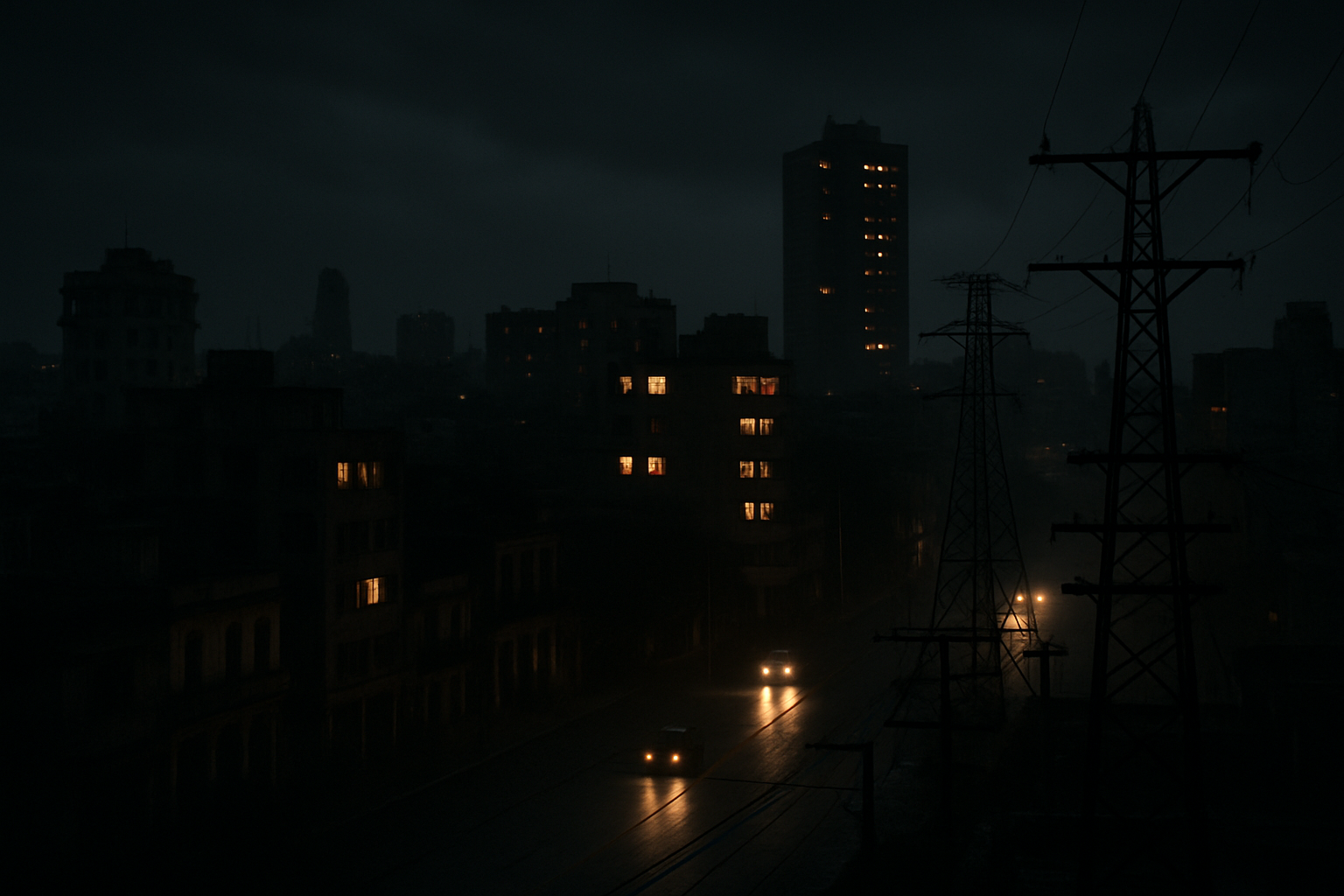
Cuba's electrical infrastructure collapsed Wednesday evening as the shutdown of the nation's largest power plant triggered a cascading system failure that left two-thirds of the island, including the capital Havana, without electricity—the latest devastating blow in what officials describe as the worst energy crisis since the 1990s "Special Period."
The National Electric System (SEN) suffered a complete breakdown stretching from Pinar del Río in the west to Camagüey in central Cuba, affecting an estimated 7-8 million of the island's 11 million inhabitants. The crisis began when the Antonio Guiteras thermoelectric power plant in Matanzas province—considered Cuba's primary power generation facility—disconnected unexpectedly due to a boiler malfunction.
Cascading System Failure
The failure of the Antonio Guiteras plant created a domino effect across Cuba's aging electrical grid, which has been operating at breaking point for months. Only the Felton 1 plant in eastern Holguín province remained operational, leaving vast swaths of the country in complete darkness.
Cuban energy officials warned that restoration efforts could take up to 72 hours, potentially leaving millions without power through the weekend. The blackout represents the fifth major system-wide electrical failure affecting Cuba's population since late 2024, highlighting the precarious state of the nation's energy infrastructure.
"We are facing a critical situation that demonstrates the systematic breakdown of our electrical system," said a source from the state electricity company Unión Eléctrica (UNE), speaking on condition of anonymity. "This is not just a temporary outage—it's a reflection of deeper structural problems."
Context of Unprecedented Crisis
The latest blackout comes amid what experts describe as Cuba's most severe energy emergency since the collapse of the Soviet Union triggered the "Special Period" in the 1990s. However, unlike that previous crisis which resulted from external factors, the current emergency stems from a combination of domestic infrastructure decay and international pressure.
Cuba has been experiencing complete aviation isolation since February, with zero jet fuel available at all airports through March 11. Oil reserves have dwindled to a critical 15-20 day supply, while domestic production has collapsed from 3 million barrels daily to just 700,000 barrels. Venezuelan crude shipments, once a lifeline, have been completely halted following political changes in Caracas.
The Cuban peso has plummeted to historic lows of 500 units per dollar, while 51% of the population—approximately 5.5 million people—had already been experiencing scheduled blackouts during peak evening hours even before Wednesday's grid collapse.
Transportation and Healthcare Systems Paralyzed
The power grid failure has created cascading effects throughout Cuban society. Transportation networks have ground to a halt, with buses unable to operate and crowds gathering at transit hubs like the Viaducto with backpacks and water bottles, waiting indefinitely for services that may never arrive.
Healthcare systems face critical challenges as medical staff struggle to reach hospitals and clinics. Power outages threaten medical equipment and medicine storage, while eastern provinces are particularly affected after previous failures of the Holguín substation left 3.4 million residents without reliable electricity.
"Not even in the hardest years of the Special Period had we seen anything like this. The transportation system is in complete collapse."
— Anonymous Cuban Official
The agricultural sector has also suffered severe disruptions, with sugar harvests halted and food production systems compromised. Government officials have acknowledged that domestic agricultural production is insufficient to meet national food requirements, creating additional strain on import-dependent food security.
International Diplomatic Tensions
The energy crisis occurs within a complex geopolitical context. The Trump administration's "maximum pressure" campaign has achieved what officials describe as "total energy supply severance," forcing traditional allies like Mexico and Venezuela to suspend oil shipments to Cuba to avoid threatened U.S. tariffs.
Ecuador has escalated diplomatic tensions by expelling Cuba's ambassador and diplomatic staff, giving them 48 hours to leave Quito. This action represents another blow to Cuba's international relations as the island faces increasing isolation.
International responses have been divided. Russia has condemned what it terms "economic strangulation" and pledged oil aid as humanitarian assistance. An international flotilla led by former UK Labour leader Jeremy Corbyn has been announced to challenge the blockade. China has demanded the U.S. "immediately" cease pressure on Cuba.
Economic Collapse and Social Impact
The power grid failure compounds an already devastating economic situation. The tourism industry, once a crucial source of foreign currency, has collapsed with major hotel chains including Meliá, Iberostar, and Blue Diamond closing facilities in Varadero and along the northern coast.
Over 25,000 tourists have been evacuated, including 21,000 Canadians and 4,000 Russians, as airlines suspended operations due to fuel shortages. The Festival del Habano, an important cultural and economic event, has been cancelled due to the "complex economic situation."
Government emergency measures have been insufficient to address the scale of the crisis. These include four-day work weeks for government employees, semi-virtual university classes, and the closure of 90% of gas stations. Hospital surgeries have been suspended except for emergencies, highlighting the humanitarian dimensions of the crisis.
Infrastructure Decades in the Making
The current crisis reflects decades of deferred maintenance and underinvestment in Cuba's electrical infrastructure. The aging power plants and transmission lines were already operating beyond their designed capacity before the recent economic pressures created additional strain.
The Antonio Guiteras plant, whose failure triggered the latest blackout, has been operating with limited spare parts and maintenance due to international sanctions that restrict access to modern equipment and technology. Previous incidents, including a major fire at the Ñico López refinery in Havana in February, have further reduced Cuba's energy production capacity.
Regional and Global Implications
Cuba's energy crisis serves as a template for understanding modern economic warfare capabilities and their humanitarian consequences. The success of external pressure in achieving "complete energy supply severance" demonstrates how economic coercion can affect entire civilian populations beyond political objectives.
The crisis tests international humanitarian principles and the limits of economic pressure as a diplomatic tool. Regional Caribbean nations face difficult choices between maintaining traditional solidarity with Cuba and managing their own economic relationships with major powers.
For the Cuban people, the power grid collapse represents more than an infrastructure failure—it symbolizes the breakdown of basic services that sustain modern life. As the island enters potentially days of darkness, the human cost of geopolitical tensions becomes starkly apparent in the lived experiences of millions of ordinary citizens.
The coming 72 hours will be critical in determining whether Cuban engineers can restore power to major population centers. However, even if immediate repairs succeed, the underlying structural problems that led to this crisis—from aging infrastructure to diplomatic isolation—will require much longer-term solutions that may reshape Cuba's future for decades to come.