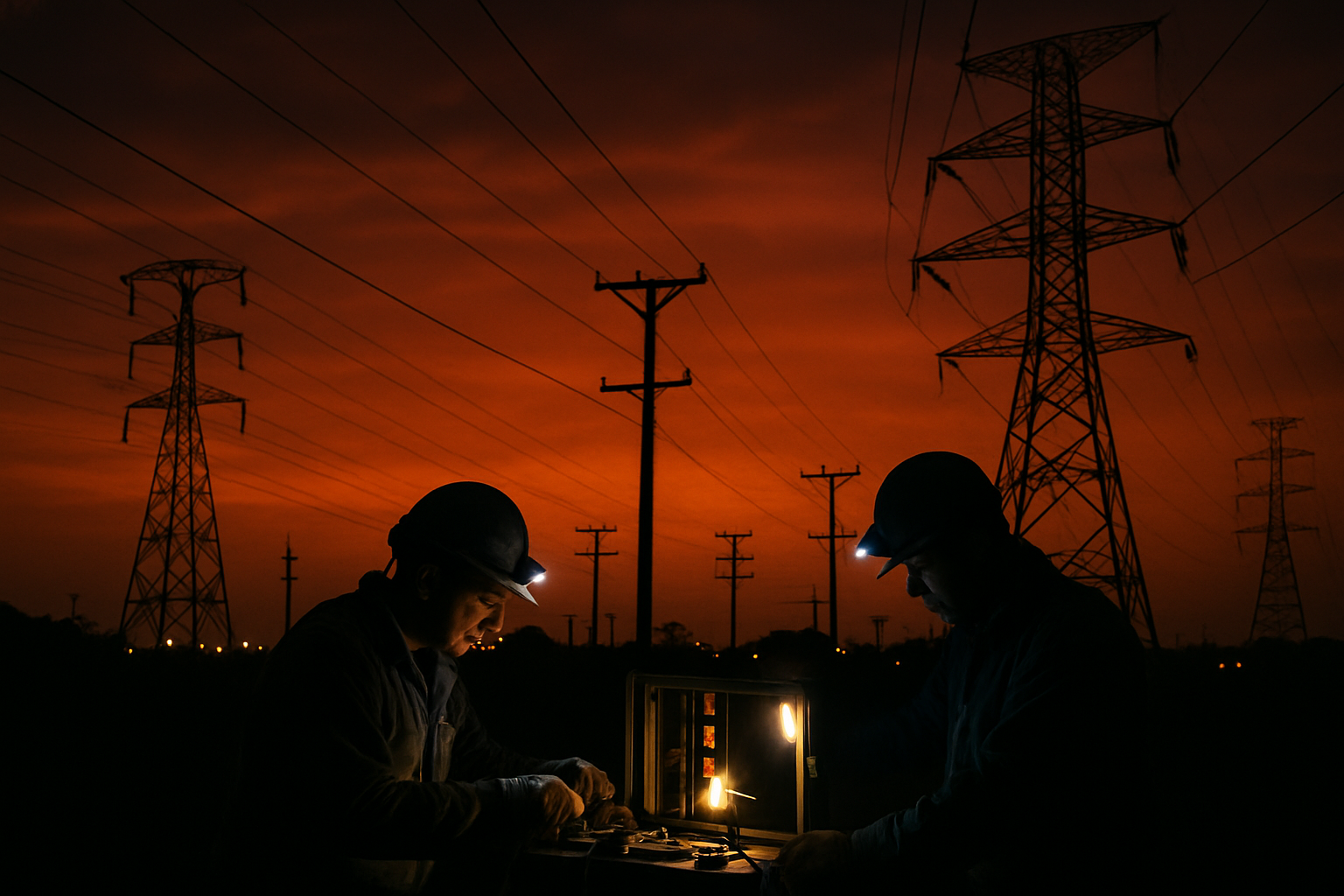
Cuba has reconnected portions of its electrical grid across much of the country, according to the Energy and Mines Ministry, as the island continues grappling with its most severe power crisis since the 1990s "Special Period" amid mounting international pressure.
The restoration efforts come just hours after the latest nationwide blackout plunged millions into darkness, marking the sixth major grid failure in 18 months since late 2024. The crisis has exposed the fragility of Cuba's aging infrastructure while highlighting the devastating impact of what international observers describe as a "deliberately engineered humanitarian emergency."
The Scale of the Crisis
Cuba's National Electric System (SEN) has experienced repeated complete disconnections affecting over 10 million inhabitants. The latest failure originated from the Antonio Guiteras thermoelectric power plant in Matanzas province, the nation's largest power facility, which has become the epicenter of Cuba's energy woes.
Currently, 51% of Cuba's population—approximately 5.5 million people—experience scheduled blackouts during peak evening hours, according to state electricity company Unión Eléctrica (UNE). The eastern provinces have been particularly hard hit, with 3.4 million residents affected by the Holguín substation failures that have created cascading power outages across Santiago de Cuba and surrounding areas.
"Not even in the hardest years of the Special Period had we seen anything like this,"
— Cuban Energy Official, Unión Eléctrica
Infrastructure Under Siege
The repeated failures of the Antonio Guiteras plant underscore the systematic breakdown of Cuba's power generation capacity. The facility, operating with limited maintenance and spare parts due to sanctions restrictions on modern equipment access, has become symbolic of the broader infrastructure decay plaguing the island.
The crisis deepened in February 2026 when a massive fire at the Ñico López refinery in Havana eliminated the nation's remaining domestic petroleum processing capacity. This incident, combined with the collapse of domestic oil production from 3 million to 700,000 barrels daily, has created a perfect storm of energy shortages.
Government emergency measures now include four-day work weeks for government employees, closure of 90% of gas stations, suspension of non-emergency hospital surgeries, and the implementation of semi-virtual university classes. Public transportation has been paralyzed, with crowds waiting indefinitely at major transit hubs like Viaducto, carrying backpacks and water bottles as they prepare for extended delays.
International Pressure and Isolation
The timing of Cuba's grid failures coincides with escalating rhetoric from the United States. President Donald Trump recently declared he could "do anything he wanted" with Cuba, describing the island as "very weakened" and a "failed nation with nice landscape." These comments represent the most explicit U.S. discussion of Cuban control since the 1960s.
The energy crisis has been compounded by what Cuban officials describe as "maximum pressure" tactics, including a January 30, 2026 executive order threatening 25% tariffs on countries supplying oil to Cuba. This policy successfully forced Venezuela and Mexico to halt crude shipments despite humanitarian concerns, achieving what analysts call "total energy supply severance."
The aviation sector has been particularly devastated, with complete fuel shortages forcing the evacuation of over 25,000 tourists, including 21,000 Canadians and 4,000 Russians. Major airlines including Air Canada, WestJet, and Russian carriers suspended operations, while hotel chains like Meliá, Iberostar, and Blue Diamond closed facilities across the island.
Civil Unrest and Political Pressure
The energy crisis has sparked unprecedented civil unrest, culminating in protesters storming a Communist Party headquarters in Morón, Ciego de Ávila province. Demonstrators chanting "¡Libertad!" (Freedom) ransacked the building and created street bonfires with party materials—the first successful attack on a major party facility since the 1959 revolution.
Widespread "cacerolazos" (pot-banging protests) have spread across multiple cities, with protesters using cellphone flashlights during blackouts and confronting police. The government has shifted its priorities to "defense of internal order" as infrastructure collapse spreads throughout the island.
Healthcare System in Crisis
The power grid failures have created a cascading healthcare emergency. Hospitals are operating on backup generators, with medical equipment threatened by power outages and medicine storage compromised by unreliable electricity. Medical evacuation capacity has been eliminated, and medical staff face transportation difficulties reaching facilities.
The eastern provinces, already suffering from the Holguín substation failures, have seen particularly severe healthcare disruptions. Surgery suspensions and power outages threatening critical equipment have forced Cuban authorities to prioritize life-saving procedures while deferring routine medical care.
International Response and Aid Efforts
International responses to Cuba's crisis have been sharply divided. Russia has condemned what it calls "economic strangulation" and pledged oil aid as humanitarian assistance, though no specific timeline has been provided. China has demanded the cessation of U.S. pressure, while European officials have characterized the situation as a "deliberately engineered humanitarian emergency."
Mexico has deployed naval vessels carrying 814 tons of humanitarian supplies while carefully avoiding oil shipments to prevent U.S. retaliation. Former UK Labour leader Jeremy Corbyn has announced an international flotilla to challenge what supporters call an oil blockade.
Historical Context and Precedent
Energy experts note that the current crisis exceeds the severity of the 1990s "Special Period" that followed the Soviet Union's collapse. Unlike that era's external economic collapse, the current emergency stems from deliberate policy targeting, creating what analysts describe as a template for 21st-century economic siege warfare affecting civilian populations.
The complete aviation connectivity severance is unprecedented since the 1962 Cuban Missile Crisis, while the systematic targeting of energy infrastructure represents a new dimension in economic coercion that has implications far beyond Cuba's borders.
Regional Implications
The crisis has forced Caribbean nations to choose between solidarity with Cuba and maintaining relationships with the United States. This "Corolario Trump" strategy—described as a 21st-century update to the Monroe Doctrine—demonstrates American economic influence in forcing regional compliance despite ideological commitments.
CARICOM member states face particularly difficult choices, with some leaders like Trinidad's Prime Minister Kamla Persad-Bissessar publicly dismissing regional "zone of peace" policies, creating fundamental breaches in Caribbean diplomatic norms.
Looking Forward
Cuban authorities have provided no timeline for full grid restoration or the removal of the restrictions that have created this unprecedented isolation. The crisis has entered its second month with no clear resolution pathway identified, requiring either a diplomatic breakthrough, alternative supply arrangements that circumvent international pressure, or fundamental changes to Cuban energy infrastructure.
The international community faces an unprecedented test of how to respond to what many characterize as collective punishment affecting civilian populations. The outcome will influence future approaches to territorial disputes, democratic transitions, and great power competition management globally.
As Cuba continues its struggle to restore electrical service to millions of citizens, the crisis represents a watershed moment that may fundamentally reshape not only the island's future but also establish dangerous precedents for economic coercion in the modern era. The restoration efforts, while providing temporary relief, highlight the urgent need for sustainable solutions to an energy crisis that has pushed Cuba's 11 million inhabitants to the brink of humanitarian catastrophe.