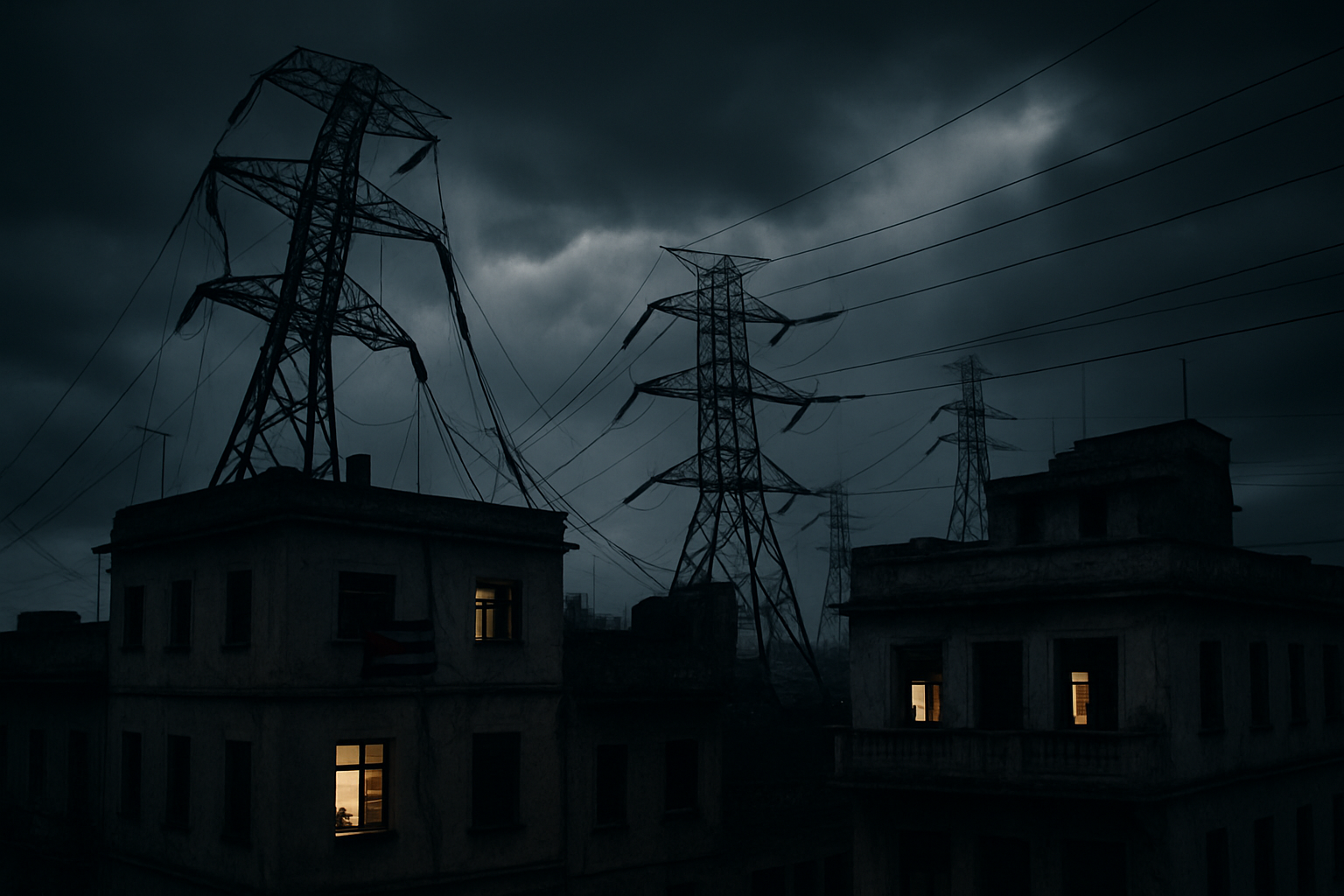
Cuba is experiencing a catastrophic convergence of crises as the island nation grapples with both a nationwide blackout affecting millions of residents and a magnitude 6.0 earthquake that struck on Tuesday, exposing critical vulnerabilities in the country's deteriorating infrastructure.
The earthquake, which occurred with a depth of 15 kilometers according to the European Mediterranean Seismological Centre (EMSC), was felt across multiple provinces including Guantánamo and Santiago de Cuba. While Cuban authorities have not yet reported casualties or significant structural damage from the seismic event, the timing could not be worse as the nation simultaneously battles its most severe power crisis since the 1990s Special Period.
Complete Power Grid Collapse
The latest nationwide blackout represents the sixth major system-wide electrical failure since late 2024, with the National Electric System (SEN) experiencing complete disconnection affecting approximately 10 million inhabitants. The power failure has been traced to ongoing issues with the Antonio Guiteras thermoelectric power plant in Matanzas province, Cuba's primary electricity generation facility.
"The energy supply situation in Cuba has severely deteriorated as a result of a blockade on fuel shipments caused by unilateral US restrictions," reported Russian state media TASS, highlighting the international dimensions of Cuba's energy crisis.
"Cuba suffers a nationwide blackout, exposing the fragility of its power grid as millions endure heat, shortages and long waits for electricity."
— Africanews Report
Currently, 51% of Cuba's population - approximately 5.5 million people - are experiencing scheduled blackouts during peak hours. Oil reserves have dwindled to a critical 15-20 day supply, while domestic production has collapsed from 3 million to just 700,000 barrels daily.
Energy Crisis Reaches Critical Point
The current crisis represents the culmination of months of deteriorating conditions that have pushed Cuba's energy infrastructure to the breaking point. The island's electrical grid, plagued by aging infrastructure and chronic fuel shortages, has been systematically failing under the weight of multiple pressures.
The situation has been severely exacerbated by the complete halt of Venezuelan crude oil shipments and the suspension of Mexican petroleum deliveries following external pressure. This has forced Cuba into an unprecedented energy isolation that exceeds even the severe constraints experienced during the 1990s Special Period following the Soviet Union's collapse.
Emergency measures now in effect include four-day government work weeks, the closure of 90% of gas stations, suspension of hospital surgeries except for emergencies, semi-virtual university operations, and the cancellation of sugar harvests. The transportation system has experienced complete breakdown, with crowds waiting indefinitely at transit hubs like Viaducto as bus services fail to operate.
Healthcare and Humanitarian Impact
The dual crisis has created severe humanitarian consequences, particularly for Cuba's healthcare system. Medical staff struggle to reach hospitals, essential medical equipment is threatened by power outages, and medicine storage faces compromisation due to unreliable electricity supply.
Eastern provinces, home to 3.4 million residents, have been particularly affected by power outages following failures at the Holguín electrical substation. The healthcare crisis has forced the suspension of non-emergency surgeries and created transportation difficulties that prevent both medical staff and patients from accessing facilities.
The government has acknowledged that domestic agricultural production cannot meet national food requirements, representing a catastrophic failure affecting all 11 million inhabitants. Transportation breakdowns have prevented access to basic necessities, medical care, and economic opportunities, with officials stating that "not even in the hardest years of the Special Period had we seen anything like this."
International Context and Response
The crisis unfolds against a backdrop of complex international dynamics, with various nations offering different forms of assistance. Mexico has provided humanitarian aid through naval vessels carrying supplies, while Russia has pledged oil aid as humanitarian assistance to challenge what it terms "economic strangulation."
European media has characterized the situation as a "deliberately engineered humanitarian emergency," while international observers express concern about the collective impact on civilian populations. The crisis has effectively severed Cuba's aviation connectivity, with complete isolation from international air travel due to jet fuel shortages.
China has demanded the immediate cessation of external pressure on Cuba, while several European and Latin American nations have announced humanitarian assistance programs. However, the scale of the crisis appears to exceed regional capacity for meaningful relief.
Infrastructure Vulnerabilities Exposed
The earthquake striking during the midst of the power crisis starkly illustrates Cuba's infrastructure vulnerabilities. The island's electrical grid, already operating under extreme stress, faces additional challenges from potential seismic damage to transmission lines and generation facilities.
The Antonio Guiteras power plant, identified as the source of the latest blackout, has been operating with limited maintenance and spare parts due to restrictions on importing modern equipment. This aging infrastructure, combined with the chronic fuel shortages, has created a perfect storm of vulnerabilities that the recent earthquake threatens to worsen.
The Ñico López refinery in Havana, which suffered a major fire in February 2026, has eliminated remaining domestic petroleum processing capacity, further compounding the energy crisis. These infrastructure failures demonstrate decades of deferred maintenance and investment creating cascading system breakdowns.
Regional Implications
Cuba's crisis carries significant implications for the broader Caribbean region, where other nations face similar infrastructure challenges and natural disaster vulnerabilities. The combination of power grid failures and seismic activity highlights the urgent need for regional cooperation on infrastructure resilience and disaster preparedness.
CARICOM leaders have indicated preparation of coordinated humanitarian assistance, though regional divisions over response approaches have complicated unified action. The crisis serves as a stark reminder of small island developing states' vulnerability to both external pressures and natural disasters.
Path Forward Uncertain
As Cuba faces this unprecedented convergence of crises, the path to recovery remains uncertain. The government has provided no timeline for resolving the power crisis, while the potential for additional earthquake damage adds another layer of complexity to restoration efforts.
Sustainable solutions will require fundamental changes to Cuba's energy infrastructure, enhanced international cooperation prioritizing humanitarian needs, and potentially diplomatic breakthroughs to address underlying causes of the energy isolation.
The current crisis represents more than an immediate emergency - it exemplifies the challenges facing nations with aging infrastructure in an era of increasing climate volatility and geopolitical tensions. The international community's response to Cuba's humanitarian emergency may establish important precedents for how similar crises are addressed in the future.
With millions of Cubans struggling without reliable electricity, adequate food supplies, or functioning transportation, the coming weeks will be critical in determining whether innovative solutions can emerge or whether the island faces sustained isolation unprecedented in modern history.