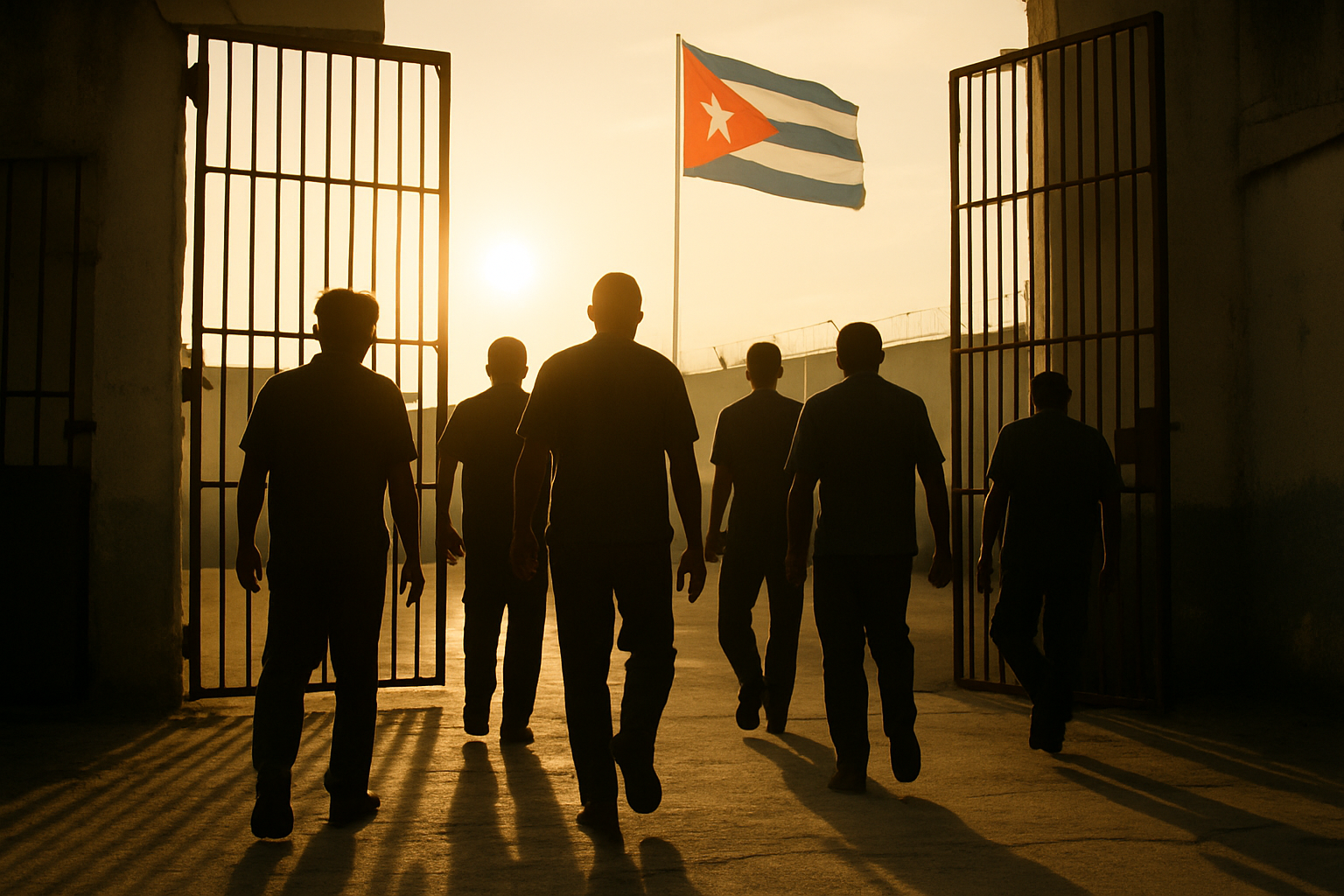
Cuba announced Thursday the release of 2,010 prisoners in what officials described as a "humanitarian gesture" during Holy Week, marking one of the largest prisoner releases in the island's recent history amid escalating US economic pressure and a severe energy crisis.
The announcement comes just days after the Trump administration eased a de facto oil blockade by allowing a Russian tanker to deliver crude oil to the fuel-starved island, ending nearly three months of complete energy isolation that brought Cuba to the brink of humanitarian collapse.
Context of Unprecedented Crisis
The prisoner release follows Cuba's most severe crisis since the 1990s Special Period, but this time caused by deliberate US policy rather than external economic collapse. The island endured complete aviation isolation from February through March 2026, with zero jet fuel available at all nine major airports, forcing the evacuation of over 25,000 tourists, including 21,000 Canadians and 4,000 Russians.
According to multiple international sources, 51% of Cuba's population—approximately 5.5 million people—experienced scheduled blackouts during peak hours, while oil reserves dropped to a critical 15-20 day supply. The crisis was precipitated by President Trump's January 30 executive order threatening 25% tariffs on countries supplying oil to Cuba, effectively forcing Venezuela and Mexico to halt shipments despite humanitarian concerns.
Civil Unrest and Government Response
The energy crisis triggered unprecedented civil unrest, culminating in the historic March 13-14 storming of Communist Party headquarters in Morón, Ciego de Ávila—the first successful attack on a major party facility since the 1959 revolution. Protesters chanted "¡Libertad!" while burning party materials, forcing the government to prioritize "defense of internal order" as infrastructure collapsed across the island.
"The Cuban government is talking with us, and they're in a big deal of trouble. Maybe we'll have a friendly takeover of Cuba."
— President Donald Trump, February 2026
The tourism industry collapsed entirely, with major Spanish hotel chains including Meliá, Iberostar, and Blue Diamond closing facilities in Varadero and northern coastal areas. Canada issued its second-highest travel advisory warning of "serious/life-threatening risks," effectively ending the winter tourism season that Cuba depends on for foreign currency.
International Diplomatic Responses
The crisis exposed deep international divisions over US policy. Russia condemned what it called "economic strangulation" and pledged oil aid, while China demanded Washington "immediately" cease pressure on Cuba. European media characterized the situation as a "deliberately engineered humanitarian emergency," with critics arguing it exceeded acceptable bounds of economic coercion.
UK Labour leader Jeremy Corbyn announced an international humanitarian flotilla to challenge the blockade, while Mexico maintained humanitarian aid shipments via naval vessels carrying 814 tons of supplies, even as it suspended oil deliveries under US pressure.
The Russian Oil Breakthrough
The policy landscape shifted dramatically on March 30 when the Russian tanker Anatoly Kolodkin successfully delivered 730,000 barrels of crude oil to Cuba's Port of Matanzas after a 20-day journey from Primorsk, Russia. The White House confirmed this as a humanitarian exception, with Press Secretary Karoline Leavitt stating it was allowed "to provide humanitarian needs to the Cuban people" while maintaining the right to seize future vessels on a case-by-case basis.
This marked a significant reversal from Trump's earlier March statements about "taking Cuba" and describing it as a "failed nation with nice landscape"—the most explicit US discussion of Cuban control since the 1960s.
Scope and Significance of Prisoner Release
The 2,010 prisoner release represents a substantial humanitarian gesture in the context of Cuba's recent history. While specific details about the categories of prisoners remain limited, Italian sources confirm that those guilty of serious crimes including murder and drug trafficking are excluded from the pardons, suggesting a selective rather than blanket amnesty.
The timing during Holy Week follows historical precedent for Cuban prisoner releases during religious holidays, though this represents one of the largest such actions in recent memory. The announcement comes as Cuba continues to face what energy expert Jorge Piñón describes as "zero hour"—a critical point where energy reserves are insufficient to maintain basic services without immediate intervention.
Regional Implications and Template Setting
The Cuba crisis has served as a laboratory for testing the Trump administration's "Corolario Trump"—a 21st-century update to the Monroe Doctrine combining military pressure, economic coercion, and selective engagement for hemispheric dominance. The approach follows the successful Venezuela model, where maximum pressure on the Maduro regime led to his January 2026 capture and a subsequent transformation to strategic partnership with interim President Delcy Rodríguez.
Caribbean nations have been forced to choose between US economic relationships and traditional solidarity with Cuba, demonstrating American economic gravitational pull in forcing compliance despite ideological commitments. Trinidad and Tobago's Prime Minister notably dismissed CARICOM's "zone of peace" policy, telling fellow leaders "don't talk to me about zone of peace" during a February summit.
Healthcare and Infrastructure Challenges
The humanitarian impact extended far beyond energy shortages. Medical evacuation capacity was eliminated, with hospital surgery suspensions and medical staff unable to reach patients due to transportation paralysis. Eastern provinces affecting 3.4 million people suffered from transmission failures at the Holguín substation, while medicine storage was compromised by power outages threatening critical medical equipment.
The island's domestic oil production collapsed from 3 million to 700,000 barrels daily, while the Cuban peso reached a historic low of 500 units per dollar. Agricultural production became insufficient for national food requirements, and 90% of gas stations closed, creating a complete economic standstill.
Looking Forward
While the Russian oil delivery and prisoner release suggest a potential diplomatic opening, fundamental challenges remain. The 730,000 barrels provide only temporary relief, and sustained imports will be required to restore normal operations. The crisis has highlighted both the effectiveness of comprehensive economic pressure and its humanitarian consequences when applied to entire populations.
The precedent set by Cuba's crisis raises significant questions about the limits of economic coercion as a diplomatic tool and collective punishment affecting civilian populations. International law experts have expressed concerns about the normalization of such comprehensive isolation tactics affecting territorial sovereignty and humanitarian protection principles in 21st-century international relations.
As Cuba begins to emerge from its worst crisis in decades, the prisoner release represents both a humanitarian gesture and a potential signal of flexibility from Havana amid ongoing diplomatic discussions. Whether this marks the beginning of a broader settlement or merely a temporary reprieve remains to be determined in the coming weeks and months.