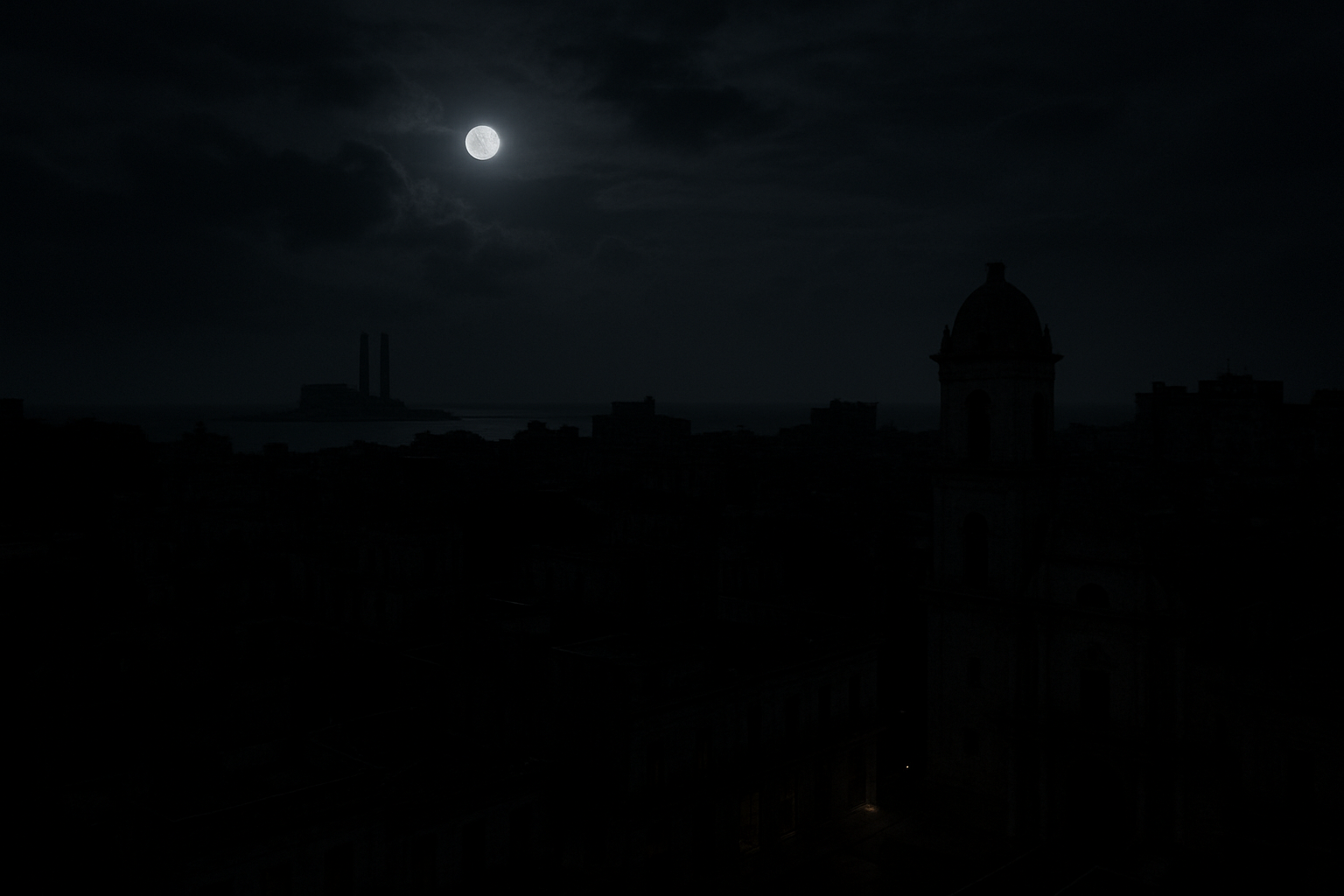
Cuba's entire national electrical system collapsed Saturday evening at 6:32 PM local time, leaving more than 10 million people without power in the second island-wide blackout within a week, as the Caribbean nation faces its worst energy crisis since the 1990s Special Period.
The Ministry of Energy and Mines announced on social media that a "total disconnection of the National Electric System has occurred," with restoration protocols immediately implemented. The blackout originated from a failure at the Antonio Guiteras thermoelectric power plant in Matanzas province, Cuba's largest power facility, creating a cascade effect that knocked out electricity across the entire island.
Unprecedented Energy Crisis Deepens
This latest blackout marks the sixth major system-wide electrical failure since late 2024, highlighting the precarious state of Cuba's energy infrastructure. The island was still recovering from a nationwide power grid collapse just days earlier, part of an ongoing crisis that has left 51% of the population - approximately 5.5 million people - experiencing scheduled blackouts during peak hours.
Cuba's oil reserves have dwindled to a critical 15-20 day supply, while domestic production has collapsed from 3 million to just 700,000 barrels daily. The situation was further exacerbated by a February fire at the Ñico López refinery in Havana, which eliminated the country's remaining domestic petroleum processing capacity.
International Pressure Takes Its Toll
The crisis has been intensified by the Trump administration's "maximum pressure" campaign, including a January 30 executive order threatening 25% tariffs on countries supplying oil to Cuba. This policy successfully forced Venezuela's interim government and Mexico to halt oil shipments to the island, despite humanitarian concerns.
"Cuba was still recovering from a nationwide power grid collapse on Monday, the first since the US began blocking fuel supplies from Venezuela earlier this year."
— CNN Report
The economic impact has been devastating, with the Cuban peso reaching a historic low of 500 units per US dollar - a 15% weekly decline that reflects the severity of the crisis.
Humanitarian Emergency Unfolds
The power grid failures have created a cascading humanitarian emergency affecting all aspects of daily life. The government has implemented unprecedented emergency measures, including four-day work weeks, closure of 90% of gas stations, suspension of non-emergency hospital surgeries, and semi-virtual university classes.
The healthcare system faces particular strain, with medical staff unable to reach hospitals, power outages threatening critical medical equipment and medicine storage, and the elimination of medical evacuation capabilities. In eastern provinces, 3.4 million people have been affected by failures at the Holguín substation.
The transportation system has experienced complete collapse, with crowds waiting indefinitely at major transit hubs like Viaducto, carrying backpacks and water bottles as bus services fail. The government has acknowledged that domestic agricultural production is insufficient to meet national food requirements, affecting all 11 million inhabitants.
Tourism Industry Devastated
The crisis has dealt a crushing blow to Cuba's vital tourism sector. Complete aviation isolation occurred from February 10 through March 11, with zero jet fuel available at all nine major airports. This forced the evacuation of over 25,000 tourists, including 21,000 Canadians and 4,000 Russians.
Major airlines including Air Canada, WestJet, Air Transat, Rossiya, and Nordwind suspended all operations to Cuba. The aviation fuel shortage affected 400 weekly flights and 70,000 scheduled seats, creating the most comprehensive aviation blockade since the 1962 Cuban Missile Crisis.
Spanish hotel chains Meliá and Iberostar, along with Canadian company Blue Diamond, have closed facilities in Varadero and along the northern coast. Canada issued its highest travel advisory warning of "serious and life-threatening risks," effectively ending the winter tourism season.
International Response Divided
The international community has responded with a mixture of humanitarian aid and diplomatic pressure. Russia has condemned what it calls "economic strangulation" and pledged oil aid as humanitarian assistance, though no timeline has been specified.
Mexico has deployed its largest humanitarian operation, sending naval vessels Papaloapan and Isla Holbox carrying 814 tons of supplies to Cuba while avoiding oil shipments to prevent U.S. retaliation. President Claudia Sheinbaum has maintained that Mexico "won't allow its territory to be used to pressure other nations."
China has demanded that the United States immediately cease its pressure campaign, while former UK Labour leader Jeremy Corbyn has announced an international flotilla to challenge what he calls the oil blockade. European media has characterized the situation as a "deliberately engineered humanitarian emergency."
Civil Unrest Emerges
The energy crisis has sparked unprecedented civil unrest. On March 13-14, protesters stormed the Communist Party headquarters in Morón, Ciego de Ávila province, chanting "¡Libertad!" (Freedom) while burning party materials - the first successful attack on a major party facility since the 1959 revolution.
Widespread "cacerolazos" (pot-banging protests) have spread across multiple cities, prompting the government to shift its priorities to "defense of internal order" with no timeline provided for the removal of restrictions.
Recovery Efforts Begin
Cuba's energy ministry announced early Sunday that it had established microsystems - smaller, closed circuits - in all provinces to restore power for vital services like hospitals, water supply, and food distribution. The country's two gas-fired power plants in Varadero and Boca de Jaruco were running, and electricity had reached the nearby Santa Cruz oil-fired plant.
Grid operator UNE reported that power supply is being gradually restored, with priority given to essential facilities including hospitals and water systems. However, the underlying crisis remains unresolved, with authorities providing no timeline for full restoration.
Historical Context and Implications
The current crisis exceeds the severity of Cuba's 1990s Special Period, which followed the collapse of the Soviet Union. However, unlike that external economic collapse, the current emergency results from deliberate policy pressure, making it unprecedented in modern Cuban history.
Energy expert Jorge Piñón from the University of Texas describes Cuba as approaching "zero hour" - a critical point where energy reserves become insufficient for basic services without immediate intervention. The crisis requires either a diplomatic breakthrough, alternative supply arrangements circumventing international pressure, or fundamental changes to Cuba's energy infrastructure.
The situation has created a template for 21st-century economic siege warfare affecting civilian populations, raising questions about the limits of economic coercion as a diplomatic tool and the protection of humanitarian principles in international relations.
Looking Ahead
As Cuba enters its third month of unprecedented isolation, the international community faces a critical test of how to respond to economic coercion affecting entire populations. The crisis outcome will likely influence approaches to territorial sovereignty, humanitarian protection standards, and the use of economic warfare in contemporary international relations.
With no clear resolution in sight and underlying infrastructure problems requiring long-term solutions, Cuba's power grid crisis represents a watershed moment that could reshape Caribbean geopolitics and set dangerous precedents for the systematic isolation of small island states through energy and transportation targeting.
The restoration of Cuba's electrical system may take days, but addressing the fundamental causes of this crisis will require sustained international attention and potentially innovative diplomatic solutions that balance geopolitical objectives with humanitarian imperatives affecting millions of ordinary Cuban citizens.