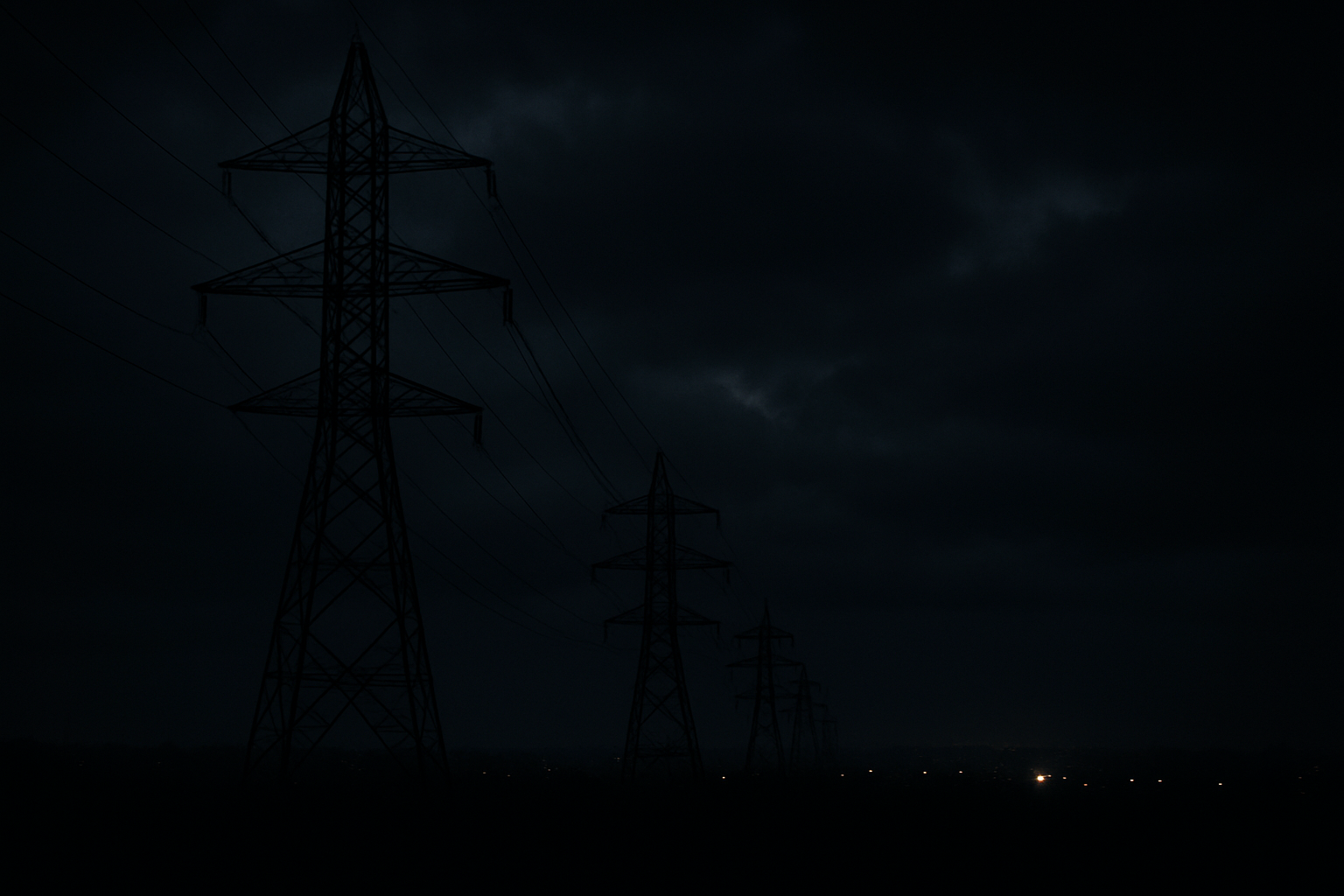
Cuba's National Electric System (SEN) suffered a complete collapse on Saturday evening, plunging the island into darkness for the third time this month as the communist nation grapples with its worst energy crisis since the devastating "Special Period" of the 1990s.
The Ministry of Energy and Mines confirmed the nationwide blackout began around 6:30 PM local time, affecting over 10 million inhabitants. The Antonio Guiteras thermoelectric power plant in Matanzas province, Cuba's largest generation facility, was identified as the likely source of the system failure that triggered a cascading collapse across the grid.
This marks the sixth major nationwide blackout since late 2024, highlighting the precarious state of Cuba's aging electrical infrastructure amid an unprecedented energy crisis that has left the island virtually isolated from the global economy.
Systematic Infrastructure Collapse
Even before this latest total system failure, 51% of Cuba's population—approximately 5.5 million people—were already experiencing scheduled blackouts during peak hours, according to the state electricity company Unión Eléctrica. The power grid has been operating under extreme stress, with many regions receiving only 2-4 hours of electricity per day.
The crisis extends far beyond electricity. Cuba's oil reserves have dwindled to a critical 15-20 day supply, while domestic production has collapsed from 3 million barrels daily at its peak to just 700,000 barrels. A devastating fire at the Ñico López refinery in Havana in February eliminated the island's remaining domestic petroleum processing capacity.
The energy shortage has paralyzed the transportation system, with 90% of gas stations closed and public transport severely curtailed. The government has implemented emergency measures including four-day work weeks, semi-virtual university classes, and the suspension of non-emergency hospital surgeries.
US Maximum Pressure Campaign Takes Hold
The crisis represents the culmination of what analysts describe as the most successful U.S. economic pressure campaign against Cuba in decades. President Trump's January 30 executive order threatening 25% tariffs on any country supplying oil to Cuba achieved what the administration calls "total energy supply severance."
Venezuela, historically Cuba's main oil supplier, completely halted crude shipments after the interim government prioritized relations with Washington following Nicolás Maduro's capture in January. Mexico also suspended petroleum deliveries despite President Claudia Sheinbaum's humanitarian concerns, bowing to U.S. economic pressure.
"This is total asphyxiation," President Miguel Díaz-Canel said in a recent televised address, describing the U.S. campaign as an attempt to force Cuba's government to negotiate.
— Miguel Díaz-Canel, Cuban President
The Cuban peso has collapsed to historic lows of 500 units per dollar, representing a 15% weekly decline and reflecting the economy's freefall amid the energy crisis.
Aviation Isolation and Tourism Devastation
The energy crisis has extended to complete aviation isolation, with all nine Cuban airports lacking jet fuel from February 10 through March 11. This unprecedented blockade—the most comprehensive since the 1962 Cuban Missile Crisis—forced the evacuation of over 25,000 foreign tourists, including 21,000 Canadians and 4,000 Russians.
Major airlines including Air Canada, WestJet, Air Transat, and Russian carriers Rossiya and Nordwind suspended all operations to Cuba. The tourism industry, a crucial source of foreign currency, has collapsed with major hotel chains like Meliá, Iberostar, and Blue Diamond closing facilities in Varadero and along the northern coast.
Canada issued a "high degree of caution" advisory for Cuba, effectively ending the winter tourism season that typically brings hundreds of thousands of visitors to the island.
Healthcare System Under Strain
The power crisis has created a humanitarian emergency affecting Cuba's vaunted healthcare system. Hospitals have been forced to suspend non-emergency surgeries due to unreliable electricity supply, while medical staff struggle to reach facilities amid transportation paralysis.
Power outages threaten medicine storage and critical medical equipment, with backup generators providing only limited relief. The eastern provinces, home to 3.4 million people, have been particularly hard hit following failures at the Holguín electrical substation.
Medical evacuation capacity has been eliminated due to the aviation fuel shortage, cutting off a critical lifeline for Cuban-American families and severing connections that have persisted for decades.
Civil Unrest Emerges
The energy crisis has sparked the most significant civil unrest in Cuba since the 1959 revolution. On March 13-14, protesters stormed and ransacked a Communist Party headquarters in Morón, Ciego de Ávila province, chanting "¡Libertad!" (Freedom) while burning party materials and dragging furniture into the streets.
This marked the first successful attack on a major party facility since the revolution, representing an unprecedented challenge to Communist authority. Widespread "cacerolazos" (pot-banging protests) have spread to multiple cities, with protesters using cellphone flashlights during blackouts while confronting police.
The government has shifted its priorities to what officials call "defense of internal order," acknowledging the crisis's threat to political stability.
International Response Divides
The international community remains divided in its response to Cuba's crisis. Russia has condemned what it calls "economic strangulation" and pledged to provide oil aid as humanitarian assistance, directly challenging U.S. policy though no timeline has been provided.
Former UK Labour leader Jeremy Corbyn has announced an international flotilla to challenge the U.S. oil blockade, while China has demanded Washington immediately cease pressure on Cuba. European media outlets have characterized the situation as a "deliberately engineered humanitarian emergency."
Meanwhile, Mexico maintains limited humanitarian aid—delivering 814 tons of supplies via naval vessels—while carefully avoiding any actions that could trigger U.S. retaliation.
Trump Administration Escalates Rhetoric
President Trump has made increasingly explicit statements about Cuba's future, declaring on March 17 that he will have the "honor" of "taking Cuba in some form" and claiming he could "do anything I want" with the island, which he described as a "very weakened" and "failed nation with nice landscape."
These represent the most direct U.S. statements about Cuban control since the 1960s. Secretary of State Marco Rubio has been positioned as the lead negotiator for any potential talks, though Cuban officials have not confirmed such discussions.
Historical Significance
The current crisis exceeds even the devastating "Special Period" of the 1990s that followed the Soviet Union's collapse. Unlike that earlier crisis, which resulted from external economic collapse, the current situation stems from deliberate U.S. policy designed to force political change.
Energy experts describe this as reaching "zero hour"—a critical point where energy reserves are insufficient to maintain basic services without immediate international intervention. The complete aviation connectivity severance is unprecedented in modern Cuban history and creates a template for 21st-century economic siege warfare.
Uncertain Path Forward
Cuban authorities have provided no timeline for restoration of normal electricity service or resolution of the broader energy crisis. The underlying infrastructure problems developed over decades of limited investment and maintenance, requiring fundamental changes that extend far beyond the current emergency.
Resolution appears to require either a diplomatic breakthrough with Washington, alternative supply arrangements that circumvent U.S. pressure, or fundamental changes to Cuba's energy infrastructure that could take years to implement.
The international community faces a critical test of how to respond to economic coercion campaigns that affect entire civilian populations. The precedent being set in Cuba may influence approaches to similar crises worldwide, potentially reshaping international relations and humanitarian protection principles for decades to come.
As Cuba enters what may be its darkest hour since the revolution, the island's 11 million inhabitants remain caught between an increasingly desperate government and an international community struggling to balance political objectives with humanitarian concerns.