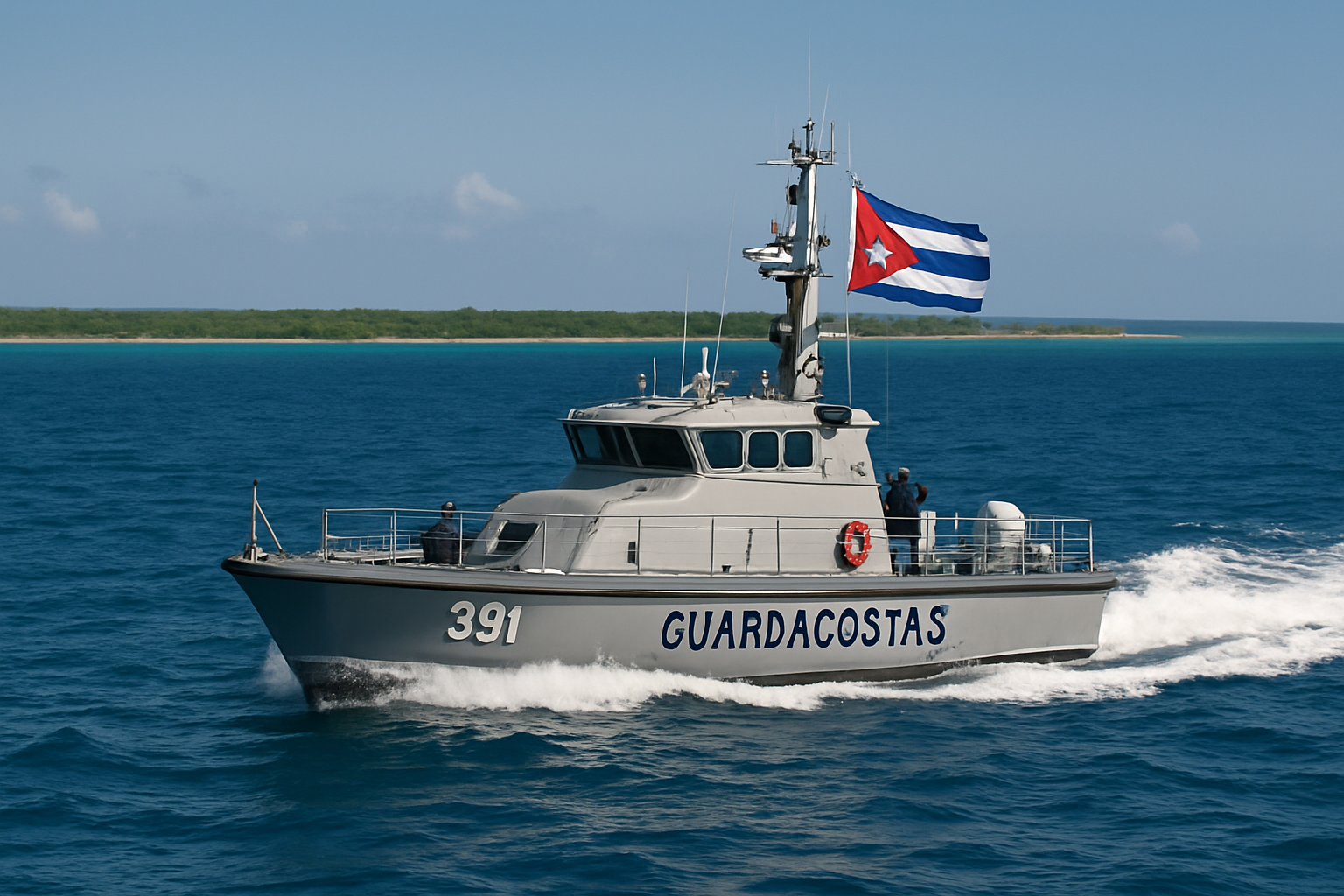
Cuban coast guard forces killed four people and wounded six others aboard a Florida-registered speedboat in Cuban territorial waters Wednesday, marking the most serious bilateral incident between the United States and Cuba in years as tensions escalate across the Caribbean region.
The incident occurred approximately 1.6 kilometers northeast of Cayo Falcones, off Cuba's northern coast in Villa Clara province, according to Cuba's Interior Ministry. Cuban authorities claim the vessel opened fire on officers during an identification check, injuring a Cuban patrol boat commander before guards returned fire.
The speedboat, registered as FL7726SH, was carrying ten individuals when the confrontation erupted, according to Cuban officials. All ten people aboard were identified as Cuban nationals residing in the United States, with the Interior Ministry characterizing their mission as having "terrorist intentions."
Cuban Claims of Terrorist Infiltration
Cuban authorities released additional details following their investigation, alleging the vessel was loaded with tactical equipment including assault rifles, short arms, improvised explosive devices described as "Molotov cocktails," bulletproof vests, telescopic sights, and camouflage uniforms. The Interior Ministry stated this equipment demonstrated the group's alleged intent to conduct what they termed a "terrorist infiltration."
"The individuals aboard the boat allegedly opened fire first, wounding the commander of a Cuban patrol craft before guards returned fire."
— Cuban Interior Ministry Statement
The confrontation represents an escalation from what Cuban officials describe as attempts by exile groups to infiltrate the island, coming amid Cuba's worst energy crisis since the 1990s Special Period.
US Response and Investigation
US Vice President JD Vance confirmed that the United States is monitoring the situation closely, stating that Secretary of State Marco Rubio had briefed him on the incident. However, Vance noted that many details remain unknown as the investigation continues.
The US State Department indicated it would "verify information and draw our own conclusions" regarding the incident, representing a measured response that suggests efforts to prevent further escalation. Officials have not yet confirmed the identities or citizenship status of those killed and wounded.
The incident occurs within the broader context of Operation Southern Spear, the Trump administration's militarized counter-narcotics campaign that has resulted in 147+ deaths across 42 attacks since September 2025, transforming the Caribbean Sea into what experts describe as an active military zone.
Regional Maritime Security Crisis
The Cuba incident represents the latest in a series of deadly maritime confrontations that have heightened tensions throughout the Caribbean. Caribbean fishing communities have reported growing anxiety following multiple incidents involving US military operations, including the deaths of three Saint Lucian fishermen in separate operations.
Maritime law experts question the precedent of lethal force against civilian vessels in territorial waters, particularly when used by Cuban forces against a US-registered boat. The incident raises complex questions about proportional response and territorial sovereignty enforcement.
The shooting occurred against the backdrop of Cuba's unprecedented energy crisis, with the island experiencing complete aviation isolation through March 11, 2026, and 51% of the population facing scheduled blackouts. This crisis stems from Trump administration pressure that successfully severed Venezuelan and Mexican oil shipments to Cuba.
Implications for US-Cuba Relations
The maritime incident represents the most serious bilateral confrontation in years, adding a lethal dimension to what has primarily been an economic and diplomatic standoff. It comes as Cuba faces what European observers have characterized as a "deliberately engineered humanitarian emergency" through systematic US economic pressure.
The timing is particularly significant given recent developments in regional cooperation. At the CARICOM 50th anniversary summit, Caribbean leaders expressed deep divisions over US military operations in the region, with some supporting counter-narcotics efforts while others raised concerns about sovereignty violations.
"This incident highlights the human cost of Caribbean tensions where civilian activities increasingly intersect with military and security operations."
— Maritime Security Expert
The confrontation also occurs as the Trump administration pursues what analysts describe as a "Corolario Trump" strategy - a 21st-century update to the Monroe Doctrine combining military pressure with selective economic engagement across Latin America.
Historical Context and Precedents
Such maritime confrontations between Cuban forces and US-registered vessels have historical precedents, but the current incident stands out for its lethality and timing amid broader regional militarization. The last major bilateral maritime incident occurred during different geopolitical circumstances, making direct comparisons challenging.
The incident sets a concerning precedent for territorial enforcement during periods of heightened regional tensions. Individual Caribbean nations have expressed concern about their capacity to address sophisticated international networks while protecting civilians from increasingly militarized enforcement operations.
International Reactions and Concerns
European media outlets have highlighted humanitarian concerns about the escalating use of lethal force in Caribbean maritime operations. The incident comes as international observers monitor the region's transformation into what they describe as an active military zone under current US counter-narcotics policies.
Russia has condemned what it terms "economic strangulation" of Cuba, while China has demanded that the US immediately cease pressure campaigns. These international reactions reflect broader concerns about the intersection of territorial sovereignty, maritime law, and humanitarian protection principles.
The shooting also raises questions about the effectiveness of current approaches to transnational criminal challenges, with maritime law experts questioning whether military solutions provide sustainable answers to complex criminal networks operating across international boundaries.
Looking Forward
The incident underscores urgent needs for enhanced regional cooperation, updated maritime protocols, and diplomatic frameworks that balance legitimate security concerns with proportional response principles. As both nations navigate the aftermath, the international community watches for signs of escalation or diplomatic resolution.
The case represents a critical test of how territorial sovereignty and civilian protection can be maintained during an era of increasing maritime militarization. Success in managing the crisis diplomatically could provide valuable lessons, while failure might establish dangerous precedents for territorial enforcement that could affect maritime operations throughout the region.
As investigations continue on both sides, the incident serves as a stark reminder of the human costs when political tensions intersect with maritime security operations in an increasingly complex regional security environment.