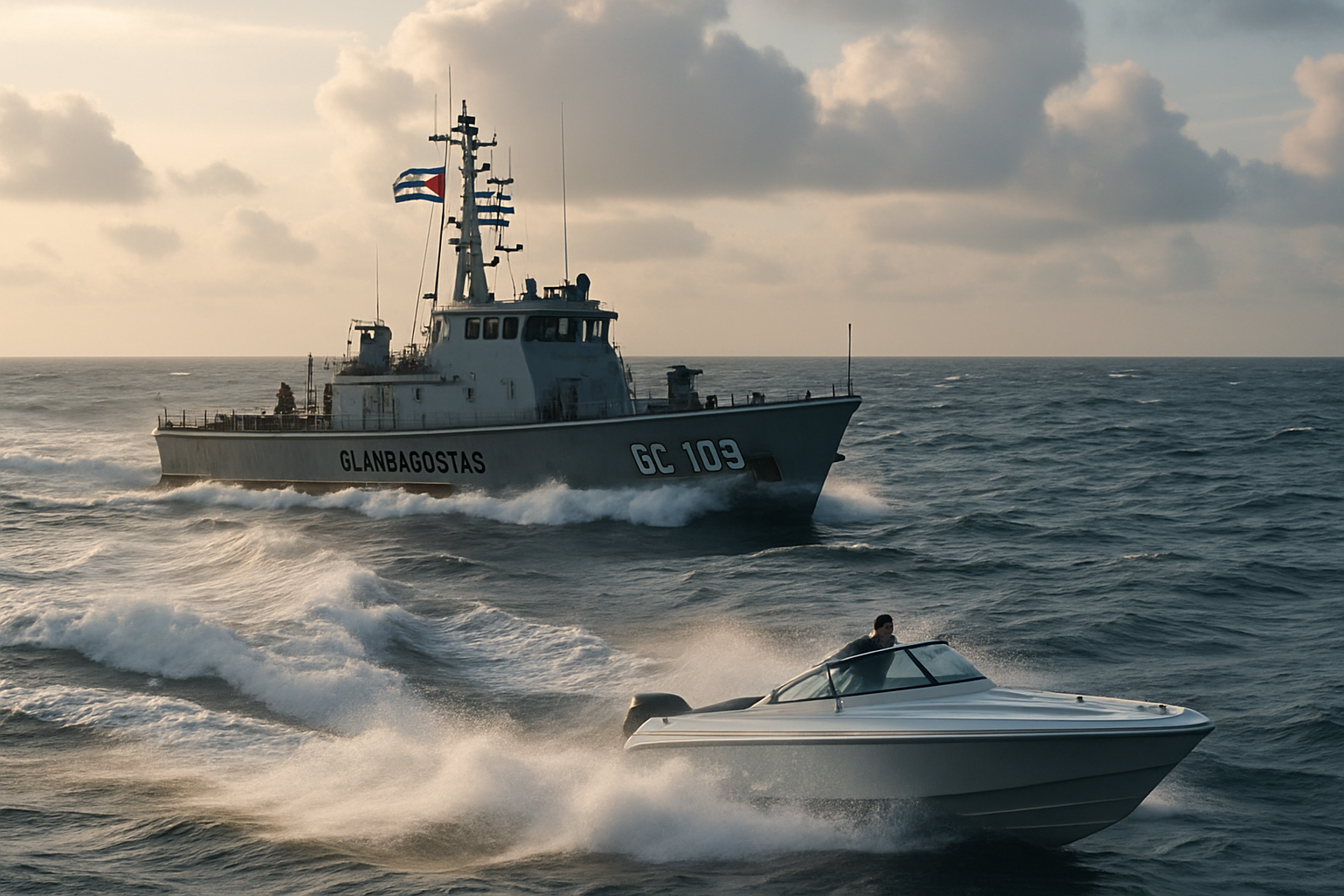
Cuban coast guard forces killed four people and wounded six others aboard a Florida-registered speedboat in Cuban territorial waters on Wednesday, marking the most serious US-Cuba bilateral incident in years amid an already tense regional security environment.
The confrontation occurred in waters near Cayo Falcones in Villa Clara province, approximately 100 miles from Florida, when Cuban Border Guard Troops (Tropa Guardafrontera) approached the speedboat FL7726SH for identification after it entered Cuban territorial waters. According to Cuba's Interior Ministry, passengers aboard the vessel opened fire during the identification attempt, wounding the Cuban commander and prompting Cuban forces to return fire.
The Incident Details
Cuban authorities reported that the speedboat was carrying ten armed individuals described as Cuban nationals residing in the United States. The Interior Ministry characterized the group as having "terrorist intentions," claiming they were equipped with assault rifles, handguns, homemade explosives, ballistic vests, telescopic sights, and camouflage uniforms.
"According to preliminary statements from the detainees, they intended to carry out an infiltration for terrorist purposes," the Cuban Interior Ministry stated in an official release. An additional Cuban suspect was detained inside Cuban territory in connection with the alleged plot.
The six wounded individuals were evacuated for medical attention and remain in Cuban custody. Cuba's Interior Ministry has identified the surviving passengers and one of those killed, noting that most had previous records of anti-government activities.
US Response Measured
US Secretary of State Marco Rubio confirmed that the State Department is investigating the "highly unusual" incident and will "verify information and draw our own conclusions." The measured US response suggests efforts to prevent escalation amid broader regional diplomatic initiatives.
Vice President JD Vance confirmed that the US is monitoring the situation and that President Trump has been briefed by Secretary Rubio, though he acknowledged that "many details remain unknown." No confirmation has yet been provided regarding US citizen casualties or the vessel's actual purpose.
Regional Security Context
The incident occurs within the framework of Operation Southern Spear, a US military campaign that has resulted in over 145 deaths across 42 attacks since September 2025. The operation has systematically transformed the Caribbean into a militarized zone, shifting from traditional law enforcement to direct military targeting of suspected vessels under terrorist organization designation authorities.
Maritime law experts have raised questions about the proportional use of lethal force against civilian vessels in territorial waters, particularly when based on suspected rather than confirmed criminal activity. The incident adds a lethal dimension to what has primarily been an economic and diplomatic standoff between the two nations.
Cuba's Energy Crisis Backdrop
The confrontation comes as Cuba experiences its worst energy crisis since the 1990s Special Period. The island faces complete aviation isolation through March 11, with 51% of the population experiencing scheduled blackouts and oil reserves at a critical 15-20 day supply. This extraordinary domestic pressure stems from the Trump administration's maximum pressure campaign, which has forced Mexico and Venezuela to halt oil shipments to avoid US economic retaliation.
The crisis has resulted in the evacuation of over 25,000 foreign tourists, the closure of major hotel chains, and severe constraints on healthcare services. Cuban President Miguel Díaz-Canel has characterized the situation as "total asphyxiation" and has appealed for US dialogue.
International Reactions and Legal Questions
Russia condemned the incident as an "aggressive provocation by the US" aimed at escalating regional tensions, according to Foreign Ministry spokesperson Maria Zakharova. International observers have expressed concern about the precedent this sets for territorial waters enforcement amid regional militarization.
The incident raises complex maritime law questions about the proportional use of lethal force against civilian vessels. International legal experts are questioning whether the enforcement action met proportionality requirements under maritime sovereignty principles, particularly given the reported civilian nature of the vessel.
European media has characterized the broader situation as a "deliberately engineered humanitarian emergency," while China and Russia have called for the US to immediately cease pressure on Cuba.
Caribbean Regional Implications
The shooting has created anxiety among Caribbean fishing communities, with three Saint Lucian fishermen reportedly killed in separate US military operations in recent months. Individual Caribbean nations lack the capacity to address transnational criminal networks while simultaneously protecting their civilian populations from increasingly militarized enforcement operations.
The incident occurred just days before a crucial CARICOM summit where US Secretary of State Rubio defended the Trump administration's Venezuela military operation. The shooting adds urgency to regional discussions about balancing security cooperation with sovereignty protection.
Historical Precedent and Strategic Significance
The confrontation represents the most serious US-Cuba incident since the normalization period began under President Obama. It tests fundamental principles of maritime sovereignty, territorial waters enforcement, and civilian protection during security operations at a time of unprecedented regional militarization.
This incident occurs within the broader context of the "Corolario Trump" – a 21st-century update to the Monroe Doctrine that combines military pressure with selective economic engagement. The human cost of this intersection between political tensions and maritime security operations highlights the urgent need for updated protocols that balance security concerns with proportional response principles.
Ongoing Investigations
Both the US and Cuban governments have announced separate investigations into the incident. The US is working to verify details and determine the vessel's actual purpose and the nationality of those aboard, while Cuban authorities have released information about seized weapons and equipment as evidence of the alleged terrorist plot.
The international community is closely monitoring how both nations handle the aftermath, as diplomatic management of the crisis could provide lessons for conflict resolution, while failure to address the incident appropriately might establish dangerous precedents for territorial enforcement during periods of regional tension.
Looking Ahead
The incident serves as a template-setting moment for territorial waters enforcement during periods of regional militarization. Success in managing the diplomatic fallout could provide valuable lessons for conflict resolution in an increasingly multipolar world, while failure might establish concerning precedents affecting broader Caribbean maritime security.
As both nations continue their investigations, the international community faces important questions about the limits of economic coercion, the protection of civilian populations during security operations, and the enforcement of territorial sovereignty in an era of great power competition. The outcome of this crisis may well influence how similar incidents are handled throughout the Caribbean and beyond for years to come.