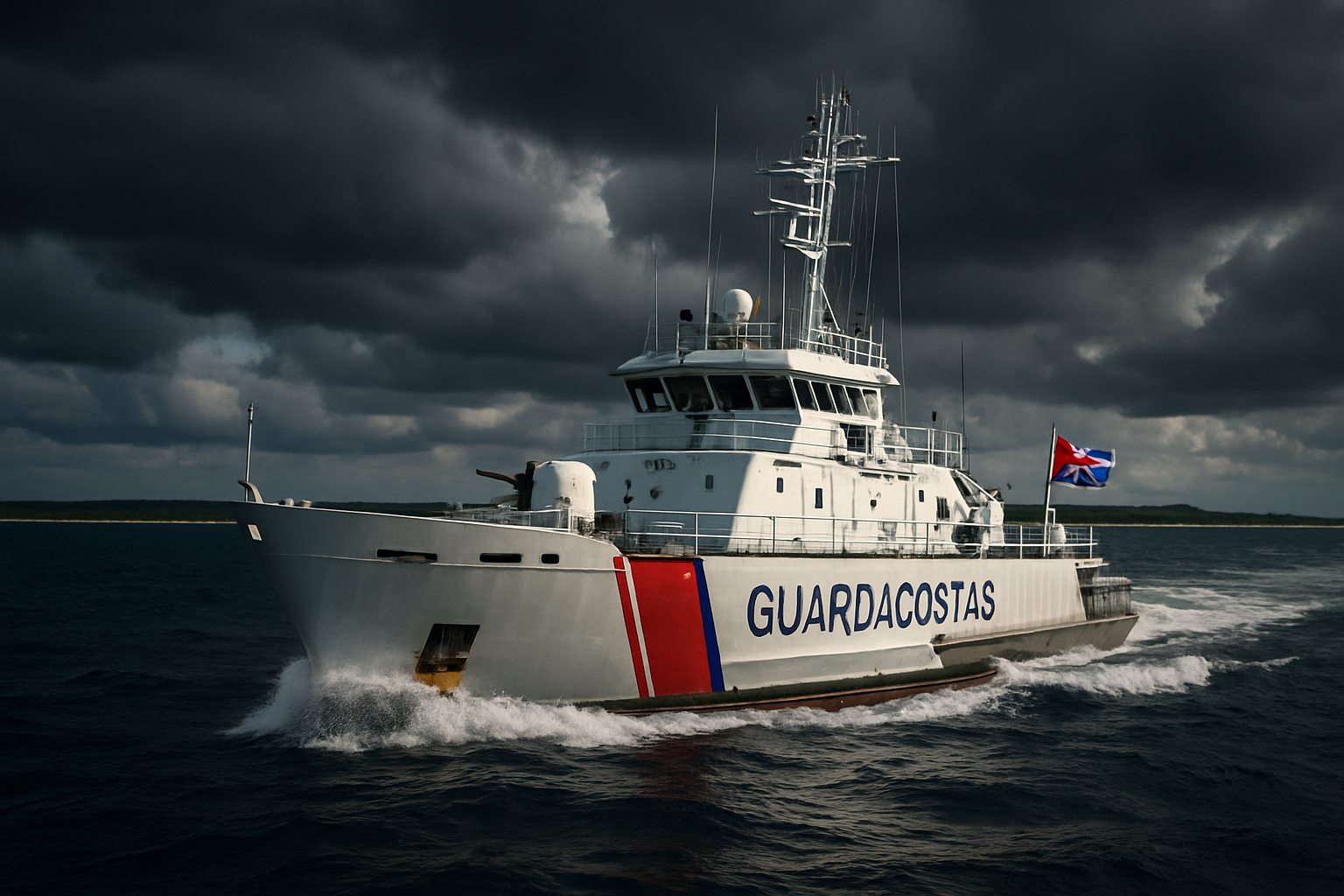
Cuban coast guard forces shot and killed four people aboard a Florida-registered speedboat Wednesday morning after the vessel allegedly opened fire on Cuban border patrol troops in territorial waters, escalating already strained US-Cuba relations and raising serious questions about maritime sovereignty enforcement in the Caribbean.
The deadly confrontation occurred approximately one nautical mile northeast of Cayo Falcones, off Cuba's northern coast in Villa Clara province, according to Cuba's Interior Ministry. Six additional people aboard the speedboat were wounded and are receiving medical attention, while the Cuban vessel commander was also injured in the exchange of gunfire.
Conflicting Accounts of Maritime Confrontation
Cuban authorities maintain that their coast guard vessel approached the Florida-registered speedboat for routine identification procedures when "shots were fired from the boat," prompting Cuban forces to return fire in self-defense. The Interior Ministry described the incident as occurring during an attempt to identify what they characterized as an "illegal" vessel operating in Cuban territorial waters.
"As a coastguard vessel approached to identify the boat, shots were fired from the boat, injuring the commander of the Cuban vessel."
— Cuban Interior Ministry Statement
US authorities have confirmed they are investigating the incident, but it remains unclear whether any US citizens were among those aboard the speedboat. The Cuban government provided the boat's registration number to media outlets, though independent verification of vessel details has proven difficult.
Regional Context of Growing Tensions
This maritime incident occurs against the backdrop of unprecedented Caribbean militarization under the Trump administration's aggressive counter-narcotics campaign, Operation Southern Spear. Since September 2025, US military forces have conducted over 40 attacks in Caribbean and Eastern Pacific waters, resulting in more than 147 deaths as part of what analysts call a systematic shift from traditional law enforcement to direct military targeting of suspected trafficking vessels.
The deadly encounter represents the most serious bilateral incident between Cuba and the United States in recent years, adding a lethal dimension to what has primarily been an economic and diplomatic standoff. The timing is particularly sensitive given Cuba's ongoing energy crisis, which has left 51% of the population experiencing scheduled blackouts and forced the complete shutdown of aviation operations through March 11, 2026.
International Law and Maritime Sovereignty
Maritime law experts are questioning the proportional response requirements in territorial waters enforcement, particularly regarding the use of lethal force against civilian vessels. The incident raises complex questions about maritime sovereignty and the appropriate level of force border security units may employ when vessels allegedly fail to comply with identification procedures.
The confrontation highlights growing tensions in Caribbean waters where legitimate maritime activities increasingly intersect with military and security operations. Fishing communities across the region have expressed mounting concerns about operating in waters where military enforcement zones create risks for civilian vessels.
Diplomatic Fallout and US Response
US Secretary of State Marco Rubio has announced that American authorities will "verify information and draw our own conclusions" regarding the incident. The State Department's measured response suggests efforts to prevent the maritime confrontation from derailing broader regional diplomatic initiatives, including ongoing negotiations with other Caribbean partners.
The incident comes as the Trump administration has been implementing what critics call a "maximum pressure" campaign against Cuba, including threats of 25% tariffs on countries that supply oil to the island. This economic pressure has forced regional allies, including Mexico and Venezuela, to halt energy shipments to Cuba despite humanitarian concerns.
Caribbean Security Architecture Under Strain
The Cuba-US speedboat incident reflects broader challenges facing Caribbean security cooperation. Individual Caribbean nations lack the capacity to address sophisticated international criminal networks while simultaneously protecting civilian populations from increasingly militarized enforcement operations.
Recent maritime incidents have created anxiety among regional fishing communities, with three Saint Lucian fishermen reportedly killed in separate incidents involving US operations in Caribbean waters. The Royal Saint Vincent and the Grenadines Police have issued guidance encouraging fishermen to maintain normal operations while staying in communication with authorities.
Historical Precedent and Regional Implications
This incident marks the most serious maritime confrontation in Cuba-US relations since the 1990s, when similar encounters led to diplomatic crises. Unlike previous decades, however, the current incident occurs within a dramatically transformed Caribbean security environment where military solutions have increasingly replaced traditional diplomatic and law enforcement approaches.
The deadly encounter may set dangerous precedents for territorial enforcement in an era of regional militarization. International observers worry about the normalization of lethal force against civilian vessels based on suspected rather than confirmed criminal activity, particularly as the Caribbean Sea has been effectively transformed into an active military zone.
Humanitarian and Economic Context
The maritime confrontation comes as Cuba faces its worst economic crisis since the 1990s Special Period. The island's complete aviation isolation has severed international connectivity, with major airlines suspending operations and over 25,000 foreign tourists evacuated. Tourism industry collapse, systematic power outages, and healthcare system strain have created what European officials characterize as a "deliberately engineered humanitarian emergency."
The economic siege has eliminated Cuba's capacity for medical evacuations and severed Cuban-American family connections, affecting all 11 million inhabitants. This isolation may contribute to defensive postures by Cuban security forces operating under extraordinary domestic pressure.
Looking Forward: Escalation Risks
The deadly incident raises critical questions about conflict escalation in an increasingly militarized Caribbean. As legitimate maritime activities continue to intersect with security operations, the risk of similar confrontations involving civilian vessels remains high.
Maritime experts emphasize the need for enhanced regional cooperation, updated international protocols for maritime enforcement, and innovative dialogue mechanisms to address both security concerns and civilian protection requirements. The alternative—continued militarization without corresponding diplomatic frameworks—threatens to transform the Caribbean into a zone of persistent low-level conflict.
The incident serves as a stark reminder that human costs inevitably accompany the intersection of political tensions and maritime security operations. As investigations proceed, the international community faces urgent questions about balancing territorial sovereignty enforcement with proportional response principles in an era where civilian activities increasingly overlap with military security operations.