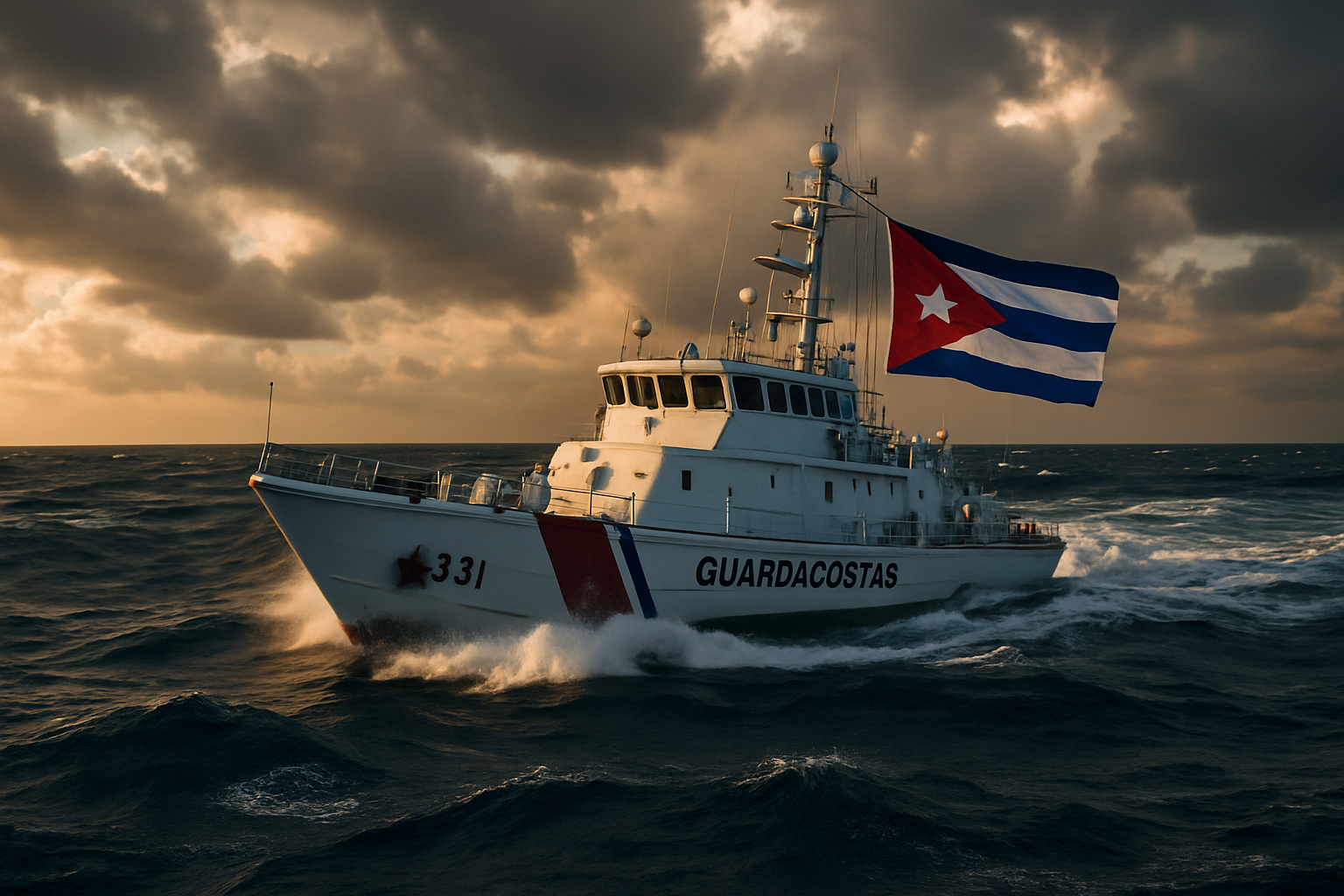
Four Americans aboard a civilian motorboat were shot and killed by Cuban coast guard forces during a confrontation in Cuban territorial waters, according to reports from Cuba's Interior Ministry confirmed by multiple international sources.
The deadly incident occurred when the American vessel allegedly violated Cuban territorial waters and failed to comply with orders to halt from the Cuban Border Guard Troops (Tropa Guardafrontera), according to official Cuban government statements reported by AFP. The coast guard subsequently opened fire on the civilian motorboat, killing all four occupants.
Cuban authorities maintain the vessel refused to obey direct orders to stop when challenged in Cuban territorial waters, prompting the use of lethal force against what they characterized as a non-compliant foreign vessel operating illegally in their maritime jurisdiction.
Incident Details and Official Response
The confrontation reportedly unfolded when Cuban coast guard vessels encountered the American motorboat in Cuban territorial waters. According to statements from Cuba's Interior Ministry, the civilian vessel failed to respond to multiple orders to halt and submit to inspection, leading to the fatal shooting incident.
The Cuban government has framed the incident as a necessary enforcement action against foreign vessels violating their territorial sovereignty. However, the use of lethal force against civilian mariners has drawn international attention amid already heightened tensions between the United States and Cuba.
The identity and purpose of the four Americans aboard the vessel have not been officially confirmed by either Cuban or U.S. authorities. No immediate statement has been released by the U.S. State Department regarding the incident or potential diplomatic response.
Regional Maritime Security Context
This shooting occurs against a backdrop of increased U.S. military operations in Caribbean waters under "Operation Southern Spear," which has resulted in over 140 deaths across 42 attacks since September 2025. The Trump administration's aggressive maritime interdiction campaign has transformed the Caribbean Sea into an active military zone where suspected drug trafficking vessels face lethal force under terrorist organization designation authorities.
The Caribbean region has experienced significant militarization as the U.S. has shifted from traditional law enforcement approaches to direct military targeting of suspected criminal vessels. This has created anxiety among regional fishing communities and legitimate maritime operators who face risks from military enforcement operations.
Recent incidents include a February 13, 2026 U.S. military strike in St. Vincent and the Grenadines territorial waters that resulted in a $500 million cocaine seizure but also raised sovereignty concerns when conducted without prior diplomatic notification to the Caribbean nation.
Cuba's Current Crisis and U.S. Relations
The fatal shooting comes as Cuba faces its worst energy crisis since the 1990s Special Period, with the island experiencing complete aviation isolation through March 11, 2026, due to zero jet fuel availability at all nine major airports. This unprecedented crisis stems from Trump administration economic pressure that forced Venezuela and Mexico to halt oil shipments to Cuba.
Over 25,000 foreign tourists have been evacuated from Cuba, including 21,000 Canadians and 4,000 Russians, as major airlines suspended operations. The tourism industry has collapsed with hotel chains closing facilities, while 51% of Cuba's population faces scheduled blackouts and healthcare systems struggle with reduced capacity.
"This represents the most comprehensive isolation Cuba has experienced since the 1962 Missile Crisis, created through deliberate U.S. policy rather than external circumstances."
— European diplomatic source
The Trump administration's "maximum pressure" campaign has achieved what officials describe as "total asphyxiation" of Cuba's economy through systematic targeting of energy supplies and transportation networks. This has created what international observers characterize as a "deliberately engineered humanitarian emergency."
Maritime Law and Sovereignty Questions
The incident raises complex questions about the use of lethal force against civilian vessels in territorial waters, particularly given the heightened tensions between the two nations. International maritime law generally requires proportional response to territorial violations, with experts questioning whether shooting to kill civilian mariners constitutes appropriate enforcement.
Cuba's assertion of territorial sovereignty comes as the island nation faces unprecedented economic pressure and isolation. The shooting may reflect heightened defensiveness regarding territorial integrity amid what Havana characterizes as an economic siege by the United States.
Maritime law experts note that while nations have rights to enforce their territorial waters, the use of lethal force against civilian vessels typically requires imminent threat justification that may be difficult to establish in this case.
International Implications
The shooting represents a significant escalation in U.S.-Cuba tensions at a time when the Caribbean region faces unprecedented militarization from American counter-narcotics operations. The incident could further complicate already strained bilateral relations and may prompt calls for international investigation.
Regional observers express concern that the combination of Cuba's economic desperation, increased U.S. military presence, and territorial sovereignty pressures creates dangerous conditions for civilian maritime traffic throughout the Caribbean basin.
The international community, including European and Latin American nations, has been monitoring the humanitarian situation in Cuba while calling for dialogue to address the crisis. This shooting incident adds a lethal dimension to what had been primarily an economic and diplomatic standoff.
Looking Forward
As investigations into the shooting continue, the incident highlights the volatile nature of Caribbean maritime operations under current security conditions. The deaths of four American civilians in Cuban territorial waters represent the most serious bilateral incident in recent years and may prompt reassessment of regional maritime policies.
The shooting underscores the human cost of escalating tensions in the Caribbean, where legitimate civilian activities increasingly intersect with military and security operations. Whether this incident leads to diplomatic engagement or further deterioration of relations remains to be determined as both nations navigate the aftermath of this tragic confrontation.
The families of the four Americans killed await official confirmation of the circumstances surrounding their deaths, while the international community watches for potential diplomatic ramifications from this deadly encounter in Cuban territorial waters.