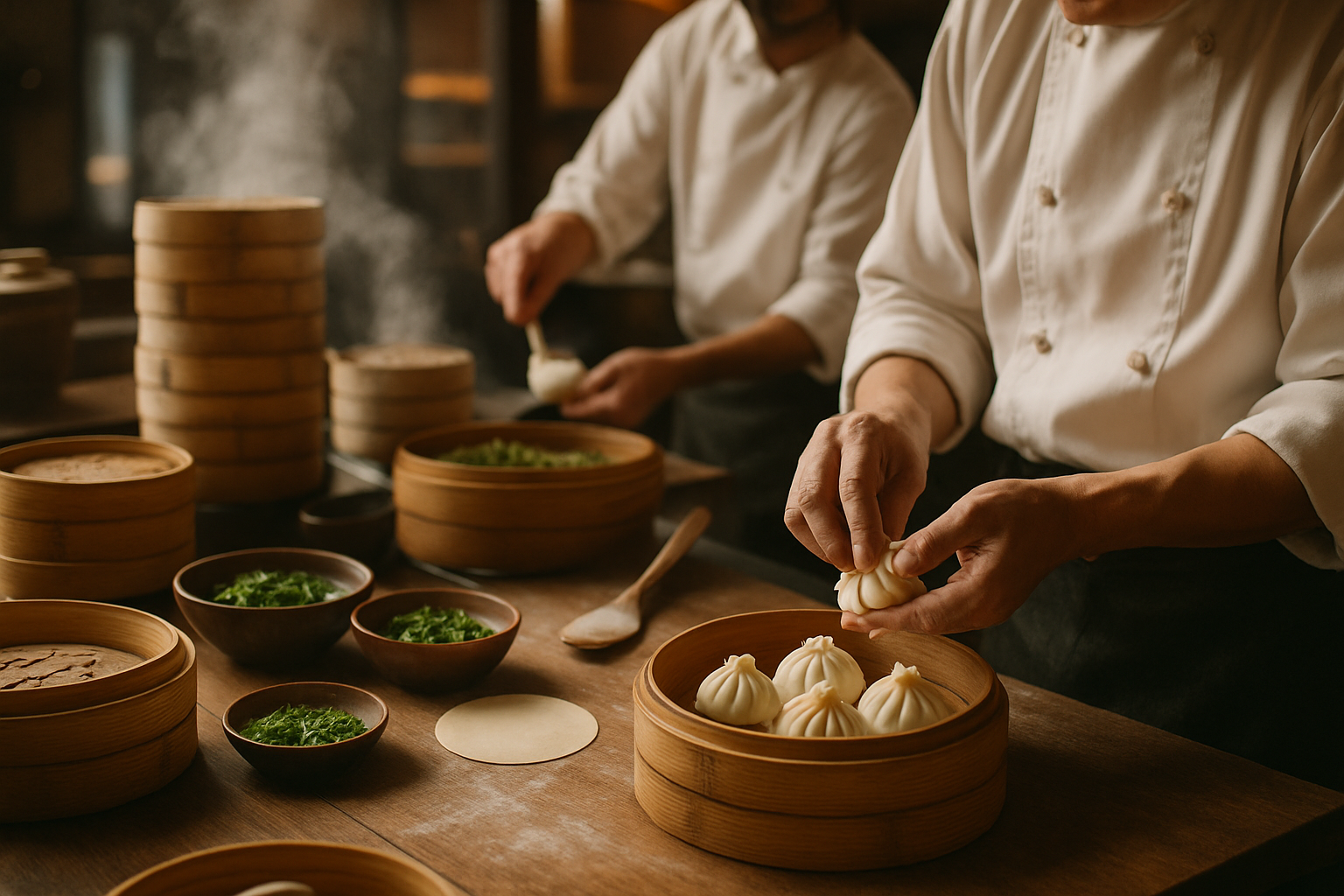
Traditional food culture faces unprecedented challenges as new regulations require transparency in century-old culinary practices, setting off international debates about authenticity, heritage preservation, and modern food standards.
In a move that has sent ripples through the international culinary community, Guangzhou authorities announced new regulations requiring teahouses to explicitly declare whether their dim sum dishes are prepared using traditional handmade methods or modern industrial processes. The regulation, effective May 1, 2026, represents a significant shift in how heritage food practices are monitored and protected.
The Guangzhou Transparency Initiative
The morning tea heritage protection regulation mandates that operators must clearly indicate whether their dim sum dishes are made using traditional on-site methods or through non-traditional means. This groundbreaking approach to culinary transparency has sparked intense debate across the culinary world, particularly in Hong Kong, where similar traditional practices remain largely unregulated.
The regulation comes at a critical time for traditional Chinese cuisine. Recent investigations have revealed that Hong Kong's restaurant industry is experiencing unprecedented transformation, with traditional dim sum establishments closing across the city due to cross-border dining trends and economic pressures. The loss of these institutions represents more than business failures—it signals potential disappearance of irreplaceable culinary heritage that has defined regional identity for generations.
"This regulation forces a conversation we've been avoiding about what authenticity means in modern food service."
— Culinary Heritage Expert
The Banh Mi Cultural Bridge Story
Meanwhile, halfway across the world, another culinary story illustrates the complex relationship between tradition and adaptation. The Vietnamese banh mi sandwich represents a remarkable evolution of cultural fusion—a testament to how traditional food practices can adapt while maintaining their essential character.
Born during French colonial rule, the banh mi emerged as Vietnamese bakers adapted French baguettes by blending wheat with rice flour to create a lighter loaf better suited to the tropical climate. European ingredients like paté and cured meats were combined with local flavors—pickled carrots, daikon, coriander, and fresh chili—creating something entirely new yet authentically Vietnamese.
This sandwich's journey from colonial adaptation to global phenomenon demonstrates how culinary traditions can evolve through cultural exchange without losing their authenticity. Unlike industrial food production, the banh mi's transformation occurred through community adaptation, local ingredient integration, and gradual cultural acceptance.
Global Patterns in Food Culture Preservation
The challenges facing traditional cuisine extend far beyond individual regulations. Comprehensive analysis reveals a global renaissance in food culture preservation, with countries worldwide implementing strategies to protect culinary heritage while adapting to contemporary realities.
Singapore's Museum of Food initiative, launched by Emily Yeo and Yeo Min, exemplifies this trend. Their discovery that many Singaporeans could prepare Western desserts but couldn't understand traditional recipes like ang ku kueh (glutinous rice cakes) led to a comprehensive cultural preservation effort combining Chinese, Malay, Indian, and Peranakan traditions.
Similar preservation efforts are emerging worldwide: Nicaragua's gastronomic festivals celebrating traditional dishes, Croatia's protection of Istrian Soup as intangible cultural heritage, and Bulgaria's revival of honey cheese buhti pastries. These initiatives demonstrate growing recognition that food culture constitutes essential infrastructure for human flourishing and community identity.
Technology Meets Tradition
Modern technology increasingly serves as an ally rather than a threat to traditional food practices. Digital platforms enable cultural food practice preservation through recipe sharing, ingredient sourcing guidance, and virtual community participation. Social media serves dual functions: cultural knowledge transfer and food safety enforcement.
The most successful approaches enhance rather than replace traditional practices. Modern equipment enables authentic commercial preparation previously impossible at scale, while digital marketing creates global reach for authentic local establishments. This synthesis avoids the "wellness paradox" where technological solutions create inequality rather than improving accessibility for diverse populations.

Economic and Cultural Implications
The economic implications of culinary heritage preservation extend far beyond individual restaurants. Cultural authenticity creates sustainable competitive advantages, with consumers increasingly paying premiums for authentic, health-conscious, culturally meaningful experiences over standardized offerings.
Countries implementing prevention-focused food policies that integrate traditional dietary wisdom report superior cost-effectiveness through decreased healthcare interventions and improved population outcomes. The Mediterranean diet's documented 25% stroke risk reduction over 20 years exemplifies how traditional eating patterns provide measurable health benefits alongside cultural value.
Quebec's whisky revival following U.S. tariffs demonstrates how cultural authenticity functions as economic resilience. Local distillers experienced unprecedented demand as consumers shifted toward authentic, locally-sourced products over industrial alternatives, creating sustainable rural employment and export potential.
Climate Change and Food Security
Climate adaptation adds urgency to food culture preservation efforts. Traditional preservation methods and diverse ingredient usage often prove more resilient than industrial systems during environmental disruption. Indigenous and traditional food knowledge provides templates for climate-responsive agriculture and food processing.
The current climate crisis—with 2026 marking consecutive months of unprecedented temperature increases—fundamentally alters growing conditions, requiring rapid evolution from historical patterns to climate-responsive approaches. Traditional dietary wisdom often proves more adaptable than industrial food systems designed for stable environmental conditions.
Regulatory Challenges and Solutions
The Guangzhou regulation represents broader regulatory challenges facing food culture preservation. Enhanced food safety requirements often conflict with traditional preparation methods, creating tensions between cultural authenticity and public health protection.
Successful frameworks balance safety requirements with cultural sensitivity. Malta's MICHELIN Guide expansion to 48 restaurants demonstrates how authentic cultural preservation combines with strategic innovation. The key lies in creating regulations that protect public health while providing pathways for traditional practices to continue legally.
International Cooperation and Knowledge Sharing
Food culture preservation increasingly requires international cooperation. Peer-to-peer knowledge sharing networks enable communities to learn from successful preservation efforts elsewhere while adapting strategies to local contexts.
Brazil's first Michelin star in Portugal, Peru's ceviche excellence gaining international recognition, and Nigeria's gastronomic festivals represent successful cultural diplomacy through authentic food experiences. These initiatives create economic opportunities while strengthening cultural identity and international relationships.
Looking Forward: Sustainable Culinary Futures
The convergence of traditional dietary wisdom with modern nutritional science offers unprecedented opportunities for creating food systems that honor cultural heritage while serving contemporary needs. Scientific validation of traditional practices—from coffee's cognitive benefits to fermentation's health advantages—provides evidence-based support for cultural food preservation.
Success factors for sustainable culinary futures include: authentic cultural expression, strategic technology integration, community engagement, international collaboration, and consistent quality standards. The most promising approaches treat technology as sophisticated amplification tools serving specific cultural goals rather than wholesale replacement of traditional knowledge.
As the global food landscape continues evolving, the challenge lies not in choosing between tradition and innovation, but in creating thoughtful syntheses that preserve cultural authenticity while embracing beneficial advances. The window for building resilient, equitable food systems that honor heritage while meeting contemporary challenges is narrowing, making current preservation efforts critically important for future generations.
The Guangzhou regulation may seem like a simple transparency requirement, but it represents a watershed moment in how societies balance cultural preservation with modern standards. The outcome of this experiment—and similar efforts worldwide—will likely determine whether traditional food cultures can thrive in the 21st century or gradually disappear under the pressure of industrialization and regulation.