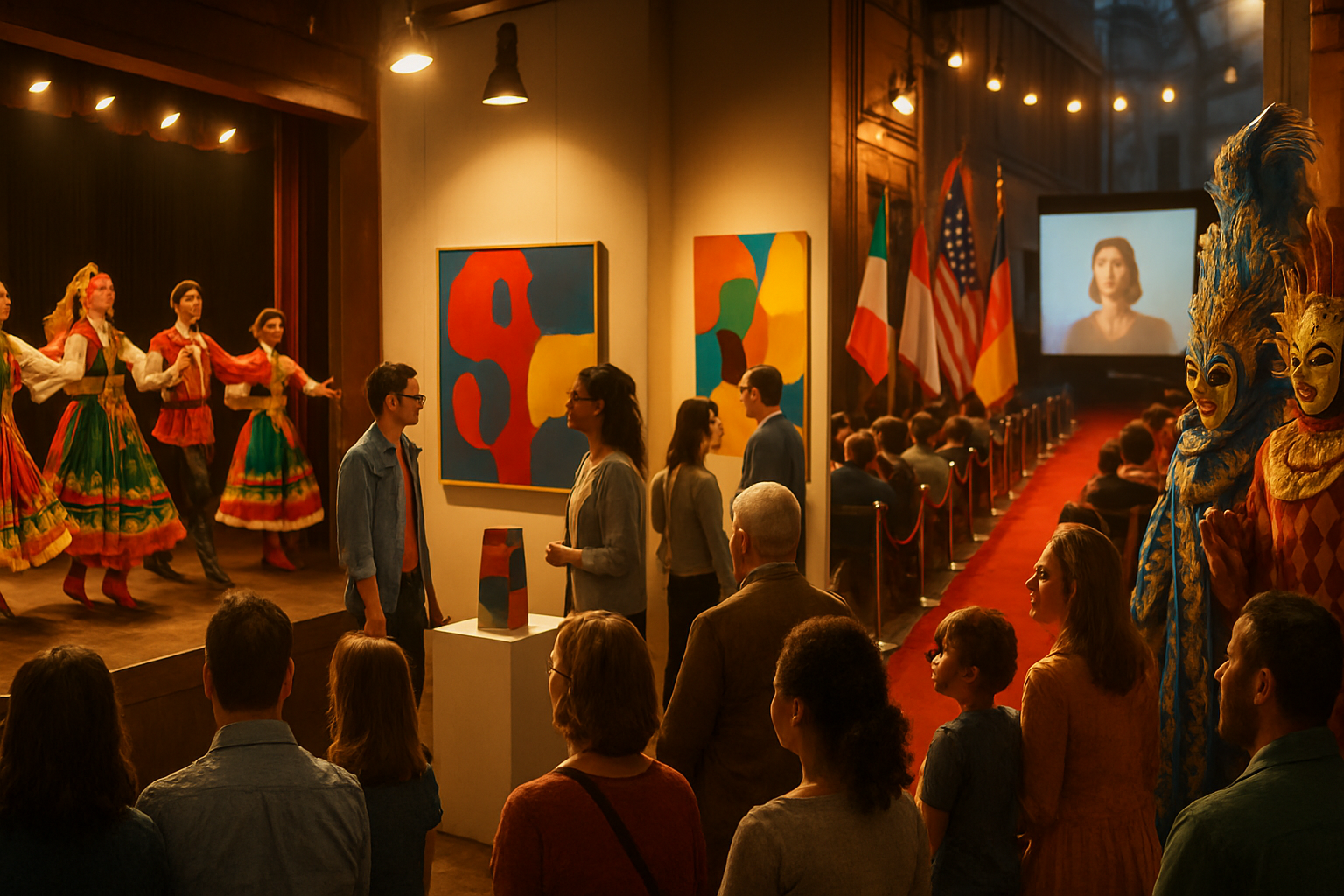
A remarkable cultural renaissance is sweeping across continents as museums, theaters, and cultural institutions worldwide launch innovative programming that bridges traditional heritage with contemporary artistic expression, marking February 2026 as a watershed moment for international cultural cooperation and creative excellence.
From the intimate museums of Andorra to the grand stages of Austria, from Estonia's cutting-edge documentary offerings to Malta's diplomatic cultural showcases, this month has witnessed an extraordinary convergence of artistic initiatives that demonstrates the vital role of cultural institutions in fostering community engagement, international understanding, and creative innovation.
Museum Innovation and Cultural Diplomacy
The Museu Carmen Thyssen Andorra exemplifies the sophisticated approach modern cultural institutions are taking to community engagement. The museum's latest edition of "L'Art fet Joia" ("Art Made Jewel") celebrates International Women's Day by focusing on the muses of the Col·lecció Carmen Thyssen-Bornemisza, created in collaboration with jeweller Silvia Hernández from the brand Shiori. This initiative demonstrates how museums are successfully integrating contemporary craftsmanship with classical art collections to create meaningful cultural dialogues.
Similarly, Malta's strategic cultural diplomacy through its carnival exhibition at the European Parliament in Brussels represents a masterclass in soft power projection. Minister for Culture Owen Bonnici, alongside Member of the European Parliament Alex Agius Saliba, launched "Malta's Carnival – Behind the Mask," an exhibition featuring original carnival float elements, elaborate costumes, archival material, and an immersive virtual reality experience. The exhibition highlights how Maltese Carnival, with roots dating back to the 16th century, serves as one of the island's most vibrant cultural expressions.
"Carnival is a living expression of our cultural identity that transcends time and connects generations through shared celebration and artistic creativity."
— Owen Bonnici, Minister for Culture, Malta
Theater and Performance Arts Renaissance
The theatrical landscape across Europe is experiencing a remarkable revival of both classical and contemporary works. In Austria, the Haydnbibliothek presents "eine theatrale Anleitung zur Selbstoptimierung auf Teufel komm raus nach Johann Wolfgang von Goethe" - a theatrical guide to self-optimization based on Goethe's works. This March 6th performance at 19:00 represents the growing trend of reimagining classical literature through contemporary theatrical frameworks.
Estonia's cultural sector continues to demonstrate its commitment to both international and domestic artistic expression. Tartu Elektriteater's celebration of its 15th anniversary on March 1st with a year-long film festival featuring employees' favorite films exemplifies how cultural institutions are personalizing programming to create authentic connections between staff, artists, and audiences. This approach transforms cultural venues from mere presentation spaces into genuine community gathering points.
Documentary and Film Excellence
The documentary film sector is experiencing unprecedented international recognition and distribution. Mstyslav Chernov's "2,000 Meters to Andriivka," now streaming on ERR's Jupiter service, follows a Ukrainian platoon's mission to traverse heavily fortified terrain to liberate a strategic village from Russian occupation. The film's availability on digital platforms demonstrates how streaming services are becoming crucial vehicles for important historical and political narratives to reach global audiences.
This trend toward accessible, meaningful documentary content reflects a broader cultural shift where audiences increasingly seek authentic, substantive content that addresses real-world issues while maintaining high production values and compelling storytelling techniques.
Celebrity and Cultural Impact
The intersection of celebrity culture and meaningful artistic expression continues to evolve, as demonstrated by recent developments in the Czech Republic. Celebrated artist and cimrmanologist Zdeněk Svěrák approaches his 90th birthday on March 28th with Czech Television planning to air twenty programs across multiple channels in his honor. Svěrák's career spanning drama, screenwriting, songwriting, acting, and writing has shaped Czech cultural life since the 1960s, earning him numerous accolades including the prestigious Řád bílého lva (Order of the White Lion).
International Cultural Exchange and Collaboration
The success of these diverse cultural initiatives reflects several key trends that are reshaping the global cultural landscape. First, technology is being employed as an enhancement tool rather than a replacement for traditional artistic expression. Virtual reality experiences at Malta's carnival exhibition and digital streaming platforms for Estonian documentaries demonstrate how cultural institutions are leveraging technology to expand accessibility while preserving authenticity.
Second, international cooperation is flourishing through strategic partnerships that respect local cultural identity while fostering global understanding. Malta's exhibition in Brussels, Estonia's international film offerings, and Andorra's collaborative jewelry-art project all exemplify this balanced approach to cultural diplomacy.
Economic and Social Impact
These cultural initiatives are generating substantial economic multiplier effects through tourism, educational partnerships, and enhanced international recognition. The comprehensive programming approach - combining heritage preservation, contemporary innovation, and community engagement - creates sustainable funding models that serve multiple societal functions simultaneously.
Cultural events are increasingly recognized as essential infrastructure equivalent to transportation, communication, and healthcare systems. They provide spaces for meaningful human connection, celebrate diversity while maintaining local authenticity, and offer platforms for intergenerational dialogue and learning.
Challenges and Adaptive Strategies
Despite remarkable success, cultural institutions face ongoing challenges including climate pressures on outdoor programming, economic constraints affecting youth participation, and the need to balance global visibility with local authenticity. However, the February 2026 developments demonstrate sophisticated adaptive strategies that address these concerns through community leadership, international resource sharing, and innovative programming approaches.
The emphasis on authentic cultural expression over homogenized global content suggests that audiences worldwide are seeking genuine cultural experiences that honor traditional practices while embracing contemporary presentation methods and technological capabilities.
Future Implications
The cultural renaissance documented across these diverse initiatives establishes important precedents for 21st-century cultural stewardship. The successful synthesis of tradition and innovation, local authenticity and global cooperation, economic viability and cultural integrity provides practical templates for cultural development worldwide.
As communities increasingly recognize culture as strategic infrastructure vital to human flourishing, the February 2026 cultural developments offer evidence that thoughtful, community-centered programming can create lasting positive impact while honoring the past and embracing future possibilities.
The coordination of cultural activities across multiple countries - from small European nations to diverse communities worldwide - suggests an emerging understanding that cultural cooperation can serve as a bridge between communities, fostering mutual respect, understanding, and shared celebration of human creativity and artistic achievement.
This global cultural renaissance represents more than entertainment or preservation; it demonstrates humanity's capacity for creating meaning, building connections, and celebrating diversity while maintaining the distinctive local identities that make each cultural expression unique and valuable to the broader human experience.