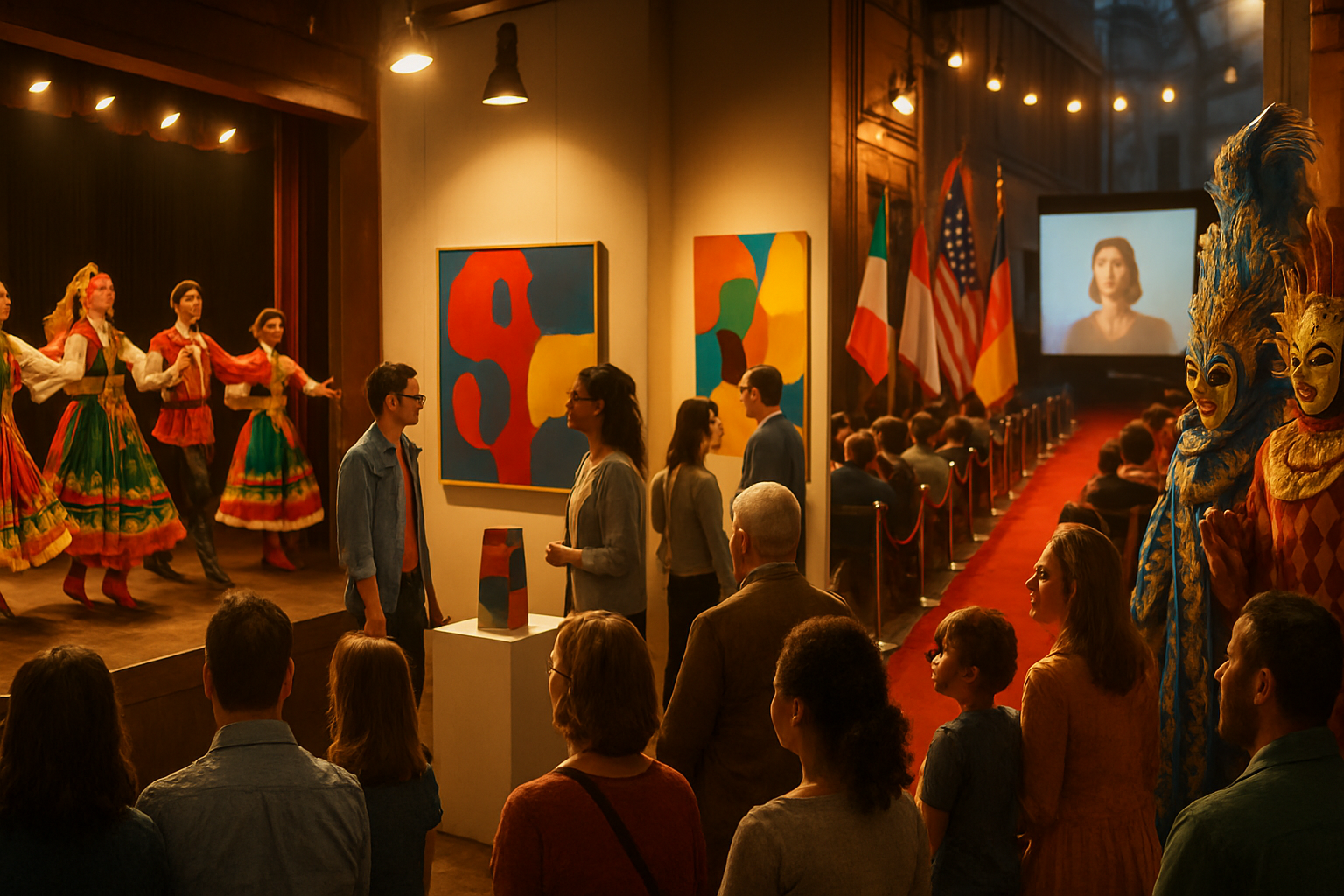
February 2026 has witnessed an extraordinary renaissance of cultural celebrations and artistic expression across six continents, with traditional carnivals, international film festivals, and community arts events drawing millions of participants and reaffirming the vital role of culture in human connection and identity.
From the sacred mountains of Bolivia to the cinema palaces of Berlin, from the Netflix production studios featuring Latin American storytelling to the diplomatic stages of Budapest, this month has showcased an unprecedented coordination of cultural preservation, artistic innovation, and community celebration that transcends borders and languages.
Latin American Carnival Traditions Reach New Heights
Bolivia's Carnival de Oruro has emerged as a symbol of national unity and cultural pride, with President Rodrigo Paz declaring it "the maximum expression of faith, cultural diversity, and national unity" during this year's Saturday Pilgrimage. The celebration honors the Virgin de la Candelaria and represents Bolivia's determination to showcase its indigenous identity on the global stage.
"Our diversity and our capacity to unite through culture is our greatest strength," President Paz emphasized to journalists, highlighting how the carnival allows Bolivia to "show itself to the world" while "defending culture as growth, not isolation."
In La Paz, the children's carnival parade (Corso Infantil) attracted an estimated 150,000 participants, featuring 188 registered groups in what Mayor Iván Arias described as a massive family celebration extending from Plaza San Francisco to Plaza del Estudiante. This grassroots participation demonstrates how cultural traditions continue to thrive through intergenerational engagement.
Colombia's Barranquilla Carnival 2026 has set new records with 73 folkloric groups, 18 floats, 59 musical trailers, and approximately 14,000 dancers participating in the emblematic Battle of Flowers parade. The celebration represents one of Latin America's most significant cultural gatherings, combining traditional expressions with contemporary artistic innovation.
European Film Renaissance Tackles Global Themes
The 76th Berlin International Film Festival has opened with unprecedented focus on global storytelling and cultural diversity. Afghan filmmaker Shahrbanoo Sadat's "Good Men Don't Exist" premiered as the opening film, marking a significant moment for refugee artists and international cinema. The film, set against the backdrop of Kabul before and during the Taliban's return, demonstrates cinema's power to preserve cultural narratives during political upheaval.
Sadat, who has lived in Hamburg since 2021, created a romantic drama that tackles complex political realities through accessible storytelling, showing how artists in exile continue to tell the stories of their homelands. The festival's commitment to diverse voices was further demonstrated by Malaysian actress Michelle Yeoh receiving the Honorary Golden Bear, continuing the event's recognition of Asian talent in international cinema.
Romania's coverage of the Berlinale highlighted how filmmakers are using "inventiveness to tell stories from countries where they cannot shoot films," addressing the challenges faced by artists working under restrictive regimes or in conflict zones. This reality underscores cinema's evolving role as both art form and historical documentation.
Cultural Diplomacy Through Arts Exchange
Oman's cultural outreach has expanded significantly with the Oman Film Society organizing an Omani Film Night in Budapest, in cooperation with the Embassy of the Sultanate of Oman in Hungary. Ambassador Malallah bin Mahmoud al Balushi emphasized the importance of "opening new channels for creative exchange and cultural cooperation," noting that cinema plays a key role in fostering "dialogue, understanding, and tolerance among peoples."
This initiative exemplifies how smaller nations are using cultural programming to build international relationships and showcase their heritage to global audiences. The event, held at Hungary's National Film Theatre, demonstrates the growing recognition that cultural diplomacy serves as a vital complement to traditional diplomatic relations.
Netflix Expands Latin American Storytelling
The streaming revolution continues to democratize global storytelling, with Argentina's "En el Barro 2" representing the ongoing success of Latin American content on international platforms. The prison drama's return to Netflix includes new character developments and a return to La Quebrada setting, with casting additions that demonstrate the platform's commitment to authentic regional storytelling.
This trend reflects the broader recognition that authentic cultural content resonates with global audiences when presented with artistic excellence and genuine cultural insight. Latin American productions are increasingly seen not as niche programming but as universal stories told through specific cultural lenses.
Economic Impact of Cultural Celebrations
The economic dimensions of these cultural events cannot be understated. Germany's analysis of Rio de Janeiro's carnival highlighted how the festival "drives Brazil's economy enormously," with many residents working year-round toward the celebration that "finances their lives." This model demonstrates how cultural traditions can serve as sustainable economic engines for entire communities.
The ripple effects extend beyond direct tourism revenue to include costume makers, musicians, venue operators, catering services, and media production. Cultural celebrations have proven to be remarkably resilient economic activities that strengthen local communities while attracting international attention and investment.
Technology Enhancing Traditional Arts
The 2026 cultural renaissance has been characterized by sophisticated integration of technology with traditional artistic expression. Digital platforms enable global sharing of local celebrations, while social media creates international communities around cultural events. However, the most successful initiatives use technology as an enhancement tool rather than a replacement for authentic cultural experience.
From livestreaming carnival parades to virtual film festival screenings, technology has expanded access without diminishing the importance of in-person community participation. This balance suggests a mature understanding of how digital tools can serve cultural preservation and promotion goals.
Challenges and Resilience in Cultural Expression
Despite political pressures, economic constraints, and climate challenges, cultural communities worldwide have demonstrated remarkable resilience in maintaining and adapting their traditions. The success of events ranging from intimate film screenings to massive carnival parades shows that human creativity and community bonds remain powerful forces for social cohesion.
The diversity of approaches—from Bolivia's state-supported carnival celebrations to Budapest's embassy-organized film nights—demonstrates that effective cultural programming can emerge from various organizational models and funding sources. The key common factor appears to be authentic community engagement combined with professional execution.
Looking Forward: A Template for Cultural Renaissance
February 2026's cultural achievements provide a template for sustainable cultural development that balances tradition with innovation, local authenticity with global appeal, and artistic excellence with community access. The success stories span different scales and models, from major international festivals to intimate community celebrations.
The events documented this month represent more than entertainment or even cultural preservation—they demonstrate humanity's capacity for creating meaning, building connections, and celebrating diversity while maintaining local identity. These celebrations serve multiple functions: heritage preservation, community bonding, economic development, and international dialogue.
As communities worldwide face challenges from climate change to economic uncertainty, the February 2026 cultural renaissance offers evidence that investment in arts and culture represents not just aesthetic choice but practical strategy for building resilient, connected, and thriving societies.
The global cultural renaissance of February 2026 will likely be remembered as a turning point when communities worldwide recognized culture as essential infrastructure—as vital to human flourishing as transportation, communication, or healthcare systems. The success of these diverse initiatives provides hope and practical models for cultural development that honors the past while embracing the future.