A remarkable cultural renaissance is sweeping across the globe as artists, archaeologists, and cultural institutions demonstrate unprecedented creativity in preserving heritage while fostering international collaboration and artistic innovation.
From Brazil's National Museum rising from the ashes of tragedy to Nordic concert halls echoing with international harmonies, the world of cultural heritage and arts is experiencing a profound transformation that blends traditional preservation with contemporary expression.
Phoenix Rising: Art Reborn from Memory
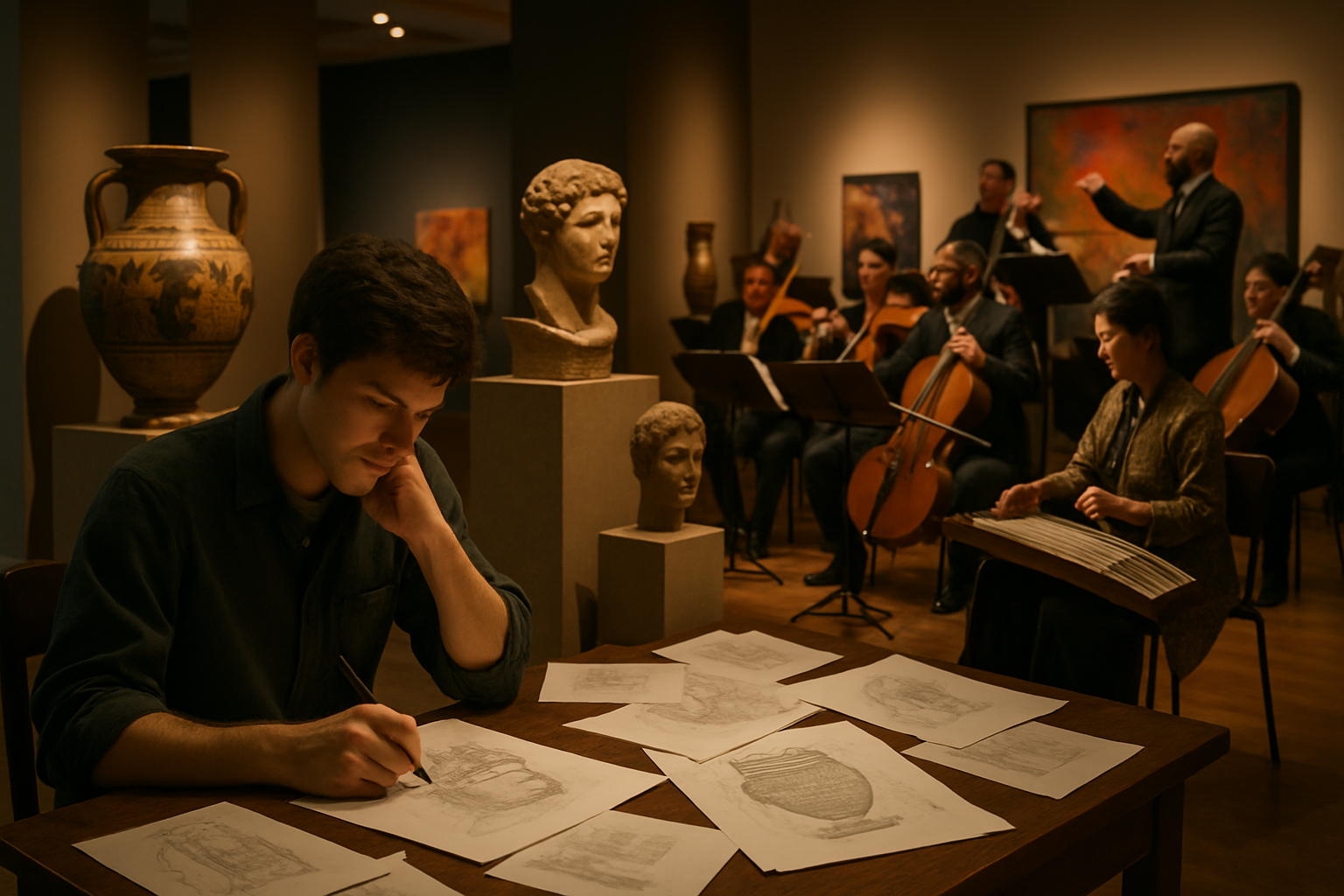
In Rio de Janeiro, a extraordinary project is breathing new life into cultural treasures lost to the devastating 2018 fire at the National Museum. Angela Rabello, the museum's most senior archaeologist, has embarked on a unique artistic collaboration with photographer Livia Melzi, recreating thousands of artifacts from memory through detailed drawings.
This innovative approach to cultural preservation represents more than just documentation—it embodies the resilience of human memory and the power of artistic interpretation to maintain connections with lost heritage. Rabello's meticulous recreations serve as both historical records and artistic expressions, demonstrating how contemporary methodologies can breathe new life into cultural preservation efforts.
"These drawings represent not just lost objects, but the living memory of our cultural heritage and the determination to preserve it for future generations."
— Cultural Heritage Specialist
The Rio project exemplifies a broader global trend where traditional preservation methods are being enhanced by creative approaches that engage communities and artists in meaningful partnerships. This synthesis of memory, art, and technology represents a mature evolution in heritage preservation practices.
Nordic Harmonies: International Musical Bridges
Meanwhile, in the prestigious halls of Oslo University, decorated with Edvard Munch's monumental paintings, an international musical collaboration is preparing to showcase the power of cross-cultural artistic exchange. The Vilnius University Academic Choir "Gaudeamus" will perform alongside the Oslo University Choir, presenting Ferenc Liszt's liturgical oratorio "Via Crucis" alongside Baltic and Nordic choral music.
This March 21st concert, scheduled for 5 PM in the historically significant venue, represents the continuing celebration of M.K. Čiurlionis's jubilee year—honoring the Lithuanian composer, artist, and cultural pioneer whose work bridged musical and visual arts. The performance demonstrates how cultural heritage can serve as a foundation for contemporary international cooperation.
The collaboration between Lithuanian and Norwegian academic choirs illustrates the sophisticated cultural diplomacy emerging across Europe, where shared musical traditions create platforms for deeper cultural understanding. These partnerships extend beyond mere performance to encompass educational exchanges and long-term artistic relationships.
Contemporary Recognition: Innovation Meets Tradition
Adding to this cultural renaissance, the prestigious Ibsen Prize has been awarded to South Korean multidisciplinary artist Jaha Koo, recognizing his contributions as a stage artist, composer, and video creator. The 2.5 million kroner prize celebrates what the jury describes as "deeply human theater," acknowledging Koo's ability to address universal themes through innovative artistic approaches.
Koo's recognition represents a significant moment in international arts acknowledgment, demonstrating how contemporary artists are successfully building bridges between traditional theatrical forms and modern multimedia expression. His work exemplifies the global trend toward interdisciplinary arts that honor cultural foundations while exploring new forms of creative expression.
Global Renaissance Patterns
These three developments—memory-based recreation in Brazil, international choral collaboration in Norway, and multimedia theatrical recognition—reflect broader patterns identified in the ongoing global cultural renaissance that began in February 2026. Success factors consistently include:
- Technology Enhancement: Digital tools and modern techniques amplify rather than replace traditional cultural expressions
- International Cooperation: Cross-border partnerships create opportunities for resource sharing while respecting local authenticity
- Community Engagement: Cultural initiatives prioritize meaningful community involvement over elite consumption
- Economic Viability: Cultural tourism and educational partnerships create sustainable funding models
The Memory-Technology Synthesis
The Rio museum project particularly exemplifies how human memory and artistic interpretation can serve as powerful preservation tools when combined with contemporary documentation techniques. Angela Rabello's drawings don't merely record lost objects—they capture the emotional and intellectual relationships between cultural custodians and their heritage.
This approach addresses one of the fundamental challenges in cultural preservation: how to maintain authentic connections to heritage when physical artifacts are lost or threatened. By engaging human memory as both source material and creative medium, the project demonstrates innovative pathways for cultural continuity.
Cultural Diplomacy Through Arts
The Oslo concert represents the sophisticated role that arts programming now plays in international relations. The Lithuanian-Norwegian collaboration operates on multiple levels: celebrating shared musical traditions, honoring individual cultural heroes like Čiurlionis, and creating platforms for ongoing cultural exchange.
These musical partnerships reflect a broader understanding that cultural collaboration can strengthen diplomatic relationships while preserving the distinctive characteristics that make each tradition valuable. The success of such collaborations often lies in their ability to find common ground while celebrating differences.
Innovation Receiving Recognition
Jaha Koo's Ibsen Prize recognition signals important shifts in how cultural institutions evaluate and celebrate contemporary artistic achievement. By honoring work that bridges multiple disciplines and cultural contexts, the prize acknowledges the evolving nature of artistic expression in an interconnected world.
The substantial financial recognition—2.5 million kroner—also demonstrates serious institutional commitment to supporting innovative cultural work. This level of investment in contemporary artists reflects growing recognition that cultural development requires sustained support for creative risk-taking and artistic exploration.
Economic and Social Impact
Beyond their artistic significance, these initiatives generate substantial economic and social benefits. Cultural projects like the Rio drawings attract international media attention and scholarly interest, positioning Brazil as a leader in innovative preservation practices. The Oslo concert contributes to cultural tourism while strengthening educational partnerships between institutions.
Koo's recognition enhances the international profile of contemporary theater while demonstrating the economic value of cultural investment. These multiplier effects—extending from immediate programming to long-term cultural positioning—illustrate why communities worldwide are increasingly treating culture as strategic infrastructure equivalent to transportation or healthcare systems.
Challenges and Adaptations
The current cultural renaissance occurs amid significant global challenges including climate change threats to cultural sites, economic pressures affecting youth participation in traditional arts, and competition from digital entertainment platforms. However, successful initiatives demonstrate adaptive strategies that respect traditions while embracing helpful innovations.
The integration of memory-based recreation, international collaboration, and multimedia approaches represents mature responses to these challenges. Rather than viewing technological and social changes as threats to cultural preservation, these projects demonstrate how cultural institutions can evolve while maintaining their essential functions.
Future Implications
These developments establish important precedents for 21st-century cultural stewardship. The success of projects spanning Brazil, Lithuania, Norway, and South Korea provides practical templates that can be adapted to diverse cultural and economic circumstances worldwide.
The evidence suggests that authentic cultural expression can achieve global appeal while maintaining local significance, creating sustainable models that serve community needs while achieving international recognition. This balance represents a fundamental shift from viewing cultural preservation as costly heritage maintenance toward understanding culture as essential infrastructure for community development and human flourishing.
As communities worldwide continue to invest in authentic cultural programming with thoughtful technology integration and international cooperation, the current renaissance appears to be establishing lasting foundations for cultural vitality in an interconnected yet diverse world. The synthesis of tradition and innovation demonstrated in Rio, Oslo, and Seoul offers hope that humanity's remarkable capacity for cultural resilience and creative adaptation will continue to enrich global civilization while honoring the distinctive traditions that give communities their unique identities.