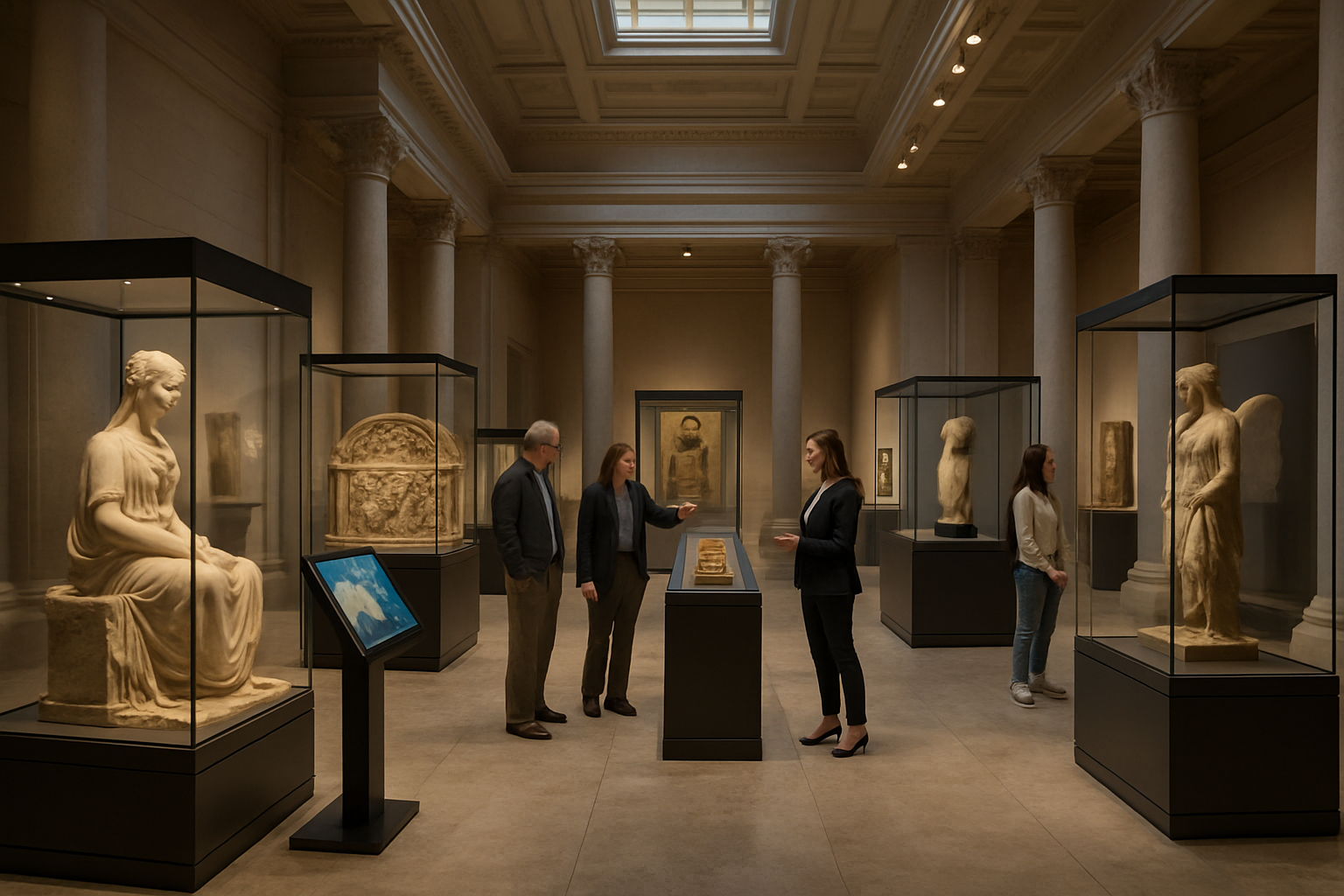
Cultural institutions across Austria, Azerbaijan, and Moldova are launching ambitious new exhibitions and preservation initiatives this February, demonstrating a coordinated renaissance in international arts programming that emphasizes both heritage preservation and contemporary cultural diplomacy.
The Belvedere Museum in Vienna has announced "Ferdinand Georg Waldmüller: Nach der Natur gemalt" (Painted from Nature), running from February 27 through June 14, 2026. This groundbreaking exhibition marks the first comprehensive focus on nature representation in Waldmüller's extensive body of work, positioning the Austrian master within contemporary discussions of environmental consciousness and artistic observation.
Azerbaijan's Cultural Memory Projects
Azerbaijan's National Art Museum has undertaken significant commemorative programming with dual exhibitions addressing both historical memory and artistic legacy. The museum recently hosted "The Khojaly Genocide in Visual Arts," a lecture series marking the 34th anniversary of the Khojaly tragedy, demonstrating how contemporary cultural institutions are integrating historical education with visual arts programming.
Simultaneously, the International Mugham Center in Baku presented "Memory #4," a concert dedicated to composer Gara Garayev, illustrating Azerbaijan's commitment to preserving and celebrating its musical heritage through live performance programming that bridges traditional and contemporary expression.
"These initiatives represent the evolution of cultural institutions from static repositories to dynamic community centers that actively engage with historical memory and contemporary artistic creation."
— Cultural Heritage Expert, European Museums Association
Moldova's Historic Venice Biennale Debut
The Republic of Moldova achieved a significant cultural milestone with its first-ever participation in the 61st International Art Exhibition – La Biennale di Venezia. The pavilion presents "In the One Thousand and Second Night" by artist Pavel Braila, curated by Adelina Luft, with support from the Ministry of Culture confirming the nation's emergence on the international contemporary art stage.
This debut represents more than artistic achievement; it demonstrates Moldova's strategic positioning within European cultural networks and its commitment to contemporary artistic dialogue at the highest international levels. The Ministry of Culture's backing signals governmental recognition of cultural diplomacy's importance in strengthening international relationships.
Technology and Tradition Synthesis
These developments occur within the broader context of what international observers are documenting as the "February 2026 Cultural Renaissance" – an unprecedented period of coordinated global cultural activity. Success factors identified across multiple countries include technology serving as enhancement rather than replacement for traditional cultural practices, international cooperation that respects local authenticity while fostering global understanding, and sustainable economic models through cultural tourism and educational partnerships.
Museums and cultural institutions are demonstrating sophisticated approaches to programming that combine heritage preservation with contemporary innovation. Digital documentation techniques, climate-controlled environments, and interactive technologies are being integrated thoughtfully to extend access while preserving authenticity.
Economic and Diplomatic Impact
Cultural initiatives are generating significant economic multiplier effects through tourism development, international media attention, and enhanced diplomatic relationships. Austria's Waldmüller exhibition positions the Belvedere as a destination for environmental art scholarship, while Azerbaijan's commemorative programming strengthens its role as a cultural bridge between Eastern and Western traditions.
Moldova's Venice Biennale participation creates lasting infrastructure benefits through enhanced international recognition, artistic exchange opportunities, and positioning as an emerging cultural destination within European tourism circuits.
Community Engagement and Cultural Access
Modern cultural programming increasingly emphasizes community engagement over elite consumption. These institutions are developing programming that serves multiple functions: heritage preservation, community education, international diplomacy, and economic development. The success of these initiatives depends on authentic community involvement and recognition of culture as essential infrastructure equivalent to transportation, communication, and healthcare.
Educational partnerships extending beyond immediate exhibitions create sustainable long-term benefits. Museum-school collaborations, artist residency programs, and community workshops ensure that major cultural initiatives generate lasting positive impacts rather than temporary tourist attractions.
International Cooperation Models
The coordination of these initiatives demonstrates emerging templates for international cultural cooperation. Austria's scholarly approach to nature representation, Azerbaijan's integration of historical memory with contemporary arts programming, and Moldova's strategic international positioning provide complementary models for cultural development that honor local traditions while embracing global opportunities.
Academic partnerships, shared curatorial expertise, and coordinated marketing efforts are creating efficiency gains that allow smaller nations to compete effectively with established cultural centers. Digital platforms enable global sharing of exhibitions and educational resources while maintaining source community ownership.
Future Implications
These February 2026 developments establish precedents for 21st-century cultural stewardship that successfully balance innovation with tradition, local authenticity with international cooperation, and economic viability with cultural integrity. The success across varied contexts – from Vienna's established art scene to Moldova's Venice debut – provides practical templates adaptable to specific cultural and economic circumstances.
Climate change adaptation, funding sustainability, and technological integration challenges are being addressed through innovative programming approaches, international resource sharing, and community-centered development strategies. The evidence suggests that thoughtful, community-engaged cultural programming creates lasting positive impacts while honoring the past and embracing future possibilities.
As these initiatives develop throughout 2026, they will likely influence cultural policy discussions internationally, providing evidence that strategic cultural investment serves multiple societal functions simultaneously – from heritage preservation and community cohesion to economic development and international relationship building.