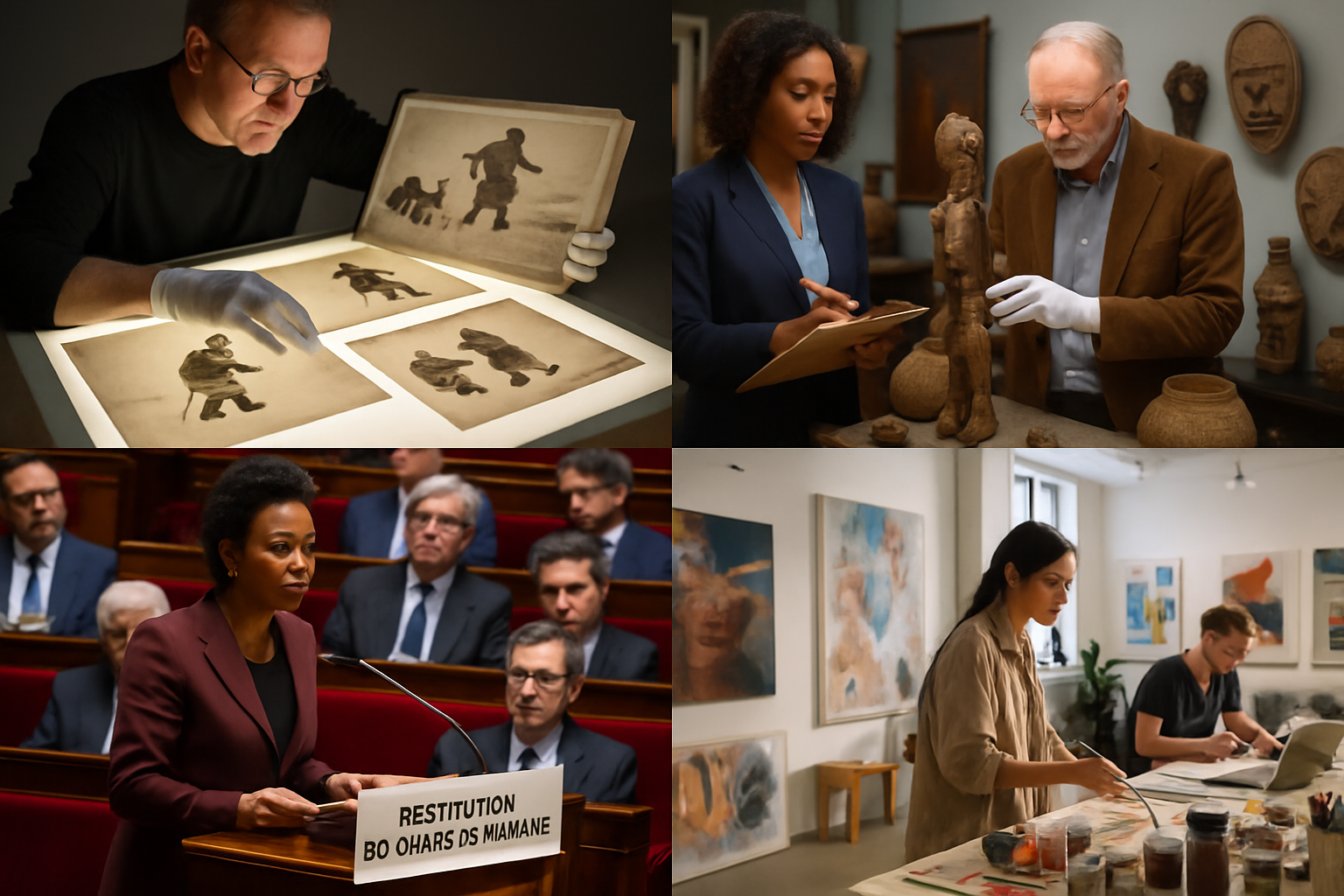
A remarkable convergence of cultural heritage discoveries and policy developments is reshaping the global arts landscape, as lost Inuit stop-motion animation from the 1970s resurfaces in Canada's Arctic, French lawmakers debate groundbreaking colonial art repatriation legislation, and innovative exhibitions bridge Eastern and Western artistic traditions.
The discovery of previously unknown Inuit animation reels from the 1970s represents one of the most significant finds in Indigenous media archaeology this decade. After more than 50 years in obscurity, these stop-motion animation works by Timmun Alariaq are now being screened across Nunavut territories, offering unprecedented insights into early Indigenous filmmaking techniques and cultural expression during a pivotal period in Arctic history.
Archaeological Media Discovery Transforms Understanding
The recovered animation reels, titled "Arctic Workshop Reel 1," showcase sophisticated sand stop-motion techniques that predate many recognized innovations in the medium. Cultural preservation experts describe the find as revolutionary for understanding how Indigenous communities adapted Western filmmaking technologies to serve traditional storytelling methods.
"These works demonstrate extraordinary technical sophistication and cultural authenticity," explains Dr. Sarah McKinnon, Director of Arctic Cultural Studies at the University of Toronto. "They represent a previously unknown chapter in both Canadian cinema and Indigenous media history."
The animations reveal complex narratives rooted in traditional Inuit mythology, executed through painstaking frame-by-frame sand manipulation techniques. Each frame required careful reconstruction of sand patterns, a process that connected ancient storytelling traditions with emerging film technology.
France Confronts Colonial Heritage Legacy
Simultaneously, French lawmakers are debating comprehensive legislation to streamline the return of artworks looted during the colonial era. The proposed bill, under consideration by the French Parliament, addresses tens of thousands of cultural artifacts and artworks that remain in French possession, acquired through colonial expeditions and seizures.
The legislation represents a fundamental shift in how former colonial powers approach cultural heritage stewardship. Unlike previous case-by-case repatriation efforts, this comprehensive approach would establish systematic protocols for identifying, documenting, and returning colonial-era acquisitions to their countries of origin.
"This legislation acknowledges that cultural heritage preservation requires addressing historical injustices while building sustainable partnerships for the future."
— Marie Dubois, French Ministry of Culture
The bill has generated intense debate among museum professionals, legal scholars, and cultural diplomacy experts. Supporters argue it represents necessary historical accountability and an opportunity to strengthen international relationships through cultural cooperation. Critics worry about potential precedents and the practical challenges of implementing systematic repatriation processes.
Innovation Through Cross-Cultural Dialogue
In Cyprus, the fourth edition of KunstRaumGoethe presents "Between Imagination and Hope," an exhibition featuring works by Nurtane Karagil, Mariandrie, and Sophie Utikal. Opening April 17 and running through early June, the exhibition transforms Nicosia's buffer zone into a vibrant cultural space, demonstrating art's power to transcend political divisions.
The exhibition, curated by Berlin-based Dr. Katharina Koch following extensive research in Cyprus, addresses urgent questions about collaboration and connection in an increasingly fragmented world. The showcase combines drawings, textile works, and sculptural objects that explore themes of hope, imagination, and human resilience.
The participating artists bring diverse perspectives: Mariandrie and Nurtane Karagil represent Cypriot contemporary art, while Sophie Utikal contributes German artistic traditions. Their collaboration illustrates successful international artistic cooperation that respects cultural distinctiveness while creating shared meaning.
Technology Amplifying Traditional Practices
These cultural developments reflect broader trends documented throughout the 2026 Cultural Renaissance, where technology serves to enhance rather than replace traditional cultural practices. The Inuit animation recovery utilized advanced digital restoration techniques that preserved the original sand-based artwork while making it accessible to contemporary audiences.
Similarly, the French repatriation discussions involve sophisticated digital documentation systems that can create permanent records of artworks while facilitating their physical return to origin communities. This approach enables global accessibility while respecting source community ownership and cultural protocols.

Economic and Diplomatic Implications
The cultural initiatives generate substantial economic multiplier effects through heritage tourism, educational partnerships, and enhanced international recognition. The Inuit animation discovery is expected to boost Arctic cultural tourism while providing educational resources for Indigenous communities worldwide.
France's colonial art legislation, if implemented, could establish templates for other former colonial powers addressing similar heritage questions. Early diplomatic responses suggest potential for enhanced cooperation with African, Asian, and Pacific nations whose cultural patrimony has been dispersed through historical collection practices.
Cyprus's innovative exhibition programming demonstrates how smaller nations can achieve significant cultural influence through strategic international partnerships and authentic artistic programming that serves both local communities and global audiences.
Community-Centered Preservation Models
A common thread across these developments is the emphasis on community-centered approaches to cultural preservation. The Inuit animation project prioritizes screening the works within Arctic communities before broader distribution, ensuring that traditional knowledge holders and community members have first access to their cultural heritage.
The French legislation includes provisions for meaningful consultation with origin communities, moving beyond top-down institutional decisions toward collaborative approaches that respect traditional knowledge and contemporary cultural needs.
Cyprus's buffer zone exhibition creates programming that serves local communities while attracting international attention, demonstrating how authentic cultural expression can achieve global appeal while maintaining local significance.
Challenges and Adaptive Strategies
These initiatives face contemporary challenges including climate change threats to cultural sites, economic pressures affecting traditional arts participation, and balancing global accessibility with local authenticity. Solutions emphasize adaptive strategies that respect traditional practices while embracing helpful technological and methodological innovations.
The Inuit animation preservation required developing new conservation techniques for unique sand-based media, while ensuring traditional storytelling contexts remained central to presentation methods. Similarly, the French legislation must balance legal frameworks across multiple national jurisdictions while respecting diverse cultural protocols.
Templates for Future Stewardship
These developments establish precedents for 21st-century cultural stewardship that successfully balance innovation with tradition, local authenticity with global cooperation, and economic viability with cultural integrity. They demonstrate that authentic cultural expression can achieve international recognition while serving essential community functions.
The success across varied contexts—from Arctic Indigenous media to European colonial heritage to Mediterranean contemporary art—provides practical templates adaptable to diverse cultural and economic circumstances worldwide.
"Culture increasingly functions as essential infrastructure equivalent to transportation, communication, and healthcare systems for community development and international cooperation."
— Dr. Elena Rodriguez, UNESCO Cultural Heritage Division
Global Renaissance Momentum
These cultural developments continue the documented momentum of the 2026 Cultural Renaissance, characterized by unprecedented international coordination in cultural preservation and innovative programming approaches. The pattern demonstrates humanity's remarkable capacity for cultural resilience, creative adaptation, and international cooperation.
From Canadian Arctic communities preserving Indigenous media heritage to French lawmakers confronting colonial legacies to Mediterranean artists building cultural bridges, these initiatives represent coordinated global recognition that culture serves fundamental infrastructure for human flourishing and international understanding.
As these projects unfold throughout 2026, they offer compelling evidence that thoughtful, community-centered cultural programming creates lasting positive impacts that honor the past while embracing future possibilities in an increasingly interconnected world.