
UNESCO has issued urgent warnings about war-related damage to priceless Middle Eastern heritage sites while Estonia celebrates a remarkable literary revival, showcasing the contrasting forces shaping global cultural preservation efforts in March 2026.
The dramatic juxtaposition of cultural destruction and celebration reflects the complex landscape facing heritage preservationists worldwide, as documented threats to invaluable sites coincide with unprecedented international cooperation in cultural renaissance initiatives.
UNESCO Sounds Alarm Over Heritage Under Fire
UNESCO has reiterated its deep concern about ongoing war damage to irreplaceable world heritage sites across the Middle East. Israeli and American bombings are causing daily damage to educational, scientific, and media infrastructure throughout the region, with some historically significant sites already suffering harm.
The international organization's warnings underscore the vulnerability of cultural heritage during armed conflicts, where centuries-old monuments and archaeological treasures face potential irreversible destruction. These sites, which represent humanity's shared cultural legacy, cannot be rebuilt or replaced once damaged or destroyed.
"The protection of cultural heritage sites during conflict is not just about preserving buildings and artifacts—it's about safeguarding the cultural memory and identity of entire communities."
— UNESCO Representative
The systematic targeting or collateral damage to educational and cultural infrastructure has become a particular concern for international heritage preservation organizations, as these institutions often house irreplaceable manuscripts, artwork, and historical documentation spanning millennia.
Estonia's Literary Renaissance: Reviving Ancient Voices
In stark contrast to the destruction threatening Middle Eastern heritage, Estonia has achieved a remarkable cultural milestone with the performance of "Oh! ma waene Tardo Liin," the nation's earliest known poem, in a Tartu church setting.
This landmark 18th-century lament by Puhja teacher and clergyman Käsu Hans was recently set to music and performed, bringing new life to Estonia's oldest documented poetic work. The performance represents a broader trend in cultural preservation that emphasizes living heritage practices rather than static museum displays.
The revival of this 300-year-old text demonstrates how nations can successfully bridge historical authenticity with contemporary cultural expression. Rather than simply preserving the poem as an academic artifact, Estonian cultural institutions have transformed it into an active part of the nation's living cultural practice.
The Technology-Tradition Synthesis
Estonia's approach exemplifies successful integration of modern preservation techniques with traditional cultural expression. Digital documentation ensures the poem's permanent preservation while musical interpretation makes it accessible to contemporary audiences who might otherwise never encounter this literary treasure.
This methodology represents a mature evolution in cultural stewardship, where technology serves to amplify rather than replace authentic cultural connections. Advanced preservation techniques create permanent records accessible globally while maintaining community ownership and cultural significance.
Global Cultural Renaissance Context
These developments occur within what cultural experts have documented as the "February 2026 Cultural Renaissance"—an unprecedented period of coordinated international heritage preservation and cultural innovation. Success factors consistently identified include technology enhancement rather than replacement of traditional practices, international cooperation that respects local authenticity, and economic viability through cultural tourism and educational partnerships.
Nations worldwide are recognizing culture as strategic infrastructure equivalent to transportation, communication, and healthcare systems. This shift represents a fundamental change from viewing cultural preservation as optional enhancement to understanding it as essential community infrastructure.
Economic and Diplomatic Dimensions
Cultural preservation efforts generate substantial economic multiplier effects through tourism development, international media attention, enhanced diplomatic relationships, and educational partnerships. Countries implementing comprehensive cultural infrastructure show greater economic resilience and sustainable investment attraction through sophisticated destination management.
The Estonian literary revival, for instance, attracts international academic attention while strengthening cultural tourism appeal. Similarly, successful heritage preservation efforts worldwide demonstrate that authentic cultural programming creates competitive advantages in the global tourism marketplace.
Challenges Facing Heritage Preservation
The contrasting situations in the Middle East and Estonia highlight the multiple challenges facing cultural preservationists. Beyond armed conflict, heritage sites worldwide face threats from climate change, economic pressures, and the balance between global accessibility and local authenticity.
Climate change poses particular urgency, with traditional construction materials proving inadequate against intensifying environmental conditions. Economic pressures affect youth participation in traditional arts, while digital entertainment competes with traditional cultural forms for public attention.
International Cooperation Solutions
Successful cultural preservation increasingly depends on international cooperation frameworks that enable resource sharing, expertise exchange, and coordinated responses to threats. The 2026 cultural renaissance demonstrates the effectiveness of collaborative approaches over competitive nationalism in cultural stewardship.
UNESCO and similar organizations are developing comprehensive frameworks for multi-threat heritage protection, including rapid response protocols for climate disasters, international databases tracking stolen artifacts, and voluntary repatriation programs like those recently implemented by European museums.
Community Engagement and Authentic Expression
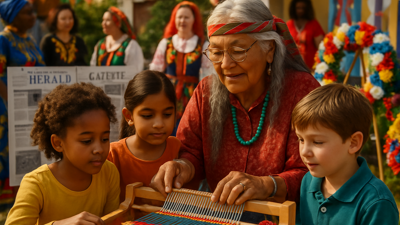
The Estonian literary revival exemplifies how successful heritage preservation requires meaningful community engagement with traditional knowledge bearers. Rather than preserving the poem as a static academic curiosity, Estonian institutions created programming that serves multiple community functions: heritage preservation, educational content, cultural identity reinforcement, and contemporary artistic expression.
This approach contrasts sharply with museum-based preservation models, instead treating cultural heritage as living tradition that adapts to contemporary challenges while maintaining essential character and community meaning.
Future Implications and Templates
The March 2026 developments establish crucial precedents for 21st-century cultural stewardship. Estonia's success provides a practical template for other nations seeking to revive historical cultural expressions through contemporary programming while maintaining authentic community connections.
Conversely, the heritage destruction warnings from UNESCO emphasize the urgent need for stronger international frameworks protecting cultural sites during conflicts. The international community faces the challenge of developing more effective mechanisms for heritage protection that transcend political boundaries and military considerations.
"Cultural heritage represents the collective memory of humanity—its protection requires collective action and shared responsibility across all nations."
— International Heritage Preservation Expert
Technological Innovation in Preservation
Advanced conservation methods demonstrated across multiple 2026 cultural initiatives include sophisticated chemical analysis, digital documentation, virtual reality applications, and climate-controlled preservation systems. These technologies enable unprecedented access to cultural treasures while protecting originals from environmental damage and overtourism.
The synthesis of innovation with tradition characterizes the most successful contemporary heritage strategies. Rather than viewing technology as competing with authentic cultural expression, leading institutions use digital tools to enhance accessibility while preserving the spiritual and social significance of cultural practices.
Building Cultural Resilience
The global cultural renaissance of 2026 demonstrates humanity's capacity for cultural resilience and international cooperation in preserving shared heritage. From Estonian poetry revival to comprehensive heritage protection initiatives, communities worldwide are investing in culture as fundamental infrastructure for human flourishing.
This investment pays dividends through enhanced community identity, international relationships, economic development, and social cohesion. Cultural preservation serves not only historical documentation but active community development, creating meaning and fostering connections across generations and geographic boundaries.
As demonstrated by both the threats facing Middle Eastern heritage and the successes of Estonian cultural revival, the future of cultural preservation depends on sustained international cooperation, innovative programming that honors traditional practices, and recognition of culture as essential infrastructure rather than luxury enhancement.