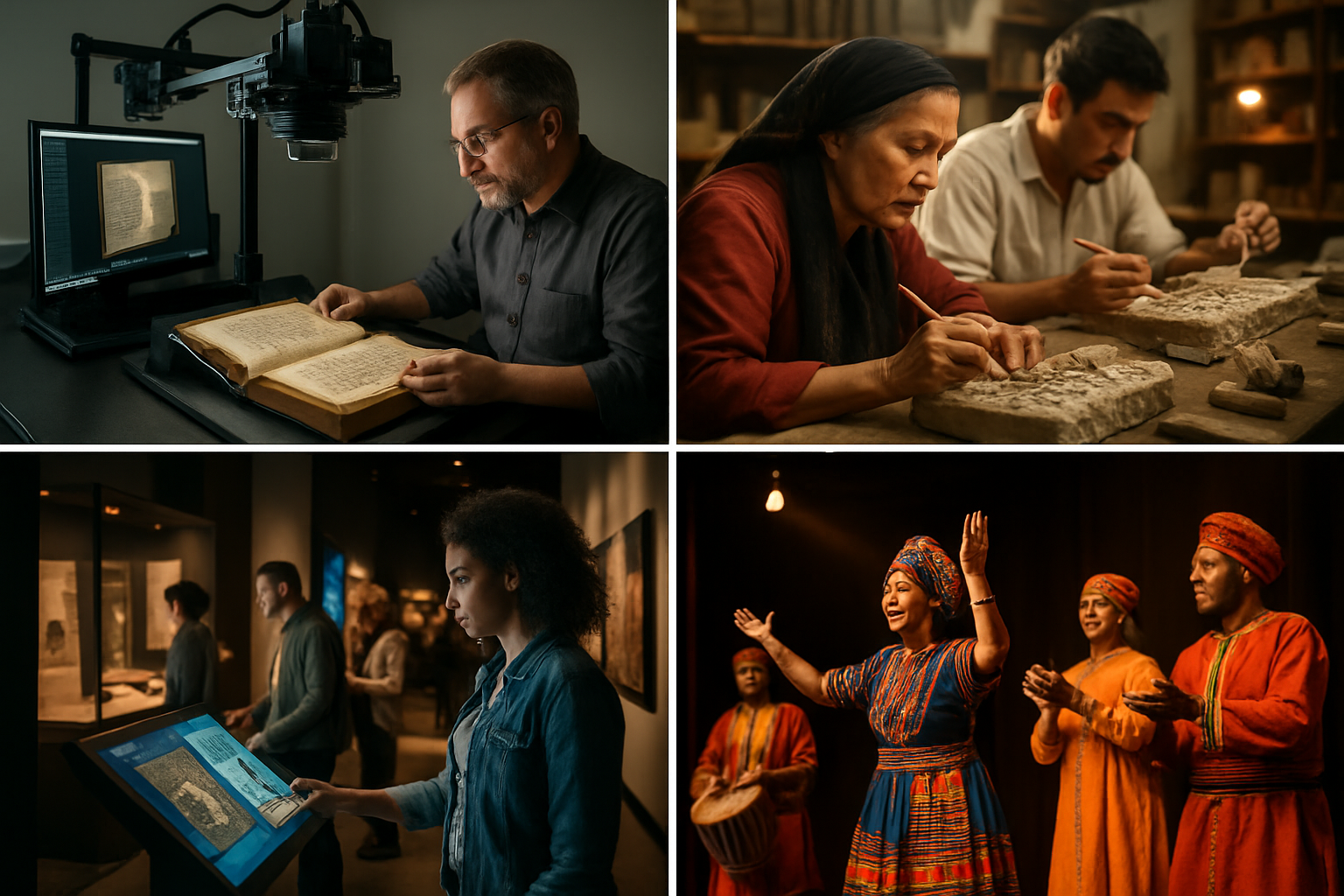
A remarkable convergence of cultural preservation efforts spanning three continents demonstrates how traditional heritage projects are evolving from static museum displays into dynamic community experiences that honor the past while embracing technological innovation and international collaboration.
Recent developments across Azerbaijan, Burkina Faso, and other nations reveal sophisticated approaches to cultural stewardship that position heritage as essential infrastructure for community development, international cooperation, and human flourishing in an interconnected world.
Azerbaijan: Bridging Eastern and Western Traditions
The Baku Music Academy's Opera Studio recently presented Uzeyir Hajibayli's celebrated operetta "If Not That One, Then This One" in honor of the Novruz holiday, exemplifying Azerbaijan's strategic positioning as a cultural bridge between Eastern and Western artistic traditions. This performance represents more than entertainment—it demonstrates how nations can leverage authentic cultural programming to strengthen international relationships while preserving national heritage.
The presentation of Hajibayli's work, considered a cornerstone of Azerbaijani musical theater, reflects the country's broader cultural diplomacy strategy that has included poetry exchanges with Egypt and collaborative workshops with European Union partners. These initiatives position Azerbaijan as a regional artistic hub that facilitates cross-cultural understanding without compromising local authenticity.
"Cultural preservation in the 21st century requires active community engagement rather than passive museum curation. When traditional arts remain vibrant community elements, they create stronger foundations for international cooperation."
— Cultural Heritage Specialist
Burkina Faso: Traditional Knowledge Meets Scientific Inquiry
Professor Ignace Yaméogo's exploration of water concepts in Moaga cosmology demonstrates how traditional knowledge systems can inform contemporary scientific understanding. His work examining the expertise of nyonyonsé—traditional practitioners who understand lightning and thunder phenomena—raises profound questions about indigenous knowledge contributions to modern scientific advancement.
Yaméogo's research challenges conventional assumptions about the relationship between traditional and scientific knowledge, suggesting that communities preserving ancient wisdom could make significant contributions to fields like biochemistry and nuclear physics if given access to advanced formal training. This approach represents a sophisticated synthesis where traditional understanding enhances rather than competes with contemporary scholarship.
The investigation into Moaga water concepts occurs within Burkina Faso's broader cultural renaissance, which includes memorial projects honoring revolutionary leader Thomas Sankara and agricultural innovation programs supporting vulnerable populations. These initiatives demonstrate how cultural preservation can serve multiple community functions simultaneously.
Technology as Cultural Enhancement, Not Replacement
Across both initiatives, technology serves as an amplification tool rather than a replacement for authentic cultural expression. Digital documentation preserves traditional knowledge while enabling global accessibility, advanced conservation techniques protect artifacts while maintaining public engagement, and social media platforms extend cultural reach while maintaining community ownership.
This mature approach to technological integration contrasts sharply with earlier fears that digitization would diminish cultural authenticity. Instead, 2026 evidence suggests thoughtful technology implementation can extend cultural preservation reach while strengthening rather than weakening traditional community connections.
Museums and cultural institutions worldwide are adopting hybrid methodologies that combine cutting-edge analytical techniques with traditional connoisseurship, creating more comprehensive and accessible cultural experiences that serve diverse audiences without compromising scholarly rigor.
Economic Multiplier Effects Drive Sustainability
Cultural heritage initiatives generate substantial economic benefits extending far beyond immediate programming costs. These projects create tourism revenue, support creative industry employment, attract international media attention, and foster lasting infrastructure including performance networks, artistic collaborations, and educational partnerships active throughout the year.
Countries recognizing culture as strategic infrastructure equivalent to transportation, communication, or healthcare systems report competitive advantages in international relationships, tourism development, and community resilience. This fundamental shift from viewing cultural preservation as optional enhancement to understanding it as essential community infrastructure reflects growing recognition of culture's role in human flourishing.
The economic impact extends to diaspora communities, academic partnerships, and international cultural cooperation, creating sustainable funding models that reduce external dependency while strengthening authentic local expression.
Global Renaissance Context and Coordination
These developments occur within what scholars have identified as the "February 2026 Cultural Renaissance"—an unprecedented period of coordinated international cultural activity spanning multiple continents. Success factors consistently emerge across diverse contexts: community engagement with traditional knowledge bearers, technological innovation serving rather than replacing authentic practices, economic viability through cultural tourism and educational partnerships, and international cooperation that respects local distinctiveness while fostering global understanding.
This global pattern suggests organic convergence around shared principles rather than imposed standardization. Communities worldwide are simultaneously recognizing culture's essential role in addressing contemporary challenges including climate change, economic pressures, intergenerational knowledge transfer, and social cohesion.
Adaptive Strategies for Contemporary Challenges
Cultural preservation efforts face significant contemporary challenges including climate change threats to outdoor practices and traditional construction materials, economic pressures affecting youth participation in traditional arts, digital entertainment competition requiring sustained attention and community engagement, and the need to balance global visibility with local authenticity.
Successful communities develop adaptive solutions emphasizing community leadership with institutional support, international resource sharing enabling smaller communities to access expertise while contributing innovations to global knowledge networks, and cultural preservation evolution from defensive conservation toward proactive community development.
The most effective approaches treat heritage as living tradition adapting to contemporary challenges while maintaining essential character and community meaning, rather than static preservation isolated from community life.
Building Cultural Bridges and International Understanding
Cultural heritage projects demonstrate unique capacity for building understanding across cultural boundaries while maintaining distinctive local identities. Azerbaijan's cultural diplomacy connects Caucasus traditions with global artistic networks, while Burkina Faso's knowledge preservation efforts create opportunities for international scientific collaboration grounded in traditional wisdom.
Rather than homogenizing global culture, successful preservation celebrates diversity while creating opportunities for mutual learning and shared understanding. This approach recognizes that authentic cultural expression can achieve global appeal while maintaining local significance, providing sustainable models for creative industries that balance commercial success with cultural responsibility.
Future Implications for Cultural Stewardship
March 2026 establishes precedents for 21st-century cultural stewardship that successfully balance preservation with accessibility, tradition with innovation, local authenticity with international cooperation, and economic viability with cultural integrity. Success across diverse contexts provides practical templates adaptable to specific cultural and economic circumstances worldwide.
The evidence suggests that thoughtful investment in cultural preservation and celebration creates lasting positive impacts that honor the past while embracing future possibilities. Cultural preservation encompasses both celebration and reflection, achievement recognition and historical acknowledgment—a comprehensive approach essential for building resilient, connected communities capable of addressing complex challenges in an interconnected world.
As communities worldwide continue recognizing culture as fundamental infrastructure for human flourishing and international cooperation, the window for effective coordinated cultural action appears to be expanding rather than narrowing. The global cultural renaissance of 2026 offers compelling evidence of humanity's remarkable capacity for cultural resilience, creative adaptation, and international collaboration during periods of rapid technological change, environmental pressures, and economic uncertainty.