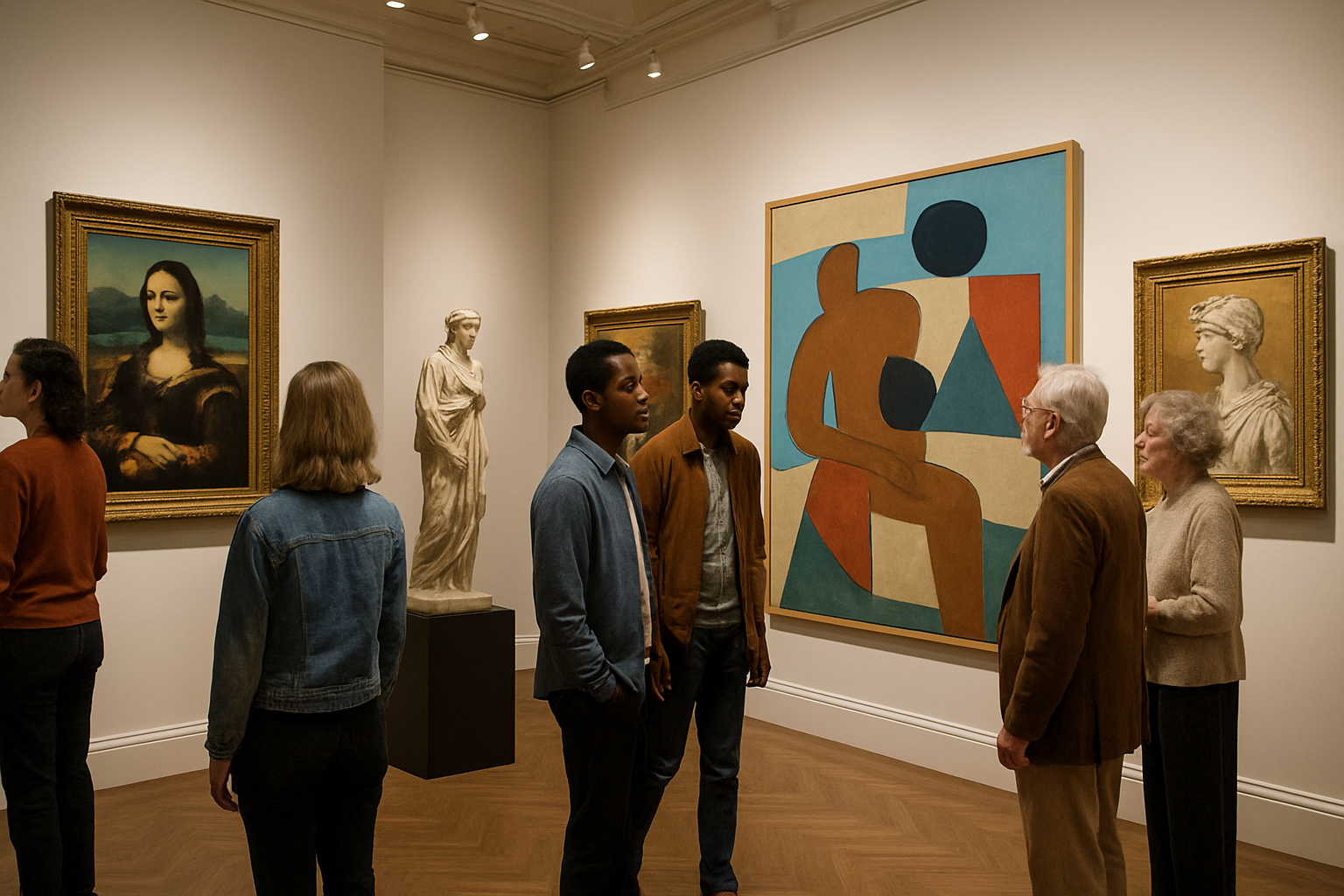
Estonia's modernist master Konrad Mägi makes his long-awaited UK debut this week with over 60 works displayed at London's prestigious Dulwich Picture Gallery, while France celebrates the stunning restoration of Pierre Loti's orientalist home in Rochefort, marking the latest developments in what experts are calling the "March 2026 Cultural Heritage Renaissance."
The simultaneous cultural celebrations across Europe demonstrate an unprecedented coordination of international heritage preservation and artistic innovation that has characterized the first quarter of 2026. From major museum exhibitions to painstaking architectural restorations, cultural institutions worldwide are experiencing what UNESCO officials describe as the most significant global cultural movement since the post-war reconstruction period.
Estonian Master's Historic London Debut
Dulwich Picture Gallery's exhibition of Konrad Mägi's work represents a milestone moment for Estonian cultural diplomacy and international artistic recognition. The comprehensive retrospective, featuring more than 60 paintings by the early 20th-century modernist pioneer, opened Tuesday to critical acclaim and immediate public interest.
Mägi, who lived from 1878 to 1925, stands as one of Estonia's most significant artistic voices, bridging European modernist movements with distinctly Baltic sensibilities. His work encompasses landscape painting, portraiture, and abstract compositions that reflect both the influence of French Post-Impressionism and a unique Northern European aesthetic rooted in Estonia's natural environment and cultural identity.
The exhibition arrives at a crucial moment for Estonia's international cultural positioning. The Baltic nation has emerged as a leader in the global "2026 Cultural Renaissance," balancing cutting-edge digital innovation with traditional heritage preservation. Recent Estonian achievements include the creation of a 16-meter literary tapestry embroidered by over 3,000 people and the declaration of Tallinn's Soviet-era Linnahall as protected heritage architecture.
Pierre Loti House: A Masterpiece Restored
Simultaneously, France celebrates a remarkable cultural preservation success with the restoration of Pierre Loti's extraordinary home in Rochefort. The 19th-century naval officer and novelist created what experts describe as one of France's most unique domestic spaces, where he indulged his "orientalist and extravagant decorator fantasies" throughout decades of global travel and literary achievement.
The restoration project represents years of meticulous work to preserve Loti's vision of exotic cultural synthesis. The house contains rooms designed to evoke different global cultures—from Turkish salons to Chinese pagodas—reflecting the author's travels across the Ottoman Empire, Asia, and North Africa. These spaces served not merely as decoration but as creative environments where Loti wrote some of his most celebrated works, including novels that influenced French literature's relationship with global cultures.
The project exemplifies sophisticated 21st-century heritage preservation methodology. Advanced conservation techniques preserved original materials while ensuring structural integrity, while digital documentation created comprehensive records accessible to international researchers. Climate control systems protect delicate artifacts while maintaining the house's function as a living cultural space accessible to contemporary visitors.
The restored house has drawn record numbers of visitors since reopening, generating substantial cultural tourism revenue for the Charente-Maritime region while serving as an educational resource about French literary history and cross-cultural artistic exchange. The success demonstrates how heritage preservation can serve multiple community functions: cultural education, economic development, and international cultural diplomacy.
The Global Cultural Renaissance Context
These European cultural achievements occur within the broader context of what cultural historians are documenting as the "February-March 2026 Cultural Renaissance"—an unprecedented period of coordinated international cultural preservation and innovation initiatives spanning six continents.
The movement encompasses diverse approaches unified by common principles: technology enhancement rather than replacement of traditional cultural practices, community engagement prioritizing authentic local expression, economic sustainability through cultural tourism and educational partnerships, and international cooperation that respects local distinctiveness while fostering global understanding.
Recent examples include Brazil's innovative memory-based heritage preservation following the 2018 National Museum fire, Malta's debut participation in the Venice Biennale, and the authentication of a previously dismissed Rembrandt painting at Amsterdam's Rijksmuseum. Each initiative demonstrates sophisticated cultural stewardship balancing preservation with accessibility, tradition with innovation.
Technology and Tradition Synthesis
The Mägi exhibition and Loti house restoration exemplify mature approaches to integrating technological innovation with traditional preservation methods. Digital enhancement tools amplify rather than compete with authentic cultural expression, creating opportunities for broader accessibility while maintaining the integrity of original artistic vision.
Interactive digital displays at Dulwich Picture Gallery provide contextual information about Mägi's artistic development without overwhelming the contemplative atmosphere essential to experiencing his work. Advanced lighting systems protect paintings from damage while enabling optimal viewing conditions. Multilingual audio guides ensure international accessibility while preserving the Estonian cultural context crucial to understanding Mägi's artistic significance.
Similarly, the Loti house employs sophisticated climate control and conservation technology to preserve delicate 19th-century materials while accommodating modern visitor safety requirements. Virtual reality components allow visitors to experience historically accurate recreations of rooms that cannot accommodate large numbers of people, expanding access while protecting irreplaceable artifacts.
Economic and Diplomatic Impact
Cultural institutions increasingly recognize heritage preservation and artistic exhibition as strategic infrastructure generating substantial economic multiplier effects. The Mägi exhibition enhances Estonia's international cultural profile while creating opportunities for academic partnerships, diplomatic relationships, and cultural tourism development extending far beyond the exhibition's immediate duration.
Estonia's sophisticated cultural programming positions the country as an attractive destination for international cultural investment and collaboration. The nation's success in balancing digital innovation with heritage preservation provides templates for other countries seeking competitive advantages in global cultural markets.
The Loti house restoration demonstrates similar economic benefits. Cultural tourism generates sustainable revenue for local communities while preserving irreplaceable historical resources. International media attention enhances France's cultural diplomacy while providing educational platforms for cross-cultural understanding and academic research.
These projects contribute to what economists identify as the "cultural multiplier effect"—cultural investments generating economic benefits exceeding initial costs through tourism revenue, creative industry employment, international recognition, and enhanced diplomatic relationships.
Challenges and Adaptations
The current cultural renaissance occurs amid significant challenges requiring adaptive strategies. Climate change threatens historic buildings and outdoor cultural programming, while economic pressures affect youth participation in traditional arts. Digital entertainment competes with cultural forms requiring sustained attention and community engagement.
Successful initiatives demonstrate responses that view these challenges as opportunities for evolution while maintaining essential cultural functions. Community ownership ensures sustainability, international cooperation enables resource sharing without standardization, and technological integration extends reach while preserving authenticity.
Both the Estonian exhibition and French restoration employ climate resilience strategies protecting cultural assets while maintaining accessibility. Advanced environmental monitoring systems, emergency protocols, and adaptive conservation techniques represent evolved approaches to heritage stewardship in an era of accelerating environmental change.
Future Implications
The March 2026 cultural developments establish precedents for 21st-century cultural stewardship successfully balancing innovation with tradition, local authenticity with international cooperation, economic viability with cultural integrity. These models provide practical templates adaptable across diverse cultural and economic circumstances worldwide.
The success of smaller nations like Estonia in achieving disproportionate cultural influence through strategic focus and sustained excellence offers frameworks for other countries seeking international recognition while preserving distinctive cultural identities. The synthesis of tradition and innovation demonstrated across these initiatives suggests sustainable pathways for cultural vitality in an increasingly interconnected yet diverse world.
As the global community faces unprecedented challenges from climate change to technological disruption, the "2026 Cultural Renaissance" provides evidence of humanity's remarkable capacity for cultural resilience, creative adaptation, and international cooperation. These achievements honor the past while embracing future possibilities through authentic artistic expression and meaningful cultural preservation.
The Estonian and French examples demonstrate that thoughtful cultural investment creates lasting positive impacts, building bridges between communities and nations while enriching global civilization through the preservation and celebration of diverse cultural traditions and artistic achievements.