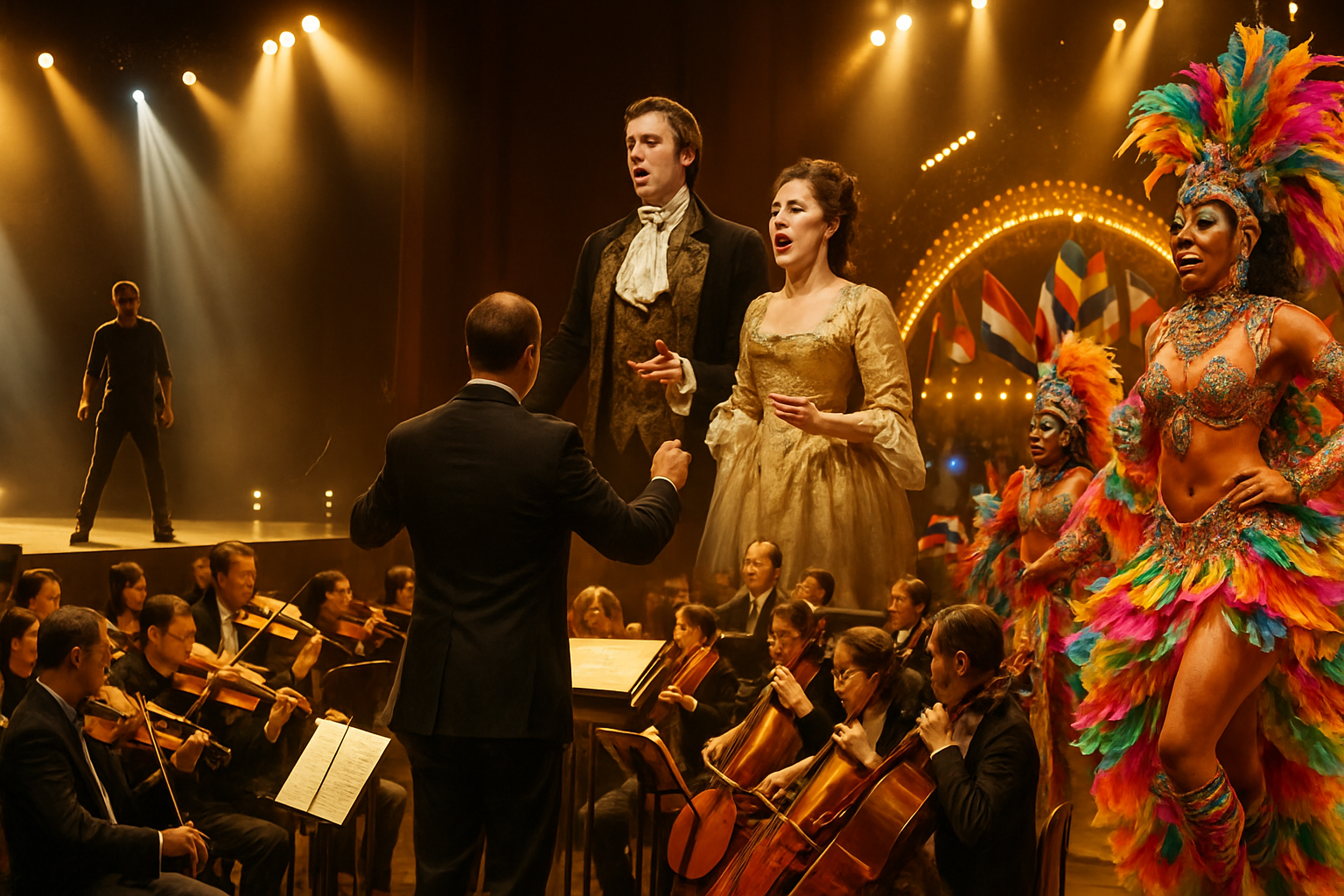
A wave of cultural events and entertainment announcements across Europe continues the remarkable cultural renaissance of February 2026, with performances ranging from classical concerts in Azerbaijan to international rock shows in Croatia, demonstrating the continent's vibrant artistic ecosystem.
The latest developments span seven countries and represent diverse artistic expressions, from traditional orchestral performances to contemporary theater productions, highlighting the unprecedented global cultural activity that has characterized this month.
Classical Music Excellence in Azerbaijan
The Baku Contemporary Music Society and Cadenza Orchestra have announced their upcoming concert program "Memory #4" at the International Mugham Center. This performance continues Azerbaijan's growing reputation as a cultural bridge between Eastern and Western musical traditions, building on the country's successful hosting of international artistic collaborations throughout February 2026.
The concert represents part of Azerbaijan's broader cultural diplomacy efforts, which have included hosting Egyptian poetry evenings and strengthening ties with regional cultural institutions. These initiatives position Baku as an emerging hub for cross-cultural artistic exchange in the Caucasus region.
International Entertainment Reaches Croatia
In a major announcement for Croatian entertainment, Grammy-winning artist John Legend will perform his first-ever concert in Croatia this July at the iconic Pula Arena. The exclusive performance marks a significant milestone for Croatia's growing international entertainment profile, following the country's successful Eurovision preparations and cultural tourism initiatives.
The Pula Arena, one of the world's best-preserved Roman amphitheaters, continues to serve as a prestigious venue for international artists, demonstrating Croatia's success in balancing heritage preservation with contemporary cultural programming. The announcement follows similar high-profile international performances across Europe, indicating Croatia's competitive positioning in the global entertainment market.
Cultural Tourism Impact
The Legend concert is expected to attract international visitors, contributing to Croatia's robust cultural tourism sector. This aligns with broader European trends where countries are leveraging cultural events to drive economic benefits while showcasing their artistic heritage to global audiences.
Theater Renaissance Across the Mediterranean
Cyprus continues its theatrical revival with Campos Culture and Arts presenting "Toula" at ARTos House in Nicosia for four performances from February 25-28. This production exemplifies the grassroots theater renaissance documented across the Mediterranean, where communities are reclaiming traditional performance spaces and creating authentic cultural programming.
The Cyprus theater scene has emerged as a model for successful integration of international cultural content with local artistic talent, serving as a cultural bridge between British theatrical traditions and Mediterranean expression. This approach has proven effective in attracting diverse audiences while maintaining cultural authenticity.
Monaco's Community-Centered Celebrations
Monaco's Smiley Carnival brought joy to La Condamine on Mardi Gras, with Princess Caroline Street coming alive with costumes, confetti, and music. The Monaco Smiley association staged the colorful parade in support of hospitalized children across the Principality, demonstrating how cultural celebrations can serve multiple community purposes beyond entertainment.
This approach reflects broader trends in European cultural programming, where events increasingly combine artistic expression with social responsibility and community support. The success of Monaco's carnival celebration provides a template for other European cities seeking to enhance their cultural offerings while addressing community needs.
Austria Prepares for Eurovision Cultural Programming
Austria is developing extensive cultural programming around Eurovision Song Contest 2026, with Vienna hosting the main competition in May. The accompanying exhibition "United by Queerness" at Qwien demonstrates the contest's evolution into a comprehensive cultural diplomacy platform beyond entertainment, showcasing European cultural identity and artistic innovation.
As Vienna Deputy Mayor Veronica Kaup-Hasler noted, "The ESC is a stage for social negotiation and queer visibility," emphasizing the contest's role in promoting European values of diversity and inclusion to a global audience of hundreds of millions.
Malta's Literary Theater Innovation
Teatru Manoel in Malta presents George Orwell's iconic "1984" in a new stage adaptation directed by Petra Sant as part of TOI TOI Classics this March. The production represents Malta's sophisticated approach to cultural programming, combining internationally recognized literary works with local directorial talent.
This theatrical interpretation of Orwell's dystopian masterpiece arrives at a particularly relevant time, offering audiences an opportunity to engage with themes of surveillance, truth, and freedom through live performance. Malta's cultural institutions have successfully positioned themselves as providers of intellectually engaging programming that attracts both local and international audiences.
Global Context and Economic Impact
These cultural developments occur within the broader "February 2026 Cultural Renaissance," a phenomenon documented across multiple continents characterized by unprecedented coordination of cultural activities, community engagement, and international artistic cooperation.
The economic impact extends far beyond ticket sales, with cultural events generating tourism revenue, supporting local employment in creative industries, and enhancing international reputation for host cities and countries. Countries positioning culture as strategic infrastructure gain competitive advantages while maintaining authentic expression.
"Cultural celebrations serve multiple purposes: heritage preservation, community bonding, economic development, and intergenerational dialogue platforms."
— Cultural Policy Analysis, February 2026
Technology and Tradition Integration
A common thread across these initiatives is the sophisticated integration of technology with traditional cultural forms. Digital platforms enable global sharing of local celebrations while maintaining community ownership, and enhanced production capabilities support more ambitious artistic projects without compromising authentic cultural expression.
This technology-tradition synthesis represents a mature approach to cultural development, where innovation builds on established foundations rather than replacing them, ensuring cultural programming remains relevant to contemporary audiences while preserving essential heritage elements.
Future Implications
The success of these diverse cultural initiatives establishes precedents for 21st-century cultural celebration and international artistic collaboration. The template emerging emphasizes community leadership, authentic representation, regulatory frameworks that protect while preserving traditions, and successful technology integration.
As these events unfold throughout 2026, they contribute to a growing understanding that culture serves as essential infrastructure for human flourishing, equivalent to transportation, communication, and healthcare systems. The February 2026 cultural renaissance demonstrates communities worldwide are recognizing this fundamental truth and investing accordingly in their artistic futures.
The momentum generated by these announcements suggests that Europe's cultural sector will continue to evolve, balancing technological innovation with authentic cultural expression while serving increasingly diverse global audiences through compelling artistic programming that transcends geographic and linguistic boundaries.