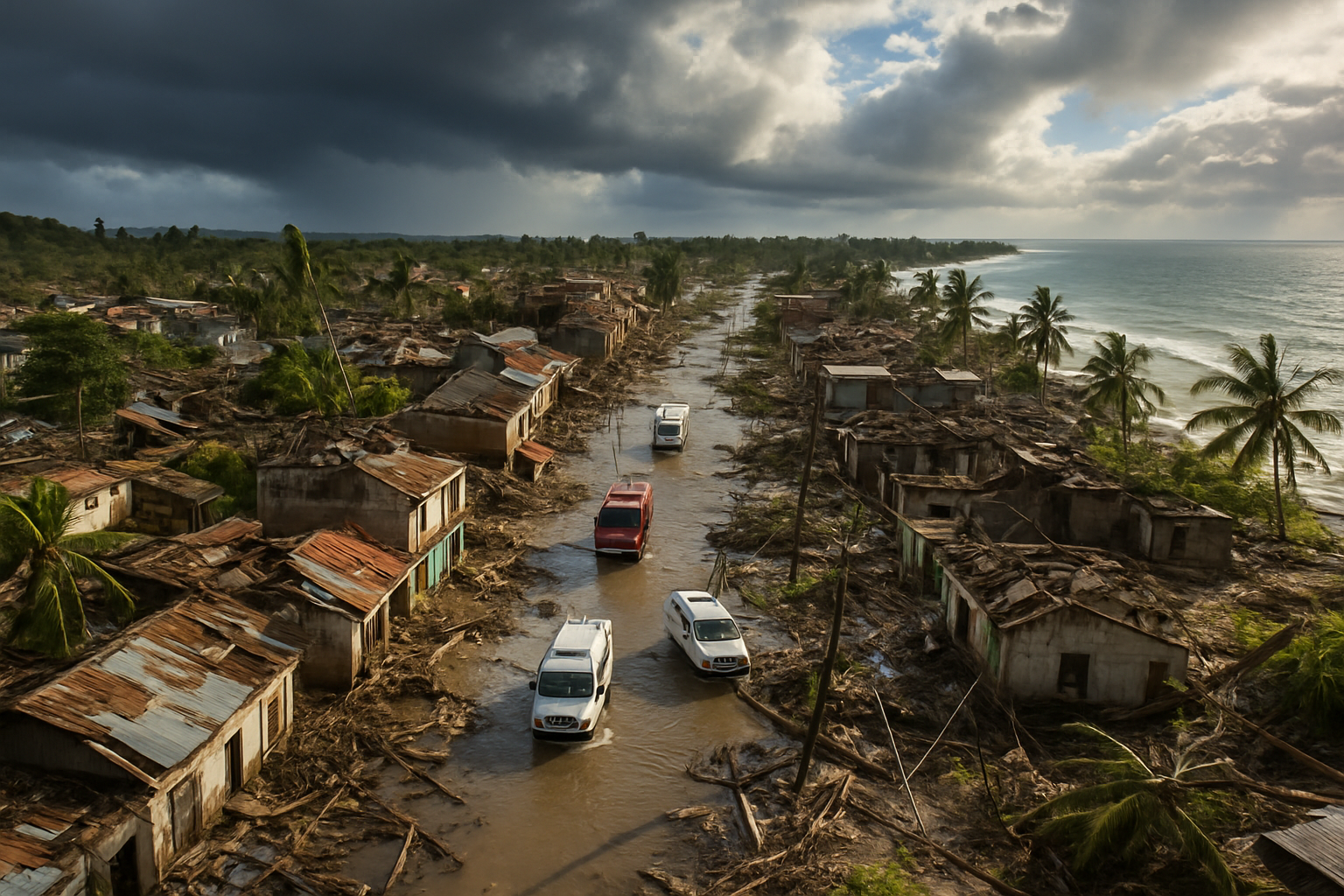
Cyclone Gezani has torn through Madagascar with unprecedented fury, killing at least 20 people and leaving two-thirds of the nation's second-largest city Toamasina in ruins, as the Indian Ocean island nation struggles with its second major cyclone in just 11 days.
The tropical cyclone made landfall on Tuesday morning in the coastal city of Toamasina, packing sustained winds of up to 250 kilometers per hour and bringing torrential rainfall that has devastated infrastructure across central and eastern Madagascar. Officials confirmed that building collapses were responsible for many of the fatalities, highlighting the vulnerability of local structures to extreme weather events.
Toamasina, Madagascar's primary port city and economic hub with a population of approximately 325,000, bore the brunt of Gezani's assault. The cyclone's destructive path has left vast swaths of the city uninhabitable, with preliminary assessments indicating that roughly two-thirds of the urban area has suffered severe damage.
Building Collapses Claim Lives
Malagasy officials report that structural failures were the primary cause of casualties as Gezani's powerful winds proved too much for many buildings in Toamasina and surrounding areas. The cyclone's sustained winds of 250 km/h, with gusts likely exceeding 300 km/h, created conditions that overwhelmed even reinforced structures.
Emergency response teams are working to reach isolated communities, though efforts remain hampered by damaged roads, downed power lines, and ongoing dangerous weather conditions. The full extent of the destruction is expected to become clearer in the coming days as rescue operations expand.
"The devastation is unlike anything we have seen in recent memory. Entire neighborhoods in Toamasina have been flattened."
— Local Emergency Official
Second Major Cyclone in 11 Days
Cyclone Gezani's impact is particularly devastating as it represents the second major tropical cyclone to strike Madagascar in less than two weeks. According to recent emergency records, Cyclone Fytia previously killed 12 people and displaced over 31,000 residents, leaving communities already vulnerable when Gezani approached.
This rapid succession of severe weather events has overwhelmed Madagascar's emergency response capabilities and highlighted the island nation's extreme vulnerability to climate-related disasters. The timing has prevented adequate recovery from the previous cyclone before facing another catastrophic event.
The double impact has created a compounding crisis, with many families who lost homes to Fytia now facing additional displacement and hardship from Gezani's destruction. Emergency shelters established for Fytia survivors have themselves been damaged or destroyed by the latest cyclone.
Regional Weather Pattern Concerns
Cyclone Gezani formed in the Indian Ocean and tracked westward across central Madagascar before entering the Mozambique Channel, where it began to intensify over open waters. Weather experts note that cyclones typically gain strength over ocean surfaces while losing intensity over land, making Gezani's sustained power across Madagascar particularly concerning.
The cyclone's trajectory has now placed it on a collision course with Mozambique's coast, particularly threatening the provinces of Inhambane, Gaza, and Sofala. Mozambican authorities have suspended all maritime, riverine, and lake navigation activities in these provinces as a precautionary measure.
Mozambique's Maritime Transport Regulatory Authority (ITRANSMAR) announced the total suspension of maritime transport and fishing activities, following alerts about the tropical system's evolution into a full cyclone. The country is still recovering from devastating floods in October 2025 that affected over 850,000 people.
Global Climate Context
Cyclone Gezani's devastation occurs within a broader pattern of extreme weather events that have characterized early 2026. January was confirmed as the hottest month on record globally, marking the 18th consecutive month of temperatures exceeding 1.5°C above pre-industrial levels.
This global weather emergency has seen simultaneous extreme events across multiple continents, with emergency services reaching capacity limits worldwide. The frequency and intensity of tropical cyclones in the Indian Ocean basin have increased, consistent with climate change projections for the region.
Madagascar's geographic position makes it particularly vulnerable to Indian Ocean cyclones, and the island has experienced increasing frequency of severe weather events in recent years. The nation's limited infrastructure and economic resources compound the challenges of disaster preparedness and recovery.
Economic and Infrastructure Impact
The destruction of Toamasina carries significant economic implications for Madagascar, as the city serves as the country's principal port and a crucial gateway for international trade. The port handles the majority of Madagascar's imports and exports, making its restoration critical for national economic recovery.
Initial reports indicate widespread damage to transportation networks, with roads blocked by debris and fallen trees. Power grids across the affected region have failed, leaving hundreds of thousands without electricity. Communication networks have also been severely disrupted, hampering coordination of relief efforts.
The agricultural sector faces additional challenges, as the cyclone struck during a critical period for crop development. Madagascar's vanilla industry, which supplies approximately 80% of global vanilla production, may face significant losses if plantations in the affected regions have been damaged.
International Response and Recovery
International humanitarian organizations are mobilizing resources to support Madagascar's response to Cyclone Gezani, though the simultaneous occurrence of extreme weather events globally has stretched available resources thin. The United Nations and regional partners are assessing immediate needs for emergency shelter, clean water, medical supplies, and food assistance.
Recovery efforts face significant challenges due to the remote location of some affected communities and the extent of infrastructure damage. Roads connecting Toamasina to other parts of the country have been severely damaged, potentially isolating communities for extended periods.
The international community's response capacity is being tested by the unprecedented nature of simultaneous global weather emergencies, requiring innovative approaches to disaster response and recovery coordination.
As Madagascar begins the long process of recovery from Cyclone Gezani, the disaster serves as a stark reminder of the increasing frequency and intensity of extreme weather events facing vulnerable nations worldwide. The dual impact of consecutive cyclones underscores the urgent need for enhanced climate adaptation strategies and international support for disaster resilience in climate-vulnerable regions.