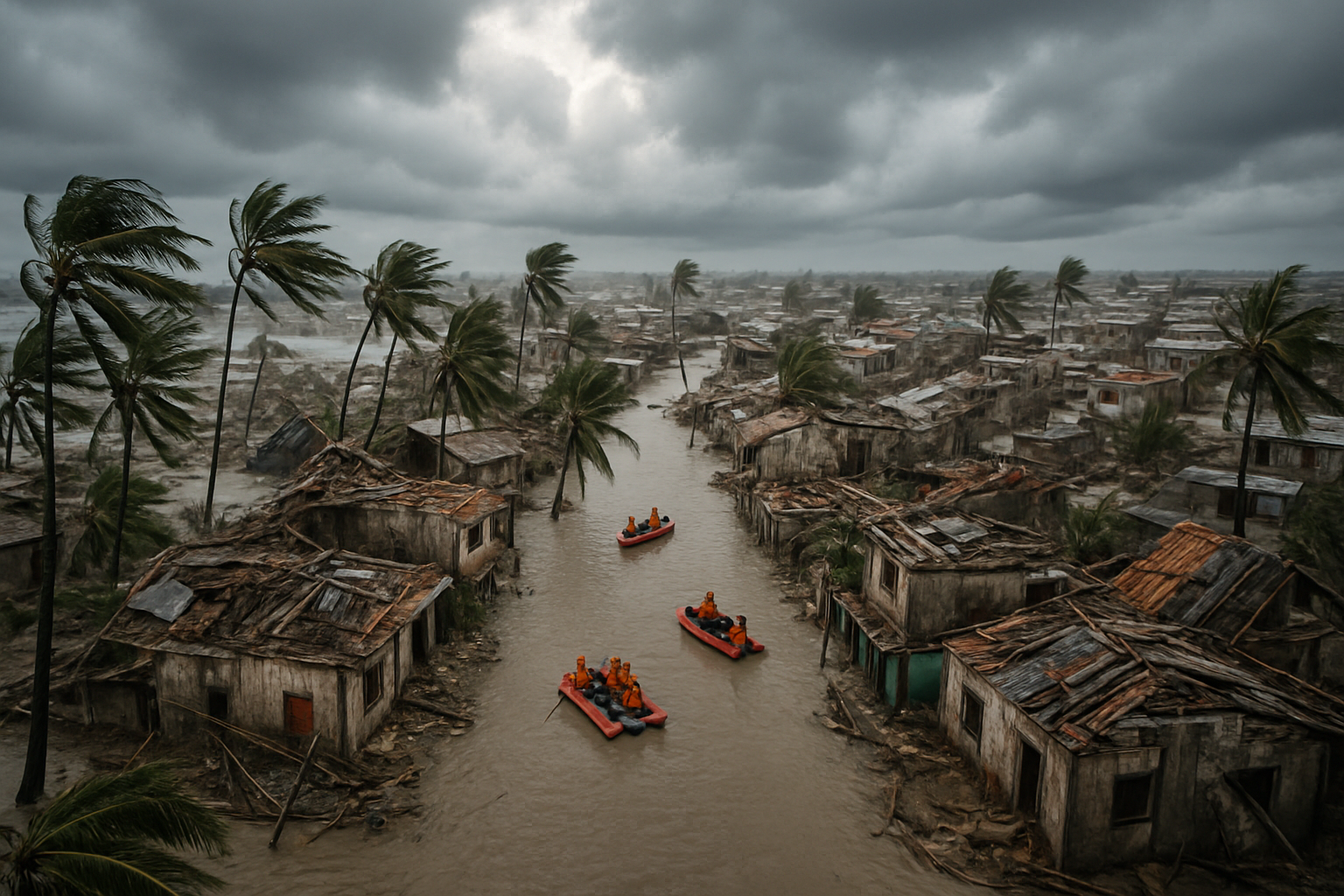
Tropical Cyclone Gezani has claimed at least 38 lives in Madagascar after battering the Indian Ocean island nation with devastating winds of up to 250 km/h, causing widespread destruction in the port city of Toamasina and displacing over 250,000 people across the affected regions.
The powerful cyclone struck Madagascar's eastern coast on February 12, 2026, with the majority of casualties occurring in Toamasina, the country's second-largest city and principal commercial port. The disaster marks the second major cyclone to devastate the island in just 11 days, following Cyclone Fytia which killed 12 people and displaced 31,000 in late January.
In a tragic incident that underscores the cyclone's ferocity, 13 people lost their lives in Toamasina after taking shelter in a shipping container to escape the violent winds. Of the 22 people who had crowded into the container fearing the destruction of their homes, 13 perished when the extreme winds displaced the container nearly 300 meters from its original position.
Government Declares National Emergency
Madagascar's government has declared a national state of emergency through a Council of Ministers decision, recognizing the overwhelming scale of destruction. President Andry Rajoelina has appealed for "international solidarity" to help the nation cope with the catastrophe that has left infrastructure in ruins and communities devastated.
The cyclone's impact has been particularly severe in Toamasina, where powerful winds destroyed homes, breached protective dikes, rendered roads impassable, and flooded crucial rice fields, threatening the region's food security. Educational and health facilities have been severely damaged, hampering emergency response efforts when they are most desperately needed.
"The situation exceeds Madagascar's capabilities alone. We urgently need international support to address this unprecedented disaster,"
— Colonel Michael Randrianirina, Emergency Response Coordinator
Economic and Infrastructure Devastation
The economic implications of Cyclone Gezani are severe, with the destruction of Toamasina port threatening Madagascar's international trade capabilities. As the nation's primary trade gateway, the port's devastation will have lasting impacts on the country's economy and ability to import essential goods.
The agricultural sector has also suffered massive losses, with flooded rice fields threatening food security for hundreds of thousands of people. Madagascar's vanilla industry, which supplies 80% of the world's vanilla, faces potential disruption from the widespread agricultural damage.
Transportation networks across the affected regions have collapsed, with roads blocked by debris and floodwater, while power grids and communication systems have failed extensively. The damage to public infrastructure is expected to require months of reconstruction work.
International Response Mobilizes
The World Health Organization (WHO) has announced an initial emergency aid package of $250,000 for essential medicines and medical supplies, representing the first phase of a broader international resource mobilization effort. Health authorities are particularly concerned about potential disease outbreaks resulting from flooding and deteriorating hygiene conditions in affected areas.
Emergency shelter operations are underway for the displaced populations, while assessment teams work to determine the full scope of damage across the affected regions. The coming weeks will be critical for preventing secondary health crises and beginning the long process of community rebuilding.
Climate Context and Global Pattern
Cyclone Gezani's formation and devastating impact occur within a broader context of extreme weather patterns affecting the Indian Ocean region. The cyclone formed in the Indian Ocean before tracking across central Madagascar and entering the Mozambique Channel, where it intensified further.
The disaster unfolds against the backdrop of January 2026 being confirmed as the hottest month in recorded history, marking the 18th consecutive month to exceed 1.5°C above pre-industrial levels. This warming trend demonstrates how climate change is overriding natural climate cycles, including the typically cooling effects of La Niña conditions.
The consecutive cyclone impacts—with Fytia striking just 11 days earlier—have prevented adequate recovery between storms, overwhelming Madagascar's response capabilities and highlighting the vulnerability of small island developing states to intensifying weather patterns.
Emergency Services Overwhelmed
Madagascar's emergency services are operating at capacity limits, struggling to respond effectively to the second major cyclone in less than two weeks. The rapid succession of severe weather events has prevented authorities from fully addressing the aftermath of Cyclone Fytia before confronting an even more devastating storm.
Risk levels remain high across the affected areas due to persistent flooding, dangerous swells, ongoing landslide threats, and the potential for additional building collapses. Emergency responders are working around the clock to reach isolated communities and provide essential aid to those most in need.
The remote geography of many affected areas, combined with damaged infrastructure, is significantly hampering relief efforts. Many communities remain cut off from outside assistance, with emergency teams using boats and helicopters to reach stranded populations.
Long-term Recovery Challenges
The scale of destruction from Cyclone Gezani presents Madagascar with long-term recovery challenges that will require sustained international support and coordinated rebuilding efforts. The consecutive impact of two major cyclones has created a complex disaster scenario that extends far beyond typical emergency response capabilities.
Recovery efforts will need to focus not only on immediate humanitarian needs but also on rebuilding critical infrastructure to be more resilient against future extreme weather events. The disaster highlights the urgent need for enhanced climate adaptation measures and improved disaster preparedness frameworks.
The international community's response will be crucial in determining how quickly Madagascar can recover from this devastating blow. The island nation's vulnerability to climate change impacts makes it a critical test case for global cooperation in addressing the increasing frequency and intensity of extreme weather events.
As Madagascar begins the long process of recovery, the lessons learned from Cyclone Gezani's impact will be essential for improving preparedness for future storms and building more resilient communities capable of withstanding the challenges of a changing climate.