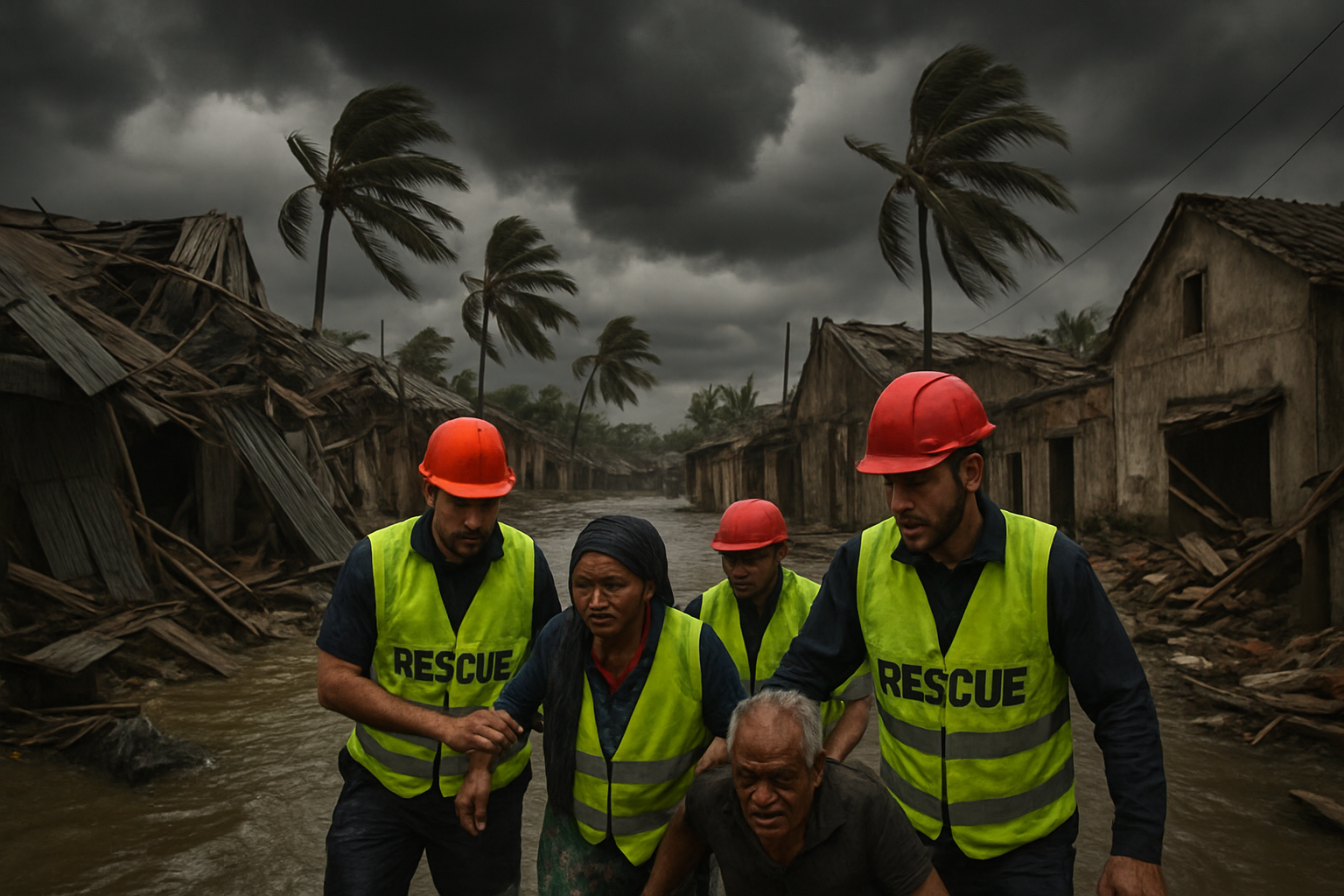
Tropical Cyclone Gezani has killed at least 31 people and affected an estimated 250,000 residents across Madagascar, with the port city of Toamasina bearing the brunt of the devastation as authorities declared a national state of emergency following the catastrophic storm.
The powerful cyclone, which struck Madagascar with winds reaching up to 250 kilometers per hour according to German news reports, represents the second major tropical cyclone to devastate the island nation in just 11 days, following Cyclone Fytia which killed 12 people and displaced 31,000 residents in northwestern regions.
Toamasina Port City Severely Damaged
Toamasina, Madagascar's crucial economic port and the nation's second-largest city, suffered extensive destruction from Cyclone Gezani. Public infrastructure has been destroyed, numerous homes damaged, dikes breached, and several roads rendered impassable. Rice fields across the region have been completely flooded, threatening food security for local communities.
Educational and health facilities are among the buildings severely affected by the cyclone's impact. Schools and medical establishments in the port city have sustained significant damage, hampering both educational services and emergency medical response capabilities during this critical recovery period.
National Emergency Response Mobilized
Madagascar's government has declared a national state of emergency in response to the unprecedented destruction caused by the successive tropical cyclones Gezani and Fytia. The Council of Ministers made this decision yesterday, acknowledging the overwhelming scale of destruction that has overwhelmed local response capabilities.
Authorities emphasize that risk levels remain dangerously high across affected areas due to persistent flooding, powerful swells, landslides, and the continued threat of building collapses. Emergency teams are working around the clock to reach isolated communities and provide life-saving assistance to affected populations.
International Aid Mobilization
The World Health Organization (WHO) has announced an emergency financial assistance package of $250,000 to support rapid health response in affected areas. This catalytic funding will enable immediate procurement of essential medicines and medical supplies to address urgent needs of disaster-affected populations.
Health authorities are particularly concerned about potential outbreaks of diseases related to flooding and deteriorated hygiene conditions. The WHO funding represents the first phase of what officials indicate will be a broader resource mobilization effort as the full scope of medical needs becomes clearer.
"Beyond this initial envelope, broader resource mobilization is being prepared. WHO is working to coordinate international medical assistance for Madagascar's recovery efforts."
— WHO Emergency Response Statement
Context of Climate Vulnerability
Cyclone Gezani's devastating impact occurs within a broader context of extreme weather events affecting multiple regions globally. The cyclone struck Madagascar during what climatologists confirm was the hottest January on record worldwide, with 18 of the past 19 months exceeding 1.5°C above pre-industrial temperature levels.
Madagascar's vulnerability to consecutive tropical cyclones highlights the growing challenge small island developing states face from intensifying weather patterns. The rapid succession of Cyclones Fytia and Gezani has overwhelmed the island's disaster response capabilities, preventing adequate recovery between major storm impacts.
Economic and Infrastructure Impact
The destruction in Toamasina carries significant economic implications for Madagascar, as the port city serves as the nation's primary gateway for international trade. Damaged infrastructure including roads, communications networks, and power grids will require extensive reconstruction efforts that could take months to complete.
Agricultural sectors have been particularly hard hit, with flooded rice fields threatening food security across affected regions. The timing of the cyclone during critical growing seasons compounds the economic disruption for farming communities already struggling with climate-related challenges.
Regional Pattern of Extreme Weather
Cyclone Gezani is part of a concerning pattern of extreme weather events affecting the Indian Ocean region and beyond. The storm initially formed in the Indian Ocean before tracking across central Madagascar, then moving into the Mozambique Channel where it posed additional threats to neighboring countries.
Maritime authorities in Mozambique suspended all naval activities as a precautionary measure while the cyclone system intensified in regional waters. The broader Southern African region has been grappling with multiple weather emergencies, straining international emergency response capacities.
Recovery Challenges Ahead
Recovery efforts face significant obstacles due to Madagascar's remote geography and the successive nature of recent cyclone impacts. Many affected communities remain isolated due to damaged transportation networks, complicating the delivery of emergency supplies and medical assistance.
The national state of emergency declaration enables coordinated resource mobilization, but authorities acknowledge that Madagascar's response capabilities have been stretched beyond normal limits. International cooperation will be essential for effective recovery and rebuilding efforts in the coming months.
Emergency shelter operations are underway for displaced populations, while assessment teams work to determine the full scope of infrastructure damage across affected regions. The coming weeks will be critical for preventing secondary health crises and beginning the long process of rebuilding communities devastated by Cyclone Gezani's unprecedented impact.