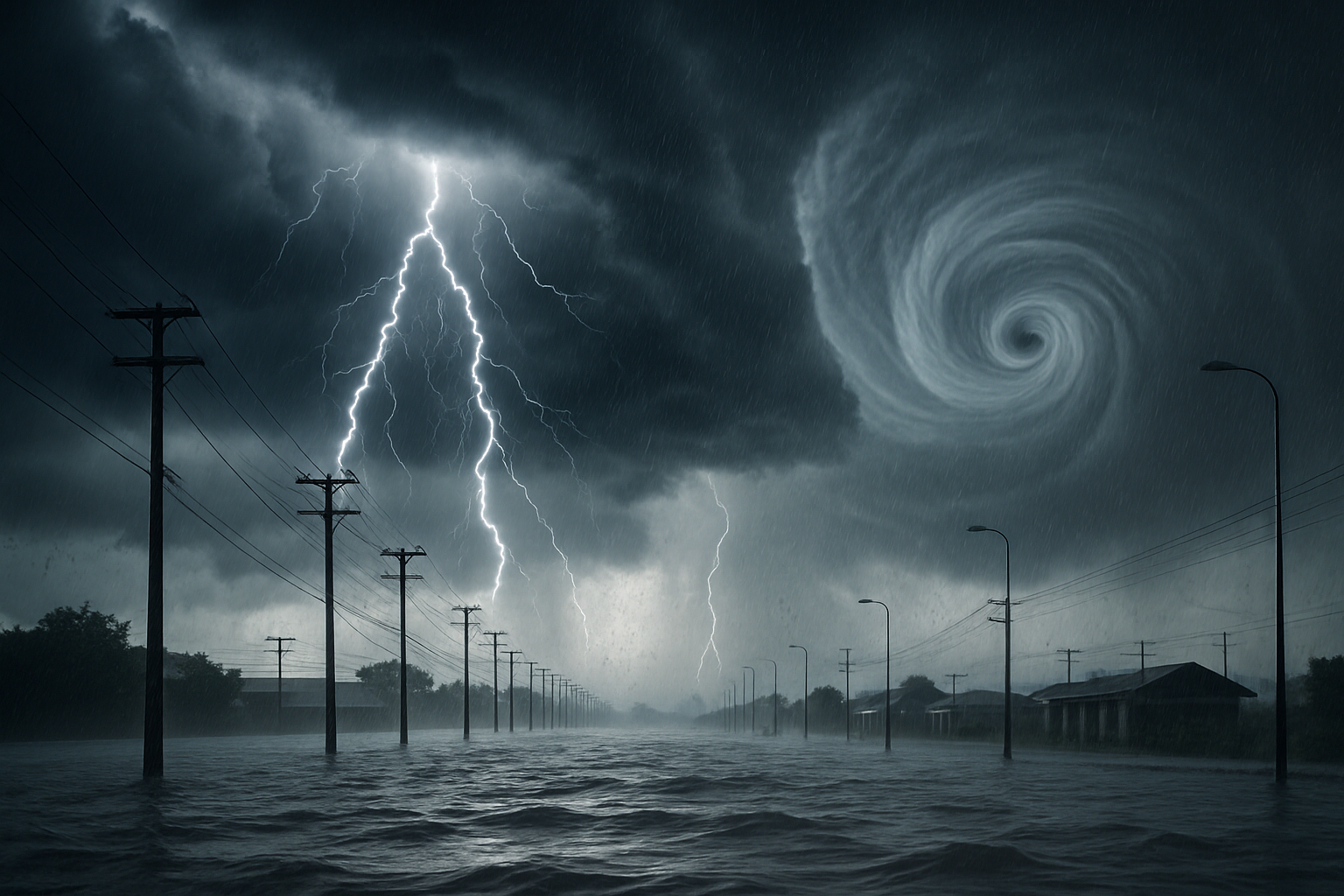
A devastating convergence of extreme weather events across multiple continents is overwhelming emergency services worldwide, as Australia battles Category 3 Cyclone Narelle while several other nations face unprecedented meteorological challenges during what has become the 22nd consecutive month of global temperatures exceeding 1.5°C above pre-industrial levels.
Cyclone Narelle Cuts Off Australian Communities
The town of Exmouth in Western Australia remains completely isolated by land and air after Tropical Cyclone Narelle made landfall Friday as a powerful Category 3 system, bringing destructive winds of up to 185 km/h. The Bureau of Meteorology warns the system continues tracking south throughout Saturday, threatening inland communities with between 30 and 50 millimeters of rainfall within six hours.
Emergency services describe "extensive damage" across the region, with the cyclone's second crossing of the Australian coast representing an unusual weather pattern that has caught authorities off guard. The system's unpredictable trajectory has forced mass evacuations and highlighted vulnerabilities in infrastructure designed for historical rather than current climate conditions.
New Zealand Faces Severe Flooding Crisis
Meanwhile, New Zealand's Northland region is experiencing what locals describe as the "worst weather seen this year," with flooding forcing emergency evacuations in Kerikeri. Community members helping with flood evacuations report unprecedented conditions as heavy rainfall overwhelms traditional drainage systems and threatens lives and property.
The crisis in New Zealand reflects broader Pacific regional instability, with meteorological services warning of continued dangerous conditions as complex weather systems converge across the region.
European Weather Warnings
Egypt's meteorological authority has issued urgent warnings about potential heavy rainfall and severe weather conditions in the coming period, with Dr. Manar Ghanem of the Meteorological Authority's media center alerting citizens to prepare for possible torrential rains and dangerous weather patterns.
The warnings extend across the Mediterranean region, where Cyprus and other island nations are monitoring unusual weather developments. Mauritius has implemented rainfall watches effective until 8 PM Saturday as atmospheric conditions remain unstable across the Indian Ocean region.
Norway Faces Multiple Emergencies
Norwegian emergency services responded to a serious house fire in Horten early Saturday morning, with authorities reporting one person unaccounted for as the building became completely engulfed in flames. The incident, occurring around 2 AM local time, demonstrates how extreme weather conditions are complicating emergency response efforts across multiple scenarios.
Emergency services received reports of the fire at 1:44 AM, with South-East Police District operations leader Lise Bjørnsund confirming that one person is registered at the address and teams are working to determine if anyone was inside the building during the blaze.
Unprecedented Temperature Milestone
The current crisis unfolds against the backdrop of an extraordinary climate milestone, with January 2026 confirmed as the hottest month ever recorded globally. This extends an unprecedented streak of 22 consecutive months where global average temperatures have exceeded the critical 1.5°C threshold above pre-industrial levels - the longest sustained period of extreme warming in recorded human history.
"We're witnessing human-induced climate change fundamentally overriding natural cooling mechanisms, including La Niña effects that would normally moderate global temperatures."
— World Meteorological Organization Climate Scientist
The World Meteorological Organization indicates a 50-60% probability of El Niño development during July-September 2026, which could potentially drive global temperatures into unprecedented territory by combining baseline warming with natural cycle amplification.
Emergency Services Overwhelmed
Traditional mutual aid mechanisms designed for sequential regional disasters are proving inadequate for the current reality of simultaneous multi-continental extreme weather events. Emergency services across affected regions report operating at or beyond capacity limits, while transportation networks, power grids, and communication systems repeatedly exceed operational parameters designed for historical climate patterns.
The Australian Fire and Emergency Services Authority (AFAC) has identified a shift toward "compound disasters" where multiple emergency types occur concurrently rather than in sequence, fundamentally challenging traditional resource allocation and mutual aid systems that emergency services have relied upon for decades.
Infrastructure Under Extreme Stress
Critical infrastructure across affected regions is experiencing cascading failures as systems encounter conditions that exceed their design specifications. Power grids are positioning additional crews in anticipation of widespread outages, while transportation authorities implement emergency protocols for dangerous travel conditions.
The crisis highlights fundamental vulnerabilities in infrastructure systems built for climate conditions that no longer exist. Recovery timelines are shifting from the traditional expectation of weeks to projected periods of months or even years, representing a fundamental change in disaster response approaches.
Economic and Social Impact
Agricultural sectors across affected regions face mounting losses as extreme weather destroys crops and disrupts supply chains during critical growing seasons. Tourism industries are experiencing extended cancellations and infrastructure damage during what should be peak revenue periods.
Mental health services report increased demand for support related to climate anxiety and repeated extreme weather trauma. Families face the prospect of losing generational properties multiple times within a decade, while small businesses confront extinction from repeated disruptions.
International Cooperation Under Strain
The simultaneity of disasters across multiple continents is testing international cooperation mechanisms that were developed for assisting isolated emergencies. Traditional frameworks assume stable regions can assist others during localized disasters, but the current pattern of simultaneous global events challenges this fundamental assumption.
Environmental challenges transcend political boundaries through atmospheric systems and ocean currents that transport climate effects globally, making unilateral adaptation efforts insufficient for comprehensive resilience.
Climate Adaptation Imperative
March 2026 represents what experts describe as a watershed moment in global climate preparedness, forcing a choice between reactive crisis management and transformative infrastructure adaptation. The concept of "building back better" with climate-resilient infrastructure has evolved from an optional enhancement to an essential survival strategy.
Current conditions provide a preview of what may become routine in the 2030s without comprehensive climate adaptation investment. Traditional seasonal patterns that have guided infrastructure design, agricultural planning, and emergency preparedness for centuries are no longer reliable frameworks.
Looking Forward
Additional weather systems are developing in both Atlantic and Pacific regions, with authorities maintaining high alert status globally. The persistence of current crisis conditions may establish a "new normal" of extreme weather frequency and intensity that permanently challenges traditional emergency response frameworks.
The convergence of extreme weather, infrastructure vulnerabilities, and emergency response limitations underscores the urgent need for coordinated international action. The window for effective climate action continues to narrow as ecological systems approach critical thresholds that could trigger irreversible changes affecting global food security, climate stability, and human settlements.
"The question is no longer whether transformative climate action is needed, but whether humanity can organize and implement solutions rapidly enough to maintain planetary habitability during Earth's most environmentally challenging period in recorded history."
— International Climate Adaptation Expert
Tools, knowledge, and cooperation frameworks exist for comprehensive environmental protection, but success depends on unprecedented speed and coordination through sustained international cooperation and political commitment to environmental protection as essential infrastructure for human prosperity and planetary sustainability.