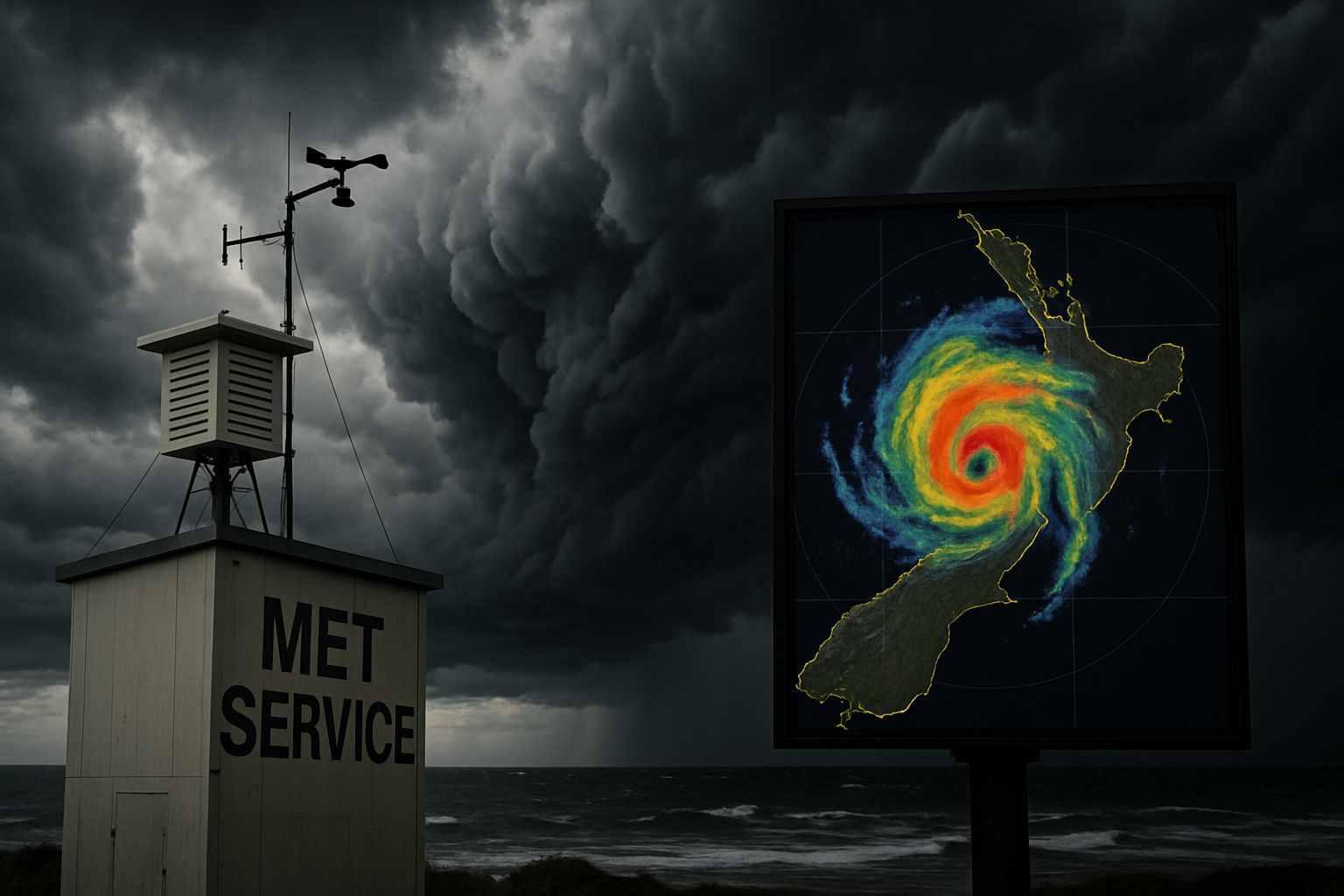
Northland has declared a state of emergency as Tropical Cyclone Vaianu approaches New Zealand's North Island, with MetService warning of "damaging, potentially life-threatening" conditions expected to arrive Saturday night through Sunday.
The Category 2 tropical cyclone, currently tracking from east of Vanuatu toward New Zealand waters, has prompted authorities to activate emergency protocols across the upper North Island, with major population centers including Auckland, Hamilton, and Tauranga within the projected impact zone.
MetService forecasters warn that first impacts could be felt as early as Saturday morning, with the storm system expected to reach Northland late Saturday night. The timing has sparked particular concern given the region's vulnerability following repeated extreme weather events throughout 2026.
Emergency Preparations Intensify
Civil Defence has activated comprehensive emergency protocols across the North Island as communities brace for what meteorologists describe as a significant weather event. The storm threatens the flood-saturated Northland region, which remains particularly vulnerable after the devastating March 26 Far North and Whangārei flooding that required week-long emergency declarations.
Prime Minister Christopher Luxon has urged immediate preparation, recognizing the stretched capabilities of emergency response services still managing recovery efforts from previous weather disasters. The National Emergency Management Agency (NEMA) emphasized that preparations must be completed urgently, warning residents that "later on is too late" as the storm continues to gain strength approaching New Zealand waters.
Emergency services are coordinating multi-agency response plans while communities demonstrate enhanced preparedness compared to previous years. Residents have strengthened emergency networks through successive weather events, with many households now equipped with Starlink satellite communications, backup generators, and community coordination systems developed through recent extreme weather experiences.
Critical Climate Context
Cyclone Vaianu's approach occurs during the 23rd consecutive month that global temperatures have exceeded 1.5°C above pre-industrial levels – the longest sustained extreme warming period in recorded human history. January 2026 remains the hottest month ever recorded, demonstrating the unprecedented climate volatility affecting weather patterns worldwide.
The World Meteorological Organization reports a 50-60% probability of El Niño conditions developing by July-September 2026, potentially driving unprecedented temperatures through the combination of baseline warming and natural climate amplification. This "climate volatility paradox" enables both global heat records and devastating regional extremes through disrupted atmospheric circulation patterns.
New Zealand has experienced a relentless series of extreme weather events throughout 2026, including the February Ōtorohanga flooding that claimed at least one life, the March Banks Peninsula isolation where communities received ten times their monthly rainfall in 48 hours, and ongoing infrastructure challenges from successive storms.
Infrastructure Under Pressure
Transportation networks, power grids, and communication systems across the North Island are operating beyond their historical design parameters due to the unprecedented frequency and intensity of extreme weather. The approaching cyclone threatens infrastructure that has had insufficient time to fully recover between successive impacts.
Emergency management experts identify a paradigm shift toward "compound disasters" – multiple emergency types occurring concurrently rather than sequentially – fundamentally challenging traditional resource allocation and mutual aid mechanisms designed for isolated regional emergencies.
The tourism industry faces additional disruption during what should be a peak revenue period, while agricultural sectors confront mounting challenges during critical growing seasons. Mental health services report increased demand as communities deal with repeated climate trauma and anxiety about losing generational properties.
Broader Emergency Response Crisis
New Zealand's cyclone emergency unfolds against a backdrop of global emergency response systems operating at or beyond capacity limits. Traditional mutual aid mechanisms, designed for sequential disasters, prove increasingly inadequate as multiple continents face simultaneous weather emergencies.
The European Union's Civil Protection Mechanism has been repeatedly activated throughout 2026, including a €246 million assistance package for Sweden and Denmark – the largest coordinated European weather response on record. However, experts warn that even these unprecedented measures remain insufficient for the scale and simultaneity of current global weather disasters.
Recovery timelines have fundamentally shifted from weeks to months or years, representing a permanent change in disaster response approaches. The concept of "building back better" has evolved from an optional enhancement to an essential survival strategy for the permanent climate volatility era.
Community Resilience and Adaptation
Despite the challenges, New Zealand communities demonstrate remarkable resilience through enhanced preparation and coordination. The integration of traditional knowledge with modern meteorological forecasting has proven particularly valuable, as has the development of community networks strengthened through successive weather events.
Local authorities emphasize evacuation readiness for residents in unsafe areas, while business owners across affected regions "hunker down" for sustained weather impacts. The experience gained from previous emergencies has led to more sophisticated emergency planning and community coordination systems.
However, the mental health implications of repeated extreme weather cannot be overlooked. Support services report increasing demand as families face the prospect of losing homes and livelihoods multiple times within a single decade, fundamentally challenging traditional concepts of community stability and security.
Economic and Social Impact
The approaching cyclone threatens significant economic disruption across multiple sectors. The tourism industry faces cancellations during a critical revenue period, while agricultural communities confront potential crop and livestock losses during key growing seasons. Supply chain disruptions could have cascading effects on regional commerce and transportation networks.
The Supercars championship has already been forced into dramatic format changes at the ITM Taupō Super440, with the threat of Cyclone Vaianu dominating discussions among competitors and organizers. Tourism operators like Bachcare are implementing comprehensive refund and rebooking policies for affected Coromandel Peninsula trips.
Small businesses face particular vulnerability, with many operating without sufficient resources to withstand repeated disruptions. The economic impacts extend beyond immediate storm damage to include lost productivity, increased insurance costs, and the ongoing challenge of maintaining business continuity in an increasingly volatile climate environment.
Global Climate Emergency Context
Cyclone Vaianu represents part of a broader pattern of extreme weather disasters affecting multiple continents simultaneously. As emergency services across the globe operate beyond their traditional capacity limits, the international community faces fundamental questions about emergency response coordination and climate adaptation strategies.
Environmental challenges transcend national boundaries through atmospheric and ocean systems that transport climate effects globally. The simultaneity of current disasters tests mechanisms traditionally designed to provide regional assistance during isolated emergencies, requiring unprecedented international cooperation and coordination.
Climate adaptation experts describe April 2026 as a watershed moment requiring a choice between reactive crisis management and transformative infrastructure adaptation. Current conditions provide a preview of routine circumstances expected in the 2030s without comprehensive climate adaptation investment.
Looking Forward
As Cyclone Vaianu approaches, New Zealand faces a critical test of its emergency preparedness capabilities and community resilience. The storm's impact will likely influence policy discussions about infrastructure investment, emergency response coordination, and long-term climate adaptation strategies.
The window for effective climate action continues to narrow as ecological systems approach critical thresholds that could trigger irreversible changes to global food security, climate stability, and human settlements. Tools, knowledge, and cooperation frameworks exist for comprehensive environmental protection, but they require unprecedented speed of coordination and sustained international cooperation.
The question facing New Zealand – and the global community – is whether humanity can organize and implement solutions rapidly enough to maintain planetary habitability during Earth's most environmentally challenging period in recorded history. Cyclone Vaianu serves as both an immediate emergency and a symbol of the larger climate crisis requiring transformative action.
As communities across Northland and the upper North Island prepare for potentially life-threatening conditions, their response will provide valuable insights into building resilience for the permanent climate volatility era that now defines our global reality.