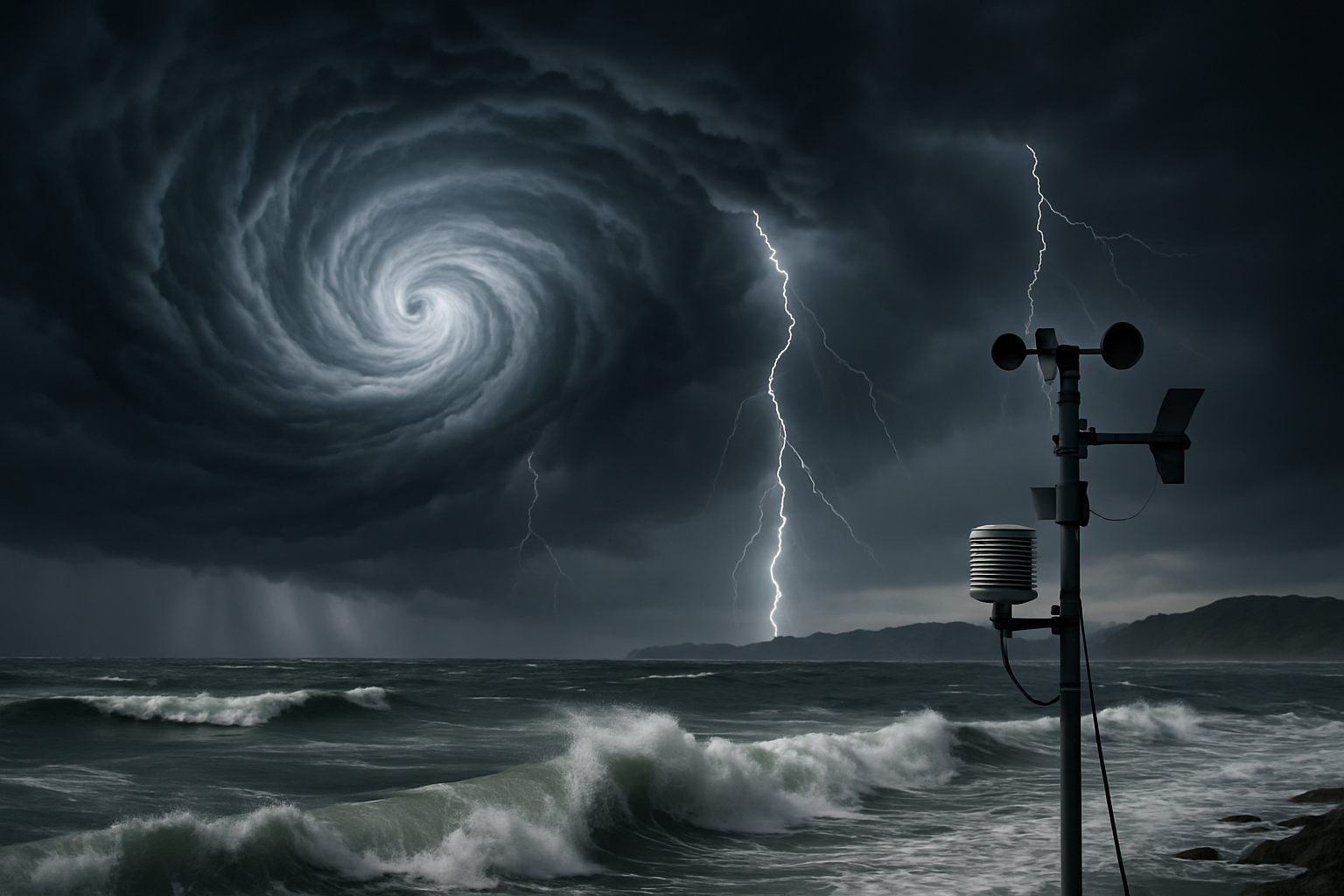
Potentially devastating Cyclone Vaianu is rapidly approaching New Zealand's North Island as a Category 3 storm system, with MetService issuing urgent warnings for life-threatening conditions expected to impact the region by Sunday.
The tropical cyclone, which has been intensifying as it tracks southward from east of Vanuatu, represents the latest in a series of extreme weather events battering the nation during what scientists have described as the most severe climate crisis in recorded history.
Dangerous Storm System Approaching
MetService forecasters report that Cyclone Vaianu has been gaining both speed and power as it moves through Pacific waters toward New Zealand. The storm system is expected to reach New Zealand waters by Wednesday evening, with the most severe impacts anticipated for the North Island through the weekend.
"This is a damaging, potentially life-threatening cyclone that is increasingly likely to hit New Zealand," meteorologists warned in their latest bulletin. The agency has issued severe weather watches and warnings across multiple regions, with particular concern for flood-saturated Northland areas that remain vulnerable following recent extreme weather events.
The timing is particularly concerning given that many North Island regions are still recovering from previous flooding events. Northland, which has experienced repeated inundations throughout 2026, faces the prospect of additional catastrophic flooding as saturated soils cannot absorb further rainfall.
Emergency Preparations Underway
Civil Defence authorities across the North Island have activated emergency response protocols as communities prepare for what could be one of the most significant weather events of the year. Emergency services are positioning resources strategically, with particular focus on areas identified as high-risk for flooding and infrastructure damage.
The storm's trajectory suggests that major population centers including Auckland, Hamilton, and Tauranga could experience severe conditions. Transportation networks are already under strain, with contingency plans being developed for potential road closures and service disruptions.
"We are taking this threat very seriously and urge all residents in potential impact zones to complete their emergency preparations immediately."
— Civil Defence spokesperson
Schools and businesses in vulnerable areas are reviewing their continuity plans, while tourism operators are canceling activities and advising visitors to seek secure accommodation.
Historic Climate Context
Cyclone Vaianu's approach occurs during the 23rd consecutive month that global temperatures have exceeded 1.5°C above pre-industrial levels – the longest sustained extreme warming period in recorded human history. This unprecedented warming streak has created conditions that scientists describe as a "climate volatility paradox," where sustained global heating enables increasingly severe regional weather extremes.
The World Meteorological Organization has identified a 50-60% probability of El Niño conditions developing during July-September 2026, which could drive global temperatures to unprecedented levels by combining baseline warming with natural climate amplification.
New Zealand has experienced a relentless series of extreme weather events throughout 2026, including the devastating Ōtorohanga flooding in February that claimed at least one life and left entire communities underwater. The Banks Peninsula was isolated for days in March after receiving ten times its monthly rainfall in just 48 hours.
Infrastructure Under Pressure
The nation's infrastructure systems, designed for historical climate patterns rather than current extreme conditions, face another severe test. Power companies are positioning crews to respond to anticipated widespread outages, while transportation authorities are developing contingency plans for potential network failures.
Agricultural communities, already dealing with mounting losses from repeated extreme weather events, are preparing for potential crop damage and livestock risks. The economic impact of successive weather disasters has created mounting pressure on farming operations and rural communities.
Recovery timelines from recent events have shifted from weeks to months or years, fundamentally changing disaster response approaches. The concept of "building back better" with climate-resilient infrastructure has evolved from an optional enhancement to an essential survival strategy.
International Climate Emergency
Cyclone Vaianu's threat emerges against a backdrop of global climate emergency, with multiple countries simultaneously battling extreme weather disasters. Traditional mutual aid mechanisms designed for sequential regional emergencies have proven inadequate when multiple continents face concurrent crises.
Emergency services worldwide are operating at or beyond capacity limits, with transportation networks, power grids, and communication systems repeatedly failing as extreme weather exceeds operational parameters established for historical climate conditions.
The European Union's Civil Protection Mechanism has been repeatedly activated throughout 2026, including a €246 million assistance package for Sweden and Denmark – the largest coordinated European weather response on record, yet insufficient for the scale and simultaneity of current challenges.
Adaptation Watershed Moment
Climate adaptation experts describe the current period as a critical watershed moment requiring a choice between reactive crisis management and transformative infrastructure adaptation. Traditional seasonal patterns that have guided human activities for centuries are becoming increasingly unreliable as planning frameworks.
The frequency and intensity of extreme weather events are testing the limits of current emergency response capabilities and highlighting the urgent need for fundamental system restructuring to address permanent climate volatility rather than exceptional weather events.
As additional weather systems develop across Atlantic and Pacific regions, authorities maintain high alert status, recognizing that current crisis conditions may persist for weeks or months, potentially establishing a "new normal" of extreme weather frequency that permanently challenges traditional emergency frameworks.
Community Resilience and Preparedness
Despite the mounting challenges, New Zealand communities have demonstrated remarkable resilience and adaptation capacity. Local networks have evolved to integrate traditional knowledge with modern meteorological forecasting, creating hybrid approaches to weather preparation and response.
Mental health services report increased demand for support related to climate anxiety and repeated weather trauma, highlighting the psychological toll of recurring extreme events on communities. Families face the prospect of losing generational properties multiple times within a single decade, while small businesses confront potential extinction from recurring disruptions.
The current crisis underscores the critical importance of individual and community preparedness as extreme weather becomes increasingly frequent and severe. Emergency authorities emphasize that self-reliance and mutual aid will be essential components of resilience strategies in the evolving climate reality.
Looking Ahead
As Cyclone Vaianu approaches, the question facing New Zealand – and the global community – is whether humanity can organize and implement solutions rapidly enough to maintain planetary habitability during Earth's most environmentally challenging period in recorded history.
The tools, knowledge, and cooperation frameworks exist for comprehensive environmental protection, but success requires unprecedented speed, coordination, and sustained international cooperation. The choices made in coming weeks and months may prove decisive for climate resilience strategies affecting generations to come.
For now, New Zealand prepares for another test of its emergency systems and community resilience, hoping that lessons learned from previous disasters will help minimize the impact of what threatens to be a significant natural disaster in an era of unprecedented climate volatility.