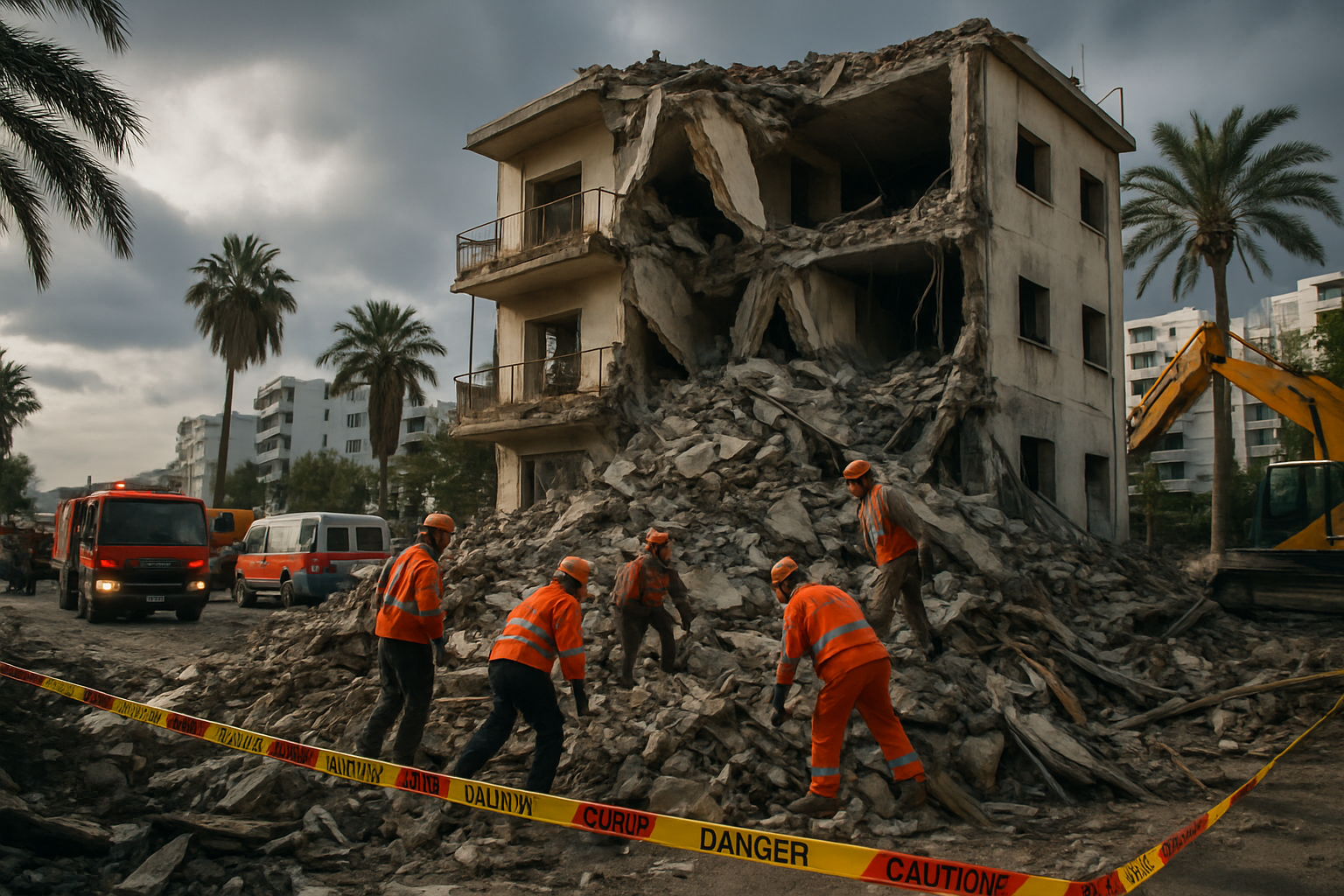
A devastating investigation into Saturday's fatal building collapse in Germasogeia, Limassol, has revealed that property owners repeatedly ignored official safety warnings spanning several years, leading to the deaths of two residents who were forced to live in appalling and dangerous conditions.
Two people died when the eastern section of the Elka Dueling Court on Aeschylus Street collapsed "like a house of cards" shortly after 1:00 p.m. on Saturday afternoon, leaving the remainder of the structure split in two and leaning precariously. Official sources confirm that authorities are now investigating potential criminal negligence in what has become one of Cyprus's most serious building safety failures in recent years.
Years of Ignored Warnings
The tragedy has exposed a systematic failure of building oversight, with sources revealing that landlords had received multiple warnings about the structural integrity of the decades-old building. The collapse has prompted urgent questions about enforcement mechanisms for building safety regulations across the island.
Joanna Yiorkatzi, a friend who may have been the last person to speak with Stanley, the 27-year-old Nigerian victim, described the "appalling" living conditions at the property to philenews. Her testimony paints a disturbing picture of negligent landlords who prioritized rental income over tenant safety.
"The apartment had holes in the ceiling with exposed metal bars hanging over the living area. It was completely unsafe, but the landlord ignored all warnings about the building's condition."
— Joanna Yiorkatzi, Friend of Victim
Dangerous Living Conditions Exposed
The investigation has revealed that residents, primarily foreign nationals, were living in squalid conditions that posed immediate dangers to their safety. Witnesses described structural defects including:
- Holes in ceilings with exposed metal reinforcement bars
- Cracking walls showing signs of structural weakness
- Water damage indicating ongoing maintenance failures
- Inadequate safety measures despite visible deterioration
The building housed primarily foreign nationals, including African and Egyptian residents, many of whom had limited recourse to challenge unsafe housing conditions. This vulnerable population appears to have been specifically targeted by property owners who knew they could exploit tenants with fewer legal protections.
Emergency Response and Rescue Operations
Following the collapse, emergency services launched extensive rescue operations involving the Cyprus Fire Service, police units, and specialized urban search and rescue teams. Heavy machinery was deployed to carefully remove debris while searching for survivors.
The victims were recovered at 5:30 PM and 7:30 PM during the complex rescue operation. Three additional people were hospitalized with non-life-threatening injuries, while the immediate area was cordoned off and nearby buildings were evacuated as a precautionary measure.
The professional response demonstrated Cyprus's evolved emergency response capabilities, incorporating lessons learned from regional infrastructure challenges and international best practices in urban disaster management.
Building Classification and Regulatory Failures
Perhaps most damning is the revelation that the building had already been classified as dangerous by the Limassol District Local Government Organisation. Property owners had received official warnings years ago from the former Germasogeia municipality about structural problems that required immediate renovation work.
These warnings were systematically ignored by the landlords, who continued to collect rent from vulnerable tenants while failing to address fundamental safety defects. The case exposes critical gaps in regulatory enforcement mechanisms, where identifying risks did not translate into effective action to protect residents.
Government sources indicate that the investigation will focus specifically on building maintenance records, compliance with safety standards, and the apparent failure of enforcement mechanisms designed to ensure property owners address identified safety hazards.
Broader Infrastructure Crisis Context
This tragedy occurs within a broader pattern of global infrastructure challenges that have marked 2026. The collapse demonstrates evolved Cyprus emergency response capabilities but highlights prevention failures in the critical gap between identifying risks and taking effective protective action.
The incident has prompted government spokesperson promises of state support for victims' families and calls for a thorough investigation into accountability mechanisms. The focus has shifted from reactive crisis management to preventive oversight that could protect vulnerable populations from similar tragedies.
Community Response and Support Systems
In the aftermath of the collapse, community support networks have been activated to assist displaced residents. The tragedy has highlighted the vulnerability of foreign national communities who often face language barriers, limited legal knowledge, and economic constraints that make them susceptible to exploitation by unscrupulous landlords.
Local organizations have mobilized to provide temporary accommodation and support services for affected residents, while advocacy groups are calling for stronger protection mechanisms for vulnerable tenant populations.
Investigation and Accountability
Authorities have launched a comprehensive investigation focusing on several critical areas:
- Criminal negligence by property owners who ignored safety warnings
- Regulatory oversight failures that allowed dangerous conditions to persist
- Building maintenance record compliance and documentation
- Enforcement mechanism effectiveness in protecting vulnerable tenants
The investigation represents a critical test of Cyprus's commitment to building safety enforcement and protection of vulnerable populations. Legal experts suggest that successful prosecution could establish important precedents for landlord accountability and tenant protection.
Implications for Building Safety Oversight
The Germasogeia tragedy has exposed systemic weaknesses in building safety oversight that extend beyond this single incident. The case demonstrates how regulatory warnings without effective enforcement mechanisms can create a false sense of security while leaving vulnerable populations at risk.
Government officials are now reviewing building safety protocols and enforcement procedures to prevent similar tragedies. The focus includes strengthening inspection processes, improving enforcement mechanisms, and protecting vulnerable tenant populations from exploitation.
"This investigation will determine whether we can prevent similar tragedies through better enforcement of existing safety regulations and stronger protection for vulnerable residents."
— Government Official, Speaking Anonymously
Path Forward: Prevention and Protection
As rescue operations conclude and the investigation begins, Cyprus faces critical questions about building safety enforcement and protection of vulnerable populations. The tragedy serves as a stark reminder that effective building safety requires not just identifying risks but ensuring property owners take immediate action to address identified hazards.
The coming weeks will be crucial in determining whether this tragedy leads to meaningful reforms in building safety oversight, enforcement mechanisms, and protection of vulnerable tenant populations. The stakes extend beyond this single incident to fundamental questions about Cyprus's commitment to ensuring safe housing for all residents, regardless of their economic status or nationality.
Community leaders and safety advocates are calling for comprehensive reforms including stronger enforcement mechanisms, enhanced tenant protections, and regular safety inspections that prioritize vulnerable populations. The goal is transforming building safety from reactive crisis management to proactive protection that prevents tragedies before they occur.