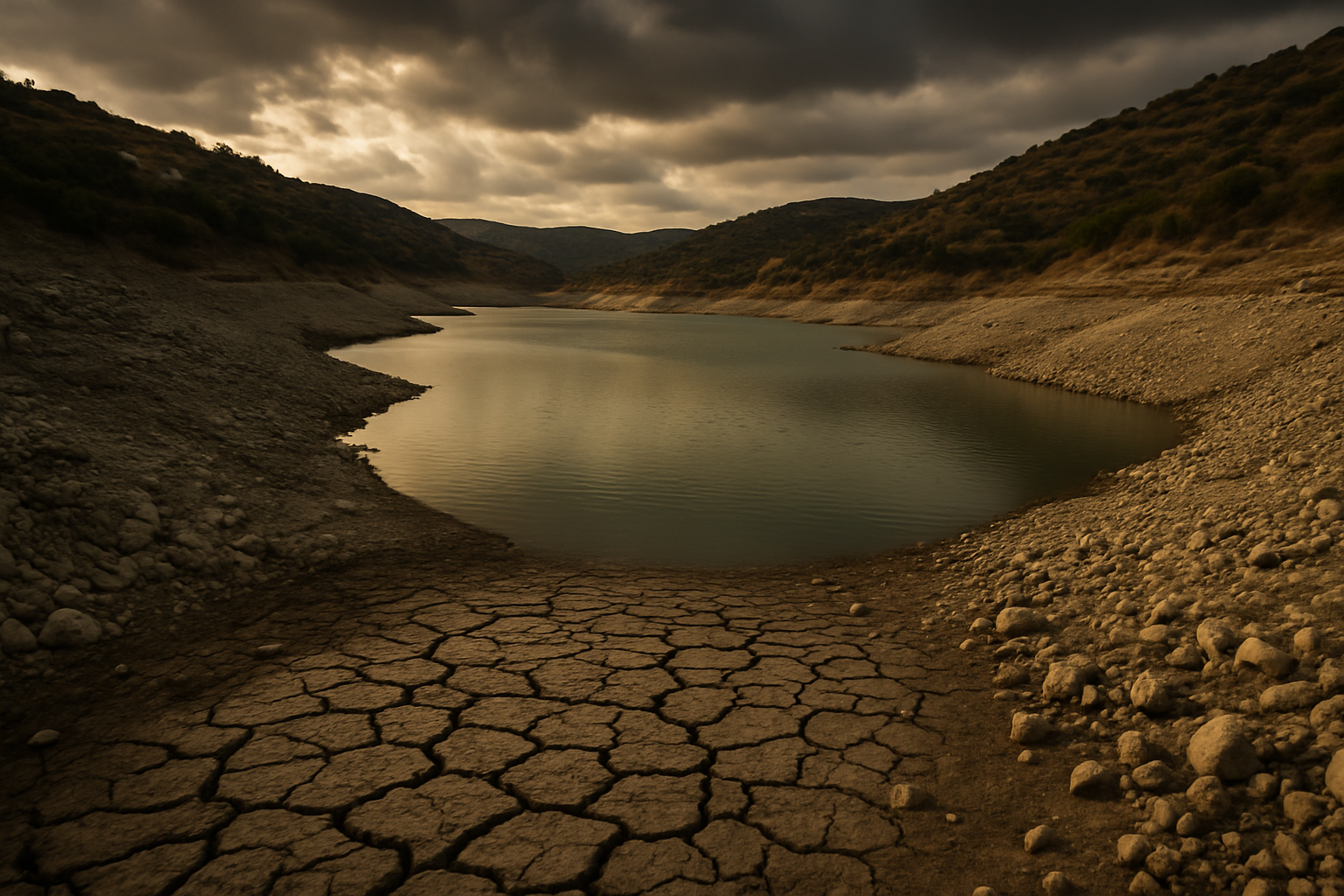
Cyprus's water reservoirs remain at critically low levels despite recent rainfall, with dams across the island currently holding just 21% of their total capacity, according to the Water Development Department (WDD), highlighting the severity of the ongoing water crisis facing the Mediterranean nation.
Senior WDD technical engineer Marios Hadjicostis confirmed that the island's reservoirs currently hold 61.15 million cubic meters of water, representing a significant decline from the 73.8 million cubic meters recorded at the same time last year—a drop from 25.4% to 21% capacity. This concerning trend underscores the mounting pressure on Cyprus's water infrastructure amid prolonged drought conditions.
Strategic Water Management Challenges
The latest data reveals the complex nature of Cyprus's water security challenges, where recent precipitation has failed to substantially improve the overall situation. Inflows into dams have slowed in recent days due to the lack of rainfall in early March, further complicating efforts to replenish critical water reserves.
Hadjicostis emphasized that effective water replenishment depends not only on the total amount of rainfall but also on its geographic distribution across the island. "Rainfall is not just a number. It must fall in targeted areas," he explained, highlighting the strategic importance of precipitation patterns for water management.
"Precipitation on the southwestern side of the Troodos mountains is particularly important, as runoff from that region feeds several of the island's largest reservoirs."
— Marios Hadjicostis, Senior WDD Technical Engineer
Historical Context and Climate Pressures
This water crisis occurs within a broader context of unprecedented climate volatility affecting the Mediterranean region. Cyprus has been grappling with water security challenges for years, exacerbated by rising temperatures, irregular precipitation patterns, and increasing demand from both domestic consumption and tourism sectors.
The island's water management challenges have been compounded by global climate patterns, with recent months showing sustained temperature increases that have intensified drought conditions across the region. The current situation reflects broader trends affecting water resources throughout the eastern Mediterranean, where traditional precipitation patterns have become increasingly unreliable.
Government Response and Adaptation Measures
In response to the ongoing crisis, Cyprus has been implementing various water management strategies, including the development of desalination infrastructure and enhanced conservation measures. The government has previously announced plans for significant water infrastructure projects, though some have faced delays due to environmental and logistical considerations.
The European Union has mandated that Cyprus, along with all member states, reduce water consumption by 10% by 2030 as part of a broader European water resilience strategy. This requirement has added urgency to the island's efforts to develop sustainable water management solutions that balance conservation with economic development needs.
Regional Water Infrastructure Development
Cyprus's water challenges mirror broader infrastructure development trends across the region. Previous government initiatives have focused on modernizing water distribution systems, improving leak detection capabilities, and developing alternative water sources through technological innovation.
The island's approach to water security has evolved beyond traditional reservoir management to include comprehensive strategies addressing supply chain diversification, advanced treatment technologies, and community-based conservation programs. These efforts reflect a growing recognition that water infrastructure must adapt to changing climate conditions rather than relying solely on historical precipitation patterns.
Economic and Social Implications
The persistent water shortage carries significant economic implications for Cyprus, particularly affecting agricultural productivity and tourism competitiveness. Water scarcity threatens key economic sectors while creating additional costs for alternative supply solutions, including increased reliance on desalination and water imports.
The crisis also highlights the broader challenge of balancing immediate water needs with long-term sustainability goals. As climate conditions continue to evolve, Cyprus faces the complex task of developing resilient water systems that can maintain supply security while supporting economic growth and environmental protection.
Looking Forward: Adaptive Water Management
The current situation underscores the critical importance of developing adaptive water management strategies that can respond effectively to changing precipitation patterns and increasing demand pressures. Cyprus's experience provides valuable insights for other Mediterranean nations facing similar challenges as climate volatility becomes an increasingly prominent factor in regional water security.
As the island continues to monitor water levels and implement conservation measures, the focus remains on developing sustainable solutions that can provide long-term water security while supporting the diverse needs of Cyprus's economy and population. The ongoing crisis serves as a stark reminder of the urgent need for comprehensive water resource management in an era of increasing environmental uncertainty.