Cyprus became the first European territory attacked since World War II when Iranian-manufactured drones struck the British sovereign base at RAF Akrotiri on March 2, 2026, triggering an unprecedented European military response that has reshaped Mediterranean security dynamics.
The coordinated strikes, allegedly launched by Hezbollah from Lebanese territory as part of Iran's broader "Operation True Promise 4" retaliation campaign, marked a dangerous escalation that brought Middle Eastern conflicts directly to European soil for the first time in over 80 years.
European Parliament President Roberta Metsola declared that Cyprus "will never be alone" following the attacks, emphasizing that "European solidarity is real, tangible, and by your side." Her comments came as no fewer than five European Union member states announced deployments of naval assets to Cypriot waters in an extraordinary show of continental unity.
Unprecedented European Military Mobilization
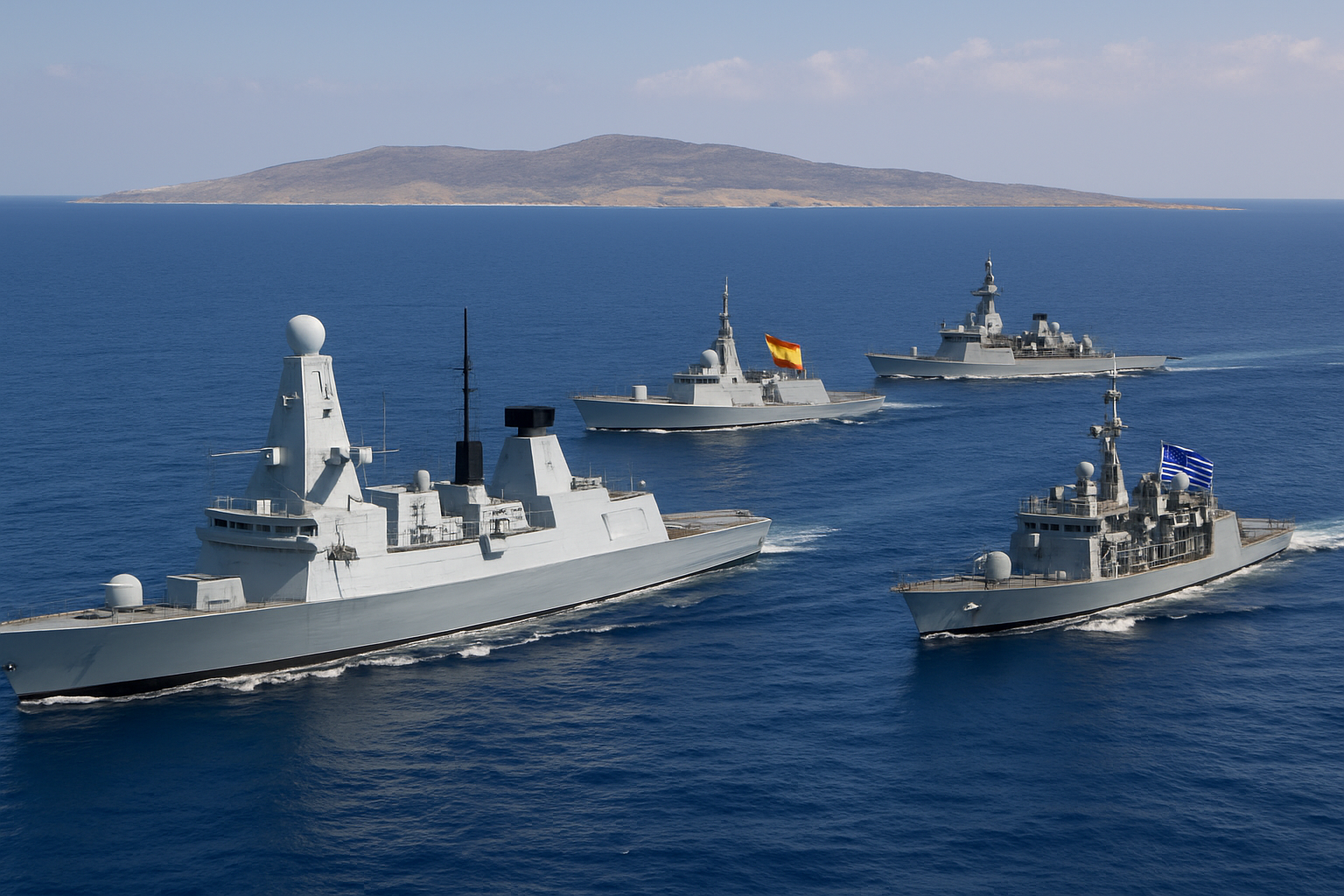
The European response has been swift and comprehensive. France deployed its Charles de Gaulle aircraft carrier, repositioning it from the Baltic Sea to the Mediterranean, alongside the frigate Languedoc equipped with advanced anti-missile and anti-drone systems. This represents the most significant Eastern Mediterranean naval mobilization since the 1974 Turkish invasion of Cyprus.
Greece committed four F-16 fighter jets and two naval frigates, including the advanced Kimon, marking the most substantial Greek military support for Cyprus since 1974. British forces deployed HMS Dragon, a Type 45 destroyer equipped with the Sea Viper missile system designed specifically to counter drone and missile threats, along with AW159 Wildcat helicopters providing counter-drone capabilities.
The Netherlands confirmed deployment of a frigate as part of the French carrier strike group, while Spain's Cristóbal Colón air defense frigate and Italy's Federico Martinengo frigate with 160+ personnel are en route to Cyprus. Germany has promised additional frigate support, creating an unprecedented four-nation European coalition operating independent of traditional NATO frameworks.
Cyprus Activates Emergency Protocols
Cyprus activated its national ESTIA evacuation plan for the first time in history, evacuating Akrotiri village and closing schools in the Asomatos, Episcopi, and Trachoni areas. The emergency response exposed significant gaps in Cyprus's civil defense infrastructure, with only 2,200 registered shelters protecting approximately 30% of the island's population.
Government spokesman Konstantinos Letymbiotis coordinated the European response through emergency EU Foreign Affairs Council sessions, managing the evacuation of over 2,000 European nationals while maintaining Cyprus's diplomatic balance in the region.
The attacks targeted the strategically vital RAF Akrotiri base, which houses approximately 3,000 UK personnel and serves as a critical hub for Eastern Mediterranean and Middle Eastern operations. Located just 100 miles from Lebanon and 200 miles from Syria, the base represents Cyprus's vulnerable position at the intersection of multiple conflict zones.
"Cyprus was not the target – the target was the British Bases," Government spokesman Konstantinos Letymbiotis stressed, attempting to distinguish between attacks on sovereign Cypriot territory and the British sovereign base areas.
— Konstantinos Letymbiotis, Cyprus Government Spokesperson
Intelligence Analysis Reveals Targeting Methods
British intelligence sources revealed that Hezbollah used Google Maps satellite imagery to plan the precise drone strikes, according to reports from The Times. The militants reportedly identified an American Lockheed U-2 reconnaissance aircraft parked outside the targeted hangar using commercially available satellite data.
Military sources expressed concern that the attackers "were hitting what they were aiming at," suggesting sophisticated targeting capabilities despite using readily available technology. The revelation has raised questions about the protection of sensitive military facilities from open-source intelligence gathering.
Broader Regional Crisis Context
The Cyprus attacks occurred within the context of Operation True Promise 4, Iran's massive retaliation campaign following the death of Supreme Leader Ali Khamenei on March 1. The Iranian Revolutionary Guard declared "no red lines remain," extending their targeting to include Western military assets across the region.
The broader conflict has created global disruption, with over 18,000 flights cancelled worldwide – the most extensive aviation crisis since COVID-19. Oil prices have surged past $80 per barrel as Iran declared the Strait of Hormuz "unsafe," affecting 40% of global oil transit. Natural gas prices have increased by 24% in Europe and 78% in the United States.
Regional casualties from Iranian retaliation have mounted across multiple countries: one civilian killed in the UAE, 32 injured in Kuwait airport strikes, and eight injured in Qatar despite successful Patriot missile interceptions of 65 missiles and 12 drones.
Strategic Autonomy Demonstration
The coordinated European response represents the most concrete expression of European strategic autonomy in decades. The rapid military coordination demonstrates European capacity for independent defense responses when territorial integrity is threatened, establishing precedents for alliance responses to extra-regional threats.
French President Emmanuel Macron visited the Charles de Gaulle carrier after holding joint consultations with Greek Prime Minister Kyriakos Mitsotakis and Cypriot President Nikos Christodoulides at the Andreas Papandreou airbase – the most significant Eastern Mediterranean diplomatic gathering since the Iranian attacks.
The multi-layered defense architecture now includes French anti-missile technology, Greek F-16 interceptors, British Sea Viper systems, and Spanish and Italian naval air defense platforms, creating comprehensive protection for Cyprus.
Turkish Counter-Response
Turkey has responded to the escalating situation by deploying six F-16 fighter jets and air defense systems to Northern Cyprus, expanding from an originally planned four aircraft. The Turkish Defense Ministry warned that "additional measures will continue to be taken based on further developments, if deemed necessary."
This deployment reflects the gravity of the regional security situation and adds another layer of complexity to an already tense Mediterranean environment, with Turkish forces now positioned alongside the unprecedented European coalition.
Nuclear Governance Crisis
The Cyprus attacks occurred amid a broader nuclear governance crisis, with the New START treaty having expired on February 5, 2026 – marking the first time in over 50 years without US-Russia nuclear constraints. Iran continues uranium enrichment at 60% purity with over 400kg of weapons-grade material, approaching the capability for multiple weapons.
UN Secretary-General António Costa described the current crisis as "the greatest test of multilateral cooperation in crisis management in the modern era," emphasizing the template-setting nature of the international response.
Historical Significance and Future Implications
The March 2026 attacks on Cyprus represent a fundamental breach of traditional geographic boundaries that have contained Middle Eastern conflicts since World War II. For the first time since 1945, European sovereign territory has been targeted by Middle Eastern actors, fundamentally challenging post-war security assumptions.
The European response demonstrates both the necessity and capability of independent action when continental security is threatened. Success in containing the escalation could provide a framework for future nuclear crisis resolution, strengthening diplomatic precedents. However, failure might accelerate military solutions that could reshape Middle Eastern geopolitics for decades.
The crisis has exposed vulnerabilities in European defense infrastructure while simultaneously demonstrating unprecedented coordination capabilities. Cyprus's civil defense gaps – with shelters protecting only 30% of the population – highlight the need for comprehensive security planning in an era where geographic boundaries no longer contain conflicts.
As the situation continues to develop, the international community faces critical decisions about immediate security needs versus long-term energy security architecture. The template-setting nature of this crisis will likely influence international approaches to conflict resolution, territorial sovereignty enforcement, and collective defense mechanisms for decades to come.
The coming phase will determine whether this represents a contained regional confrontation or the beginning of broader implications extending far beyond the current crisis, affecting energy markets, diplomatic precedents, and the fundamental principles of 21st-century international stability.