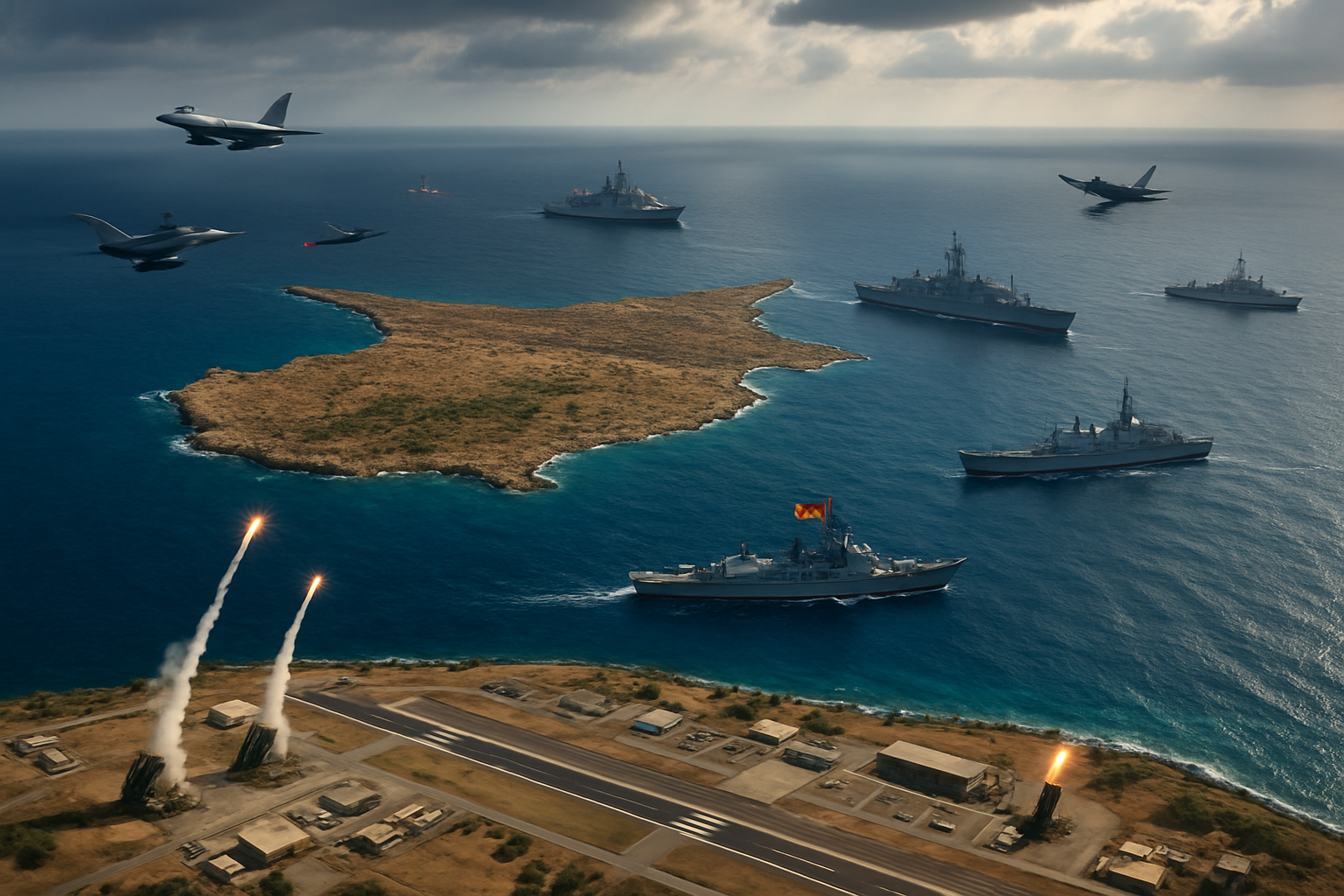
Cyprus has become the epicenter of an unprecedented European military response following Iranian drone strikes on British sovereign bases, with intelligence revealing Russian technology involvement and triggering the largest Eastern Mediterranean naval deployment since 1974.
The Iranian-made Shahed drone that struck RAF Akrotiri on Monday contained Russian military hardware, specifically the Kometa-B navigation system, according to reports published Sunday by The Sunday Times. This discovery provides the first concrete evidence of Russian military equipment being utilized in Iranian operations targeting European territory.
Russian Technology Discovery Confirms Intelligence Sharing
Military analysts suggest the presence of the Russian-made Kometa-B navigation system represents significant escalation in Moscow's Middle East involvement. The technology was first identified by Ukrainian air defenses in December 2025, and recovered components from the Cyprus attack have now been transported to British laboratories for detailed forensic analysis.
The Kometa-B system was specifically developed to protect drones from jamming technology, offering safeguards against Ukrainian-built jamming systems while ensuring precise targeting capabilities. Its presence in the Cyprus attack drone indicates potential Russian intelligence sharing with Tehran regarding real-time locations of Western military assets.
"This discovery represents the first concrete evidence that Russian military equipment is being utilized in Iranian operations targeting European territory."
— Military Intelligence Analyst, The Sunday Times
Historic Four-Nation European Military Coalition
In an unprecedented show of European unity, four major powers have deployed significant military assets to protect Cyprus following what represents the first attack on European sovereign territory since World War II during a Middle Eastern conflict.
French President Emmanuel Macron personally ordered the deployment of advanced anti-missile systems, anti-drone technology, and the frigate Languedoc to Cypriot waters. The response builds on existing December 2025 strategic partnership agreements between Paris and Nicosia, with France also repositioning the aircraft carrier Charles de Gaulle from Baltic operations to the Mediterranean.
Greece has deployed four F-16 fighter jets and two naval frigates to Cyprus, marking the most significant Greek military support for the island since the 1974 Turkish invasion. The deployment of the advanced frigate Kimon demonstrates the gravity of the security crisis facing European territory.
Britain responded by deploying HMS Dragon, a Type 45 destroyer equipped with Sea Viper missile systems and AW159 Wildcat helicopters with specialized counter-drone capabilities. The deployment protects approximately 3,000 UK personnel stationed at RAF Akrotiri and Dhekelia bases.
Germany has positioned the frigate FGS Nordrhein-Westfalen at Limassol port, following communications between President Christodoulides and German Chancellor Friedrich Merz regarding preventative security measures.
High-Level Diplomatic Response
The diplomatic response has been equally robust, with President Macron and Greek Prime Minister Kyriakos Mitsotakis both traveling to Cyprus on Monday for emergency consultations with President Nikos Christodoulides in Paphos.
The trilateral meeting aims to "strengthen security around Cyprus and in the eastern Mediterranean with European partners, with a view to contributing to de-escalation in the region," according to the Elysée Palace. The choice of Paphos as the meeting location is significant, given it houses the deployed Greek F-16 aircraft.
Cyprus Foreign Minister Konstantinos Kombos confirmed to The Guardian that the drones targeting British bases were launched from Lebanese territory, clarifying that the Republic of Cyprus was not the intended target of the attacks.
Expanding Turkish Military Presence
Adding complexity to the regional security situation, Turkey is deploying six F-16 fighter jets to the northern part of the island at Ercan (Tymbou) airport. Turkish Cypriot civil aviation authority acting director Askin Meseli confirmed the deployment, which was originally planned as four aircraft but has now been expanded.
The Turkish aircraft are expected to arrive Monday morning, representing Ankara's response to the deteriorating regional security situation following the Iranian attacks on British sovereign territory.
Cyprus Emergency Preparedness and Civil Defense
Cyprus has activated its national ESTIA evacuation plan for the first time in the country's history, exposing significant gaps in civil defense infrastructure. The island currently maintains only 2,200 registered shelters capable of protecting approximately 30% of the population (250,000 people).
The emergency response included evacuating Akrotiri village and closing schools in the affected areas of Asomatos, Episcopi, and Trachoni. Cyprus government spokesman Konstantinos Letymbiotis has coordinated the response through emergency EU Foreign Affairs Council sessions.
A comprehensive SMS alert system test was conducted across all districts, though technical difficulties were reported including language issues and significant delays of up to two hours in message delivery.
Regional Context and Global Implications
The attacks on Cyprus occurred during Iran's "Operation True Promise 4," a massive retaliation campaign following the death of Supreme Leader Ali Khamenei in US-Israeli operations. The Islamic Revolutionary Guard Corps declared "no red lines remain," extending Iranian targeting to include British sovereign territory for the first time.
The crisis has triggered a broader regional response, with multiple European nations issuing evacuation orders for their citizens in Iran and surrounding areas. Sweden and Serbia have declared the security situation "extremely uncertain," while Germany has extracted 30,000 tourists from the region.
"This trip aims to demonstrate France's solidarity with Cyprus, a member state of the European Union with which we have a strategic partnership, which was struck last week by several drones and missile attacks."
— Elysée Palace Statement
Strategic Implications for European Security
The coordinated four-nation response represents the most concrete expression of European strategic autonomy in decades, demonstrating rapid military coordination independent of NATO or US-led frameworks. The deployment creates a comprehensive multi-layered defense system combining French anti-missile technology, Greek F-16 interceptors, British Sea Viper systems, and German naval assets.
Cyprus's strategic location 100 miles from Lebanon and 200 miles from Syria makes it valuable but vulnerable during regional conflicts. The island's role as both an EU member state and host to Western military installations while maintaining diplomatic independence presents unique challenges in the current crisis.
Template for Future European Defense
Military analysts view the Cyprus response as potentially template-setting for European territorial defense coordination in the 21st century. The rapid deployment demonstrates European capacity for independent military action when continental security is threatened, establishing precedents for future alliance responses to extra-regional threats.
The success of this coordinated defensive operation could provide frameworks for future nuclear or territorial disputes, while failure might encourage further territorial violations and marginalize European influence in Middle Eastern developments.
As the situation continues to develop, the international community watches closely to see whether this unprecedented European military coordination can effectively contain regional spillover and protect civilian populations while maintaining the delicate balance between security measures and normal civilian life.