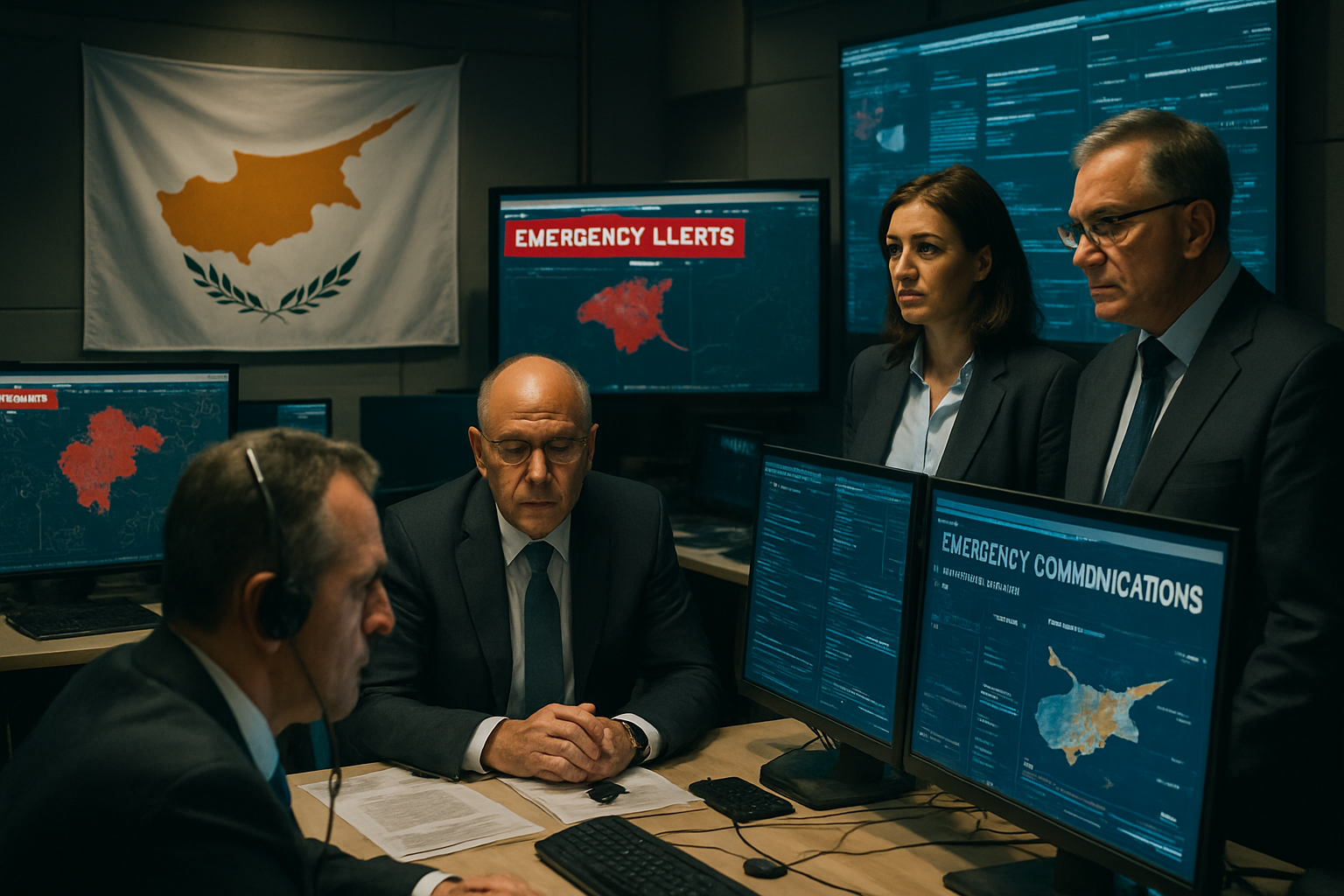
Cyprus has intensified its emergency preparedness measures, implementing comprehensive SMS alert systems, evaluating civil defense shelters, and issuing public safety guidelines as regional tensions mount in the Eastern Mediterranean following a series of security incidents and escalating Middle Eastern conflicts.
The Cyprus government has activated multiple emergency protocols in response to heightened regional security concerns, marking a significant shift in the island nation's approach to crisis management. The measures come as Cyprus faces unprecedented challenges from its strategic position at the crossroads of Europe, Asia, and Africa amid escalating regional conflicts.
Emergency SMS Alert System Testing
Cyprus conducted its second comprehensive test of the emergency SMS alert system on Friday, March 6, 2026, following significant failures in the initial trial that exposed critical gaps in the nation's crisis communication infrastructure. The Interior Ministry organized district-by-district testing between 16:30 and 19:00, addressing widespread complaints from residents who reported not receiving messages, receiving them in incorrect languages, or experiencing significant delays.
The first test on Wednesday had drawn sharp criticism from residents across social media platforms, with many Greek-speaking citizens receiving messages only in English and English-speaking residents getting alerts exclusively in Greek. Technical adjustments were made in collaboration with telecommunications providers to improve message delivery processes, with pre-paid SIM card users receiving priority testing at 4:30 PM.
"After an earlier test, which saw some users receive messages as much as two hours late or not at all, the necessary technical adjustments have been made,"
— Interior Ministry Spokesperson
The systematic approach involved sending messages to different districts at 30-minute intervals: Paphos district at 5:00 PM, Famagusta district at 5:30 PM, Nicosia district at 6:00 PM, Larnaca district at 6:30 PM, and Limassol district at 7:00 PM. This staggered deployment allowed authorities to monitor system performance and identify any remaining technical issues.
Civil Defense Infrastructure Assessment
Civil Defense authorities in Paphos have confirmed that 210 shelters are currently available across the district to protect the population in emergency situations. According to Kostas Konstantinou, Assistant Civil Defence Officer, these facilities are divided into two main categories: 81 public shelters open to all community members, and 129 communal shelters typically located in private buildings for use by residents or property owners.
When questioned about the appropriateness of distinguishing between public and private spaces during a crisis, Konstantinou emphasized pragmatic reality: "In a real emergency, everyone will take shelter wherever they can be protected." This assessment comes as authorities across the island review safety protocols following recent security developments in the region.
The shelter infrastructure reveals both strengths and vulnerabilities in Cyprus's civil defense capabilities. While the total number of facilities provides substantial coverage, questions remain about their distribution across urban and rural areas, accessibility for vulnerable populations, and readiness standards.
Official Self-Protection Guidelines
The Cyprus government has issued comprehensive official self-protection instructions to the public following the activation of emergency protocols and warning sirens in several areas. The formal announcement emphasizes that authorities may activate warning sirens in the event of serious or widespread danger to ensure immediate population protection.
Citizens are urged to remain calm and follow specific safety measures to minimize risk. The detailed guidelines include:
- Basement Shelter Protocol: If your location has a basement, proceed there immediately on foot in an orderly manner
- Indoor Safety Measures: For buildings without basements, stay inside and move away from doors, glass surfaces, and windows
- Immediate Shelter Seeking: Find the nearest secure location and follow official instructions
- Communication Protocols: Monitor official channels and avoid spreading unverified information
These instructions represent the first comprehensive public safety guidance issued by Cyprus authorities in response to regional security concerns, highlighting the government's proactive approach to civilian protection.
Regional Security Context
The emergency preparedness measures come against the backdrop of unprecedented regional tensions following Iranian drone attacks on British sovereign bases at RAF Akrotiri in early March 2026. This represented the first attack on European territory during a Middle Eastern conflict since World War II, fundamentally altering the security landscape for Cyprus.
More than 100 Akrotiri residents were relocated to Limassol hotels following the drone incidents, with Presidency Commissioner Marios Hartsiotis personally visiting the affected families. Currently, 47 people are staying at the Harmony Hotel, 31 at the Captain's Elias, and 62 at the Moniatis Hotel in Germasogeia, receiving full government support during this temporary displacement.
"The reason they are in these hotels today is solely to ensure the safety of themselves, their families, their children, and vulnerable individuals,"
— Marios Hartsiotis, Presidency Commissioner
The broader regional crisis has seen Cyprus activate its national ESTIA evacuation plan for the first time in its history, designed to coordinate European and third-country national evacuations. This unprecedented step demonstrates the gravity of current regional tensions and Cyprus's role as a potential hub for international crisis response.
Public Response and False Alarms
The heightened security atmosphere has led to several incidents highlighting public anxiety and the need for clear communication protocols. On Friday afternoon, the sound of sirens in Nicosia's Engomi district caused temporary panic among residents and workers near the Phileleftheros building, with initial fears linking the sounds to nearby US and Israeli embassies.
Police investigation quickly determined that no official alarm had been triggered and no emergency situation was underway. The incident was traced to students playing siren sounds through high-powered loudspeakers as a prank, demonstrating both the heightened public sensitivity to security alerts and the importance of verified information sources during times of tension.
Economic and Social Impact
The security situation has triggered behavioral changes among the Cypriot population, with consumers beginning to stockpile essential goods despite official assurances about supply stability. Retailers report sharp increases in sales of dry goods including pasta, rice, legumes, and canned foods, along with significant demand for infant supplies such as nappies and baby formula.
Marios Antoniou, General Secretary of the Pancyprian Retail Association (PASYLYE), moved to reassure the public that there are no supply issues, noting that current orders for basic goods cover at least 30 days of stock. Social media videos showing empty shelves or long queues have intensified the phenomenon, though industry experts explain that any gaps result from restocking timing rather than supply shortages.
Historical Context and Preparedness Evolution
Cyprus's current emergency preparedness efforts build on decades of experience managing regional crises, but the scope and sophistication of current measures reflect new realities in 21st-century security challenges. The island's strategic position has long made it vulnerable to regional spillover effects, but the direct targeting of European territory by Middle Eastern actors represents an unprecedented escalation.
The comprehensive nature of current preparations—spanning SMS communications, civil defense infrastructure, public education, and coordination with international partners—demonstrates Cyprus's evolution from reactive crisis management to proactive preparedness planning. The emphasis on multi-language communications and inclusive shelter policies reflects lessons learned from previous regional crises.
International Coordination
Cyprus's emergency preparedness measures are coordinated with broader European and international frameworks. The activation of the ESTIA evacuation plan represents part of larger European Union crisis response mechanisms, while coordination with British authorities regarding the sovereign base areas demonstrates the complex multilateral nature of Cyprus security.
The island's role as a potential hub for international evacuations from the Middle East has been demonstrated by the recent activation of emergency protocols, positioning Cyprus as a critical link in European crisis management capabilities. This responsibility requires sustained investment in infrastructure, communications systems, and coordination mechanisms.
Future Implications
The current emergency preparedness initiatives in Cyprus may establish templates for small European nations managing regional security spillover effects. The integration of modern SMS alert systems with traditional civil defense infrastructure, combined with comprehensive public education campaigns, represents an adaptive approach to evolving security challenges.
The emphasis on inclusive emergency protocols—ensuring multiple language accessibility and avoiding discrimination between public and private shelter access—reflects democratic values maintained even under security pressure. The balance between necessary security measures and preservation of normal civilian life demonstrates Cyprus's commitment to proportionate response.
As regional tensions continue to evolve, Cyprus's emergency preparedness measures will likely serve as both immediate protection for residents and a model for other nations facing similar challenges at the intersection of regional conflicts and European security. The success of these initiatives will depend on continued public cooperation, international coordination, and adaptive management as circumstances change.
The comprehensive nature of Cyprus's response—spanning technical systems, infrastructure assessment, public communication, and international coordination—reflects the complex reality of modern emergency preparedness in an interconnected world where regional conflicts can have immediate global implications.