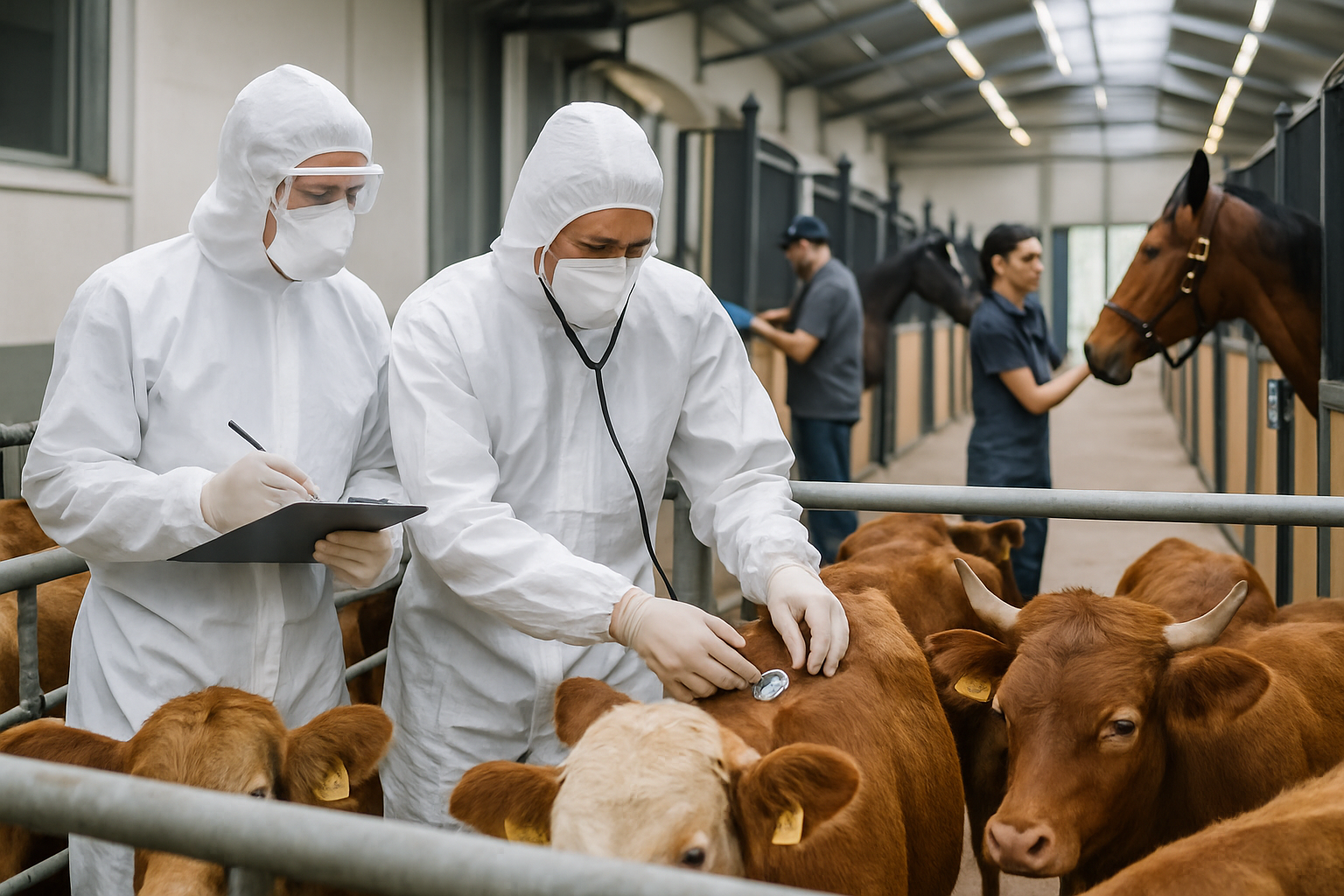
A dual veterinary health crisis is unfolding across Europe as Cyprus confronts its first foot-and-mouth disease outbreak in government-controlled areas while Finland battles a deadly herpes virus claiming horse lives, highlighting the interconnected vulnerabilities facing animal health systems during an era of climate-driven agricultural stress.
Cyprus Implements Emergency Foot-and-Mouth Protocols
Cypriot authorities have launched an unprecedented containment operation following confirmation of foot-and-mouth disease at a cattle farm in Livadia, Larnaca—the first case detected in the Republic of Cyprus's controlled territories. The discovery has triggered the immediate activation of strict EU containment protocols, with veterinary officials placing 23 livestock premises under strict quarantine within a 3-kilometer protection zone surrounding the affected farm.
The scale of the response underscores the severity of the threat: 260 cattle face culling tomorrow as authorities move aggressively to prevent the highly contagious disease from spreading beyond the initial outbreak site. All 300 animals at the ground-zero farm will be destroyed and buried under prescribed sanitary procedures, following the Animal Health Regulations of 2004.
European and national protocols have been fully activated following a broad emergency meeting of all relevant authorities. "Daily sampling and inspections will be carried out within the zone to prevent the disease from spreading," Veterinary Services officials confirmed, emphasizing the critical nature of the 72-hour window for effective containment.
"The movement of animals and products has been temporarily restricted within the protection zone. Under the same protocols, any positive case found at another farm within a 3km protection zone would trigger the culling of all animals at that premises as well."
— Cyprus Veterinary Services
The outbreak represents the first detection of foot-and-mouth disease in Cyprus's government-controlled areas, despite previous cases in areas outside effective control. This geographic distinction carries particular significance given Cyprus's divided status and the cross-border veterinary coordination required for comprehensive disease prevention.
Finland Faces Escalating Equine Health Emergency
Simultaneously, Finland is grappling with a separate but equally concerning animal health crisis as additional horses have succumbed to the highly contagious EHV1 herpes virus at Helsinki's Tuomarinkartano riding facility. The stable has been placed under strict quarantine as authorities work to contain the rapidly spreading pathogen known for its devastating impact on equine populations.
EHV1, or Equine Herpesvirus Type 1, represents one of the most serious threats to horse health worldwide, capable of causing respiratory disease, neurological complications, and reproductive failures. The virus spreads with alarming efficiency through respiratory droplets and direct contact, making quarantine protocols essential but challenging to maintain in active equestrian facilities.
The Finnish outbreak adds to mounting concerns about animal health infrastructure across Northern Europe, where climate change and increased animal movement have created conditions conducive to disease transmission. The timing coincides with Finland's broader agricultural challenges, including shifts toward mechanized farming and evolving livestock management practices.
Historical Context of European Animal Health Challenges
These outbreaks occur against a backdrop of escalating animal health pressures across Europe throughout 2025-2026. Recent memory reveals Cyprus's previous involvement in regional foot-and-mouth prevention efforts, including the European Commission's distribution of 500,000 vaccine doses to Turkish Cypriot areas—a rare example of cross-border health cooperation transcending political divisions.
The current crisis builds upon a pattern of agricultural system stress documented across European nations. From Swedish meat shortages due to declining livestock supplies to Greek livestock delegation appeals for government intervention, the continent faces mounting pressures from rising feed costs, regulatory constraints, and climate volatility.
February 2026 marks the 18th consecutive month of global temperatures exceeding 1.5°C above pre-industrial levels, creating additional stress on agricultural systems already strained by economic pressures and supply chain disruptions. These climate conditions have contributed to changing disease patterns, with warmer temperatures facilitating pathogen spread and extreme weather events disrupting traditional livestock management practices.
Biosecurity Measures and International Cooperation
The Cyprus response demonstrates the sophisticated biosecurity architecture developed following previous foot-and-mouth crises. The immediate seizure of all products from the affected unit, including milk and meat, reflects lessons learned from past outbreaks where delayed action led to regional economic catastrophe.
Veterinary Services has sought to reassure the public while maintaining transparency about the outbreak's severity. The coordinated response involves multiple agencies working within established frameworks designed to balance agricultural protection with economic continuity. The 3-kilometer protection zone represents a scientifically-calibrated buffer based on disease transmission modeling and international best practices.
Finland's quarantine measures at Tuomarinkartano follow similar principles, isolating affected animals while maintaining care standards. The facility's reputation as a competitive riding center adds complexity to containment efforts, as horses require continued veterinary attention even during quarantine periods.
Economic and Agricultural Implications
The dual outbreaks carry significant economic implications extending beyond immediate animal losses. Cyprus's agricultural sector, already adapting to climate pressures and market volatility, faces potential trade restrictions and consumer confidence challenges. The foot-and-mouth designation could impact export markets and require extensive testing protocols for agricultural products.
Finland's equestrian industry, supporting both recreational riding and competitive sports, confronts similar challenges. Horse facilities across the Nordic region may implement preventive quarantine measures, affecting training schedules and competitive events during the critical spring season.
The broader European context reveals agricultural sectors developing adaptation strategies combining enhanced efficiency measures with improved animal welfare systems. Technology integration, including real-time health monitoring and sophisticated diagnostic capabilities, represents one pathway for maintaining production quality while managing disease risks.
Climate Change and Disease Emergence Patterns
The simultaneous emergence of these distinct animal health crises reflects broader patterns linking climate change to disease dynamics. Warmer temperatures affect pathogen survival rates, vector populations, and animal stress levels, creating conditions conducive to outbreak emergence and spread.
International health experts have identified 2026 as a critical transition year requiring enhanced coordination between national governments, EU institutions, and international agricultural organizations. The challenges extend beyond immediate disease control to encompass supply chain vulnerabilities, climate adaptation requirements, and economic sustainability during environmental uncertainty.
Traditional farming operations face fundamental questions about operational resilience as climate-driven challenges interact with evolving disease patterns. The Cyprus and Finland outbreaks provide real-time case studies in crisis management during an era when exceptional weather events and pathogen pressures have become routine agricultural considerations.
Future Preparedness and Systemic Resilience
The dual health crises highlight the evolution from reactive disease management to proactive resilience building. Cyprus's rapid activation of EU protocols and Finland's immediate quarantine measures demonstrate institutional preparedness developed through previous outbreak experiences.
However, the events also reveal ongoing vulnerabilities in animal health systems designed for historical rather than contemporary challenges. Climate change has fundamentally altered the operational environment for livestock and equine management, requiring adaptive strategies that balance traditional practices with emerging realities.
Success in containing these outbreaks will depend on sustained political commitment, adequate resource allocation, and continued international cooperation. The window for effective action remains narrow, as both foot-and-mouth disease and EHV1 can spread rapidly beyond initial containment zones if control measures prove insufficient.
As European agricultural systems confront an uncertain future characterized by climate volatility and evolving disease pressures, the Cyprus and Finland experiences may provide crucial templates for crisis management in an interconnected world where animal health challenges respect no political boundaries.