Cyprus faces its most severe agricultural crisis in decades as foot-and-mouth disease continues to spread across livestock farms, prompting the government to launch an unprecedented vaccination campaign while 14,000 animals remain scheduled for culling across the island.
Agriculture Minister Maria Panayiotou defended the government's response to mounting criticism on Wednesday, announcing that comprehensive biosecurity measures and vaccination programs had been implemented from the outbreak's earliest stages. The crisis, first detected in two sheep and goat facilities in Oroklini, has now expanded to affect multiple livestock operations across the Larnaca district.
"No one will be left on their own and no sector will be left exposed," Panayiotou stated during a press conference following meetings with livestock farmers and cheesemakers. "Protecting production and supporting livestock farmers are our priority."
Outbreak Scale and Response
The Veterinary Services have confirmed that vaccination programs began immediately, focusing initially on a three-kilometer radius around infected areas. The disease, which had been circulating in affected facilities for at least two weeks before detection, has forced authorities to implement the most comprehensive animal health emergency response in Cyprus's recent history.
According to the latest figures from the agriculture ministry, 14,000 animals across multiple farms are scheduled for culling as part of containment efforts. The outbreak has already claimed significant livestock numbers, with particular impact on cattle operations in Livadia and goat facilities in the Oroklini area.
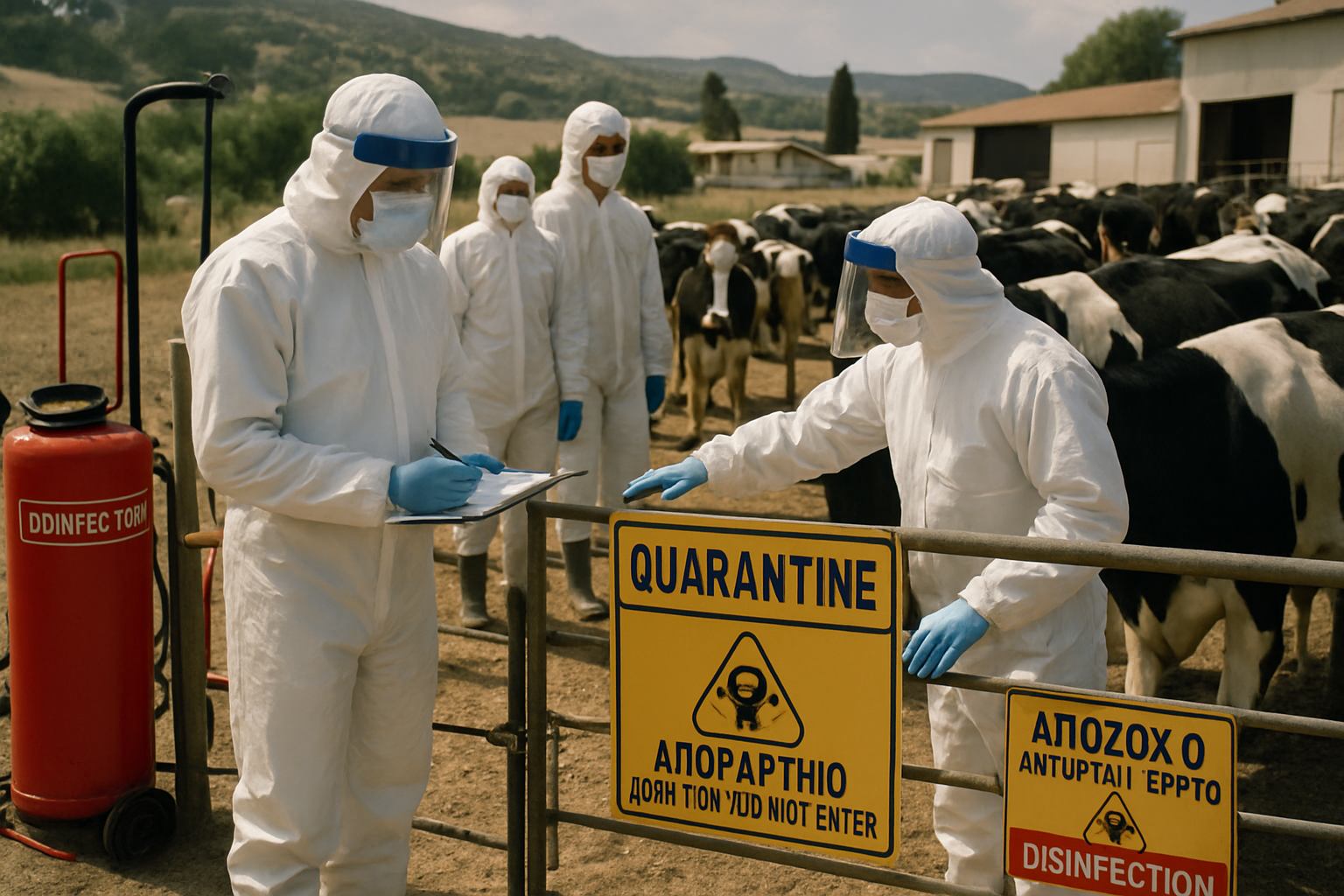
Veterinary Services Director Christodoulos Pipis has overseen the establishment of disinfection points and strict movement controls across affected regions. The response includes daily inspections and sampling across 23 livestock premises within established protection zones, with any additional positive cases triggering automatic culling protocols.
Halloumi Industry Under Threat
The crisis poses an unprecedented threat to Cyprus's iconic halloumi cheese industry, with local cheesemakers reporting that 80% of the island's milk production is dedicated to halloumi manufacturing. Industry representatives have expressed concerns about long-term impacts on both domestic production and international export markets.
"We must avoid further animal deaths," stated representatives from the cheese-making sector during recent government consultations. The industry, which has achieved protected designation of origin status for halloumi internationally, faces potential disruption to supply chains that could affect Cyprus's agricultural reputation globally.
The government has been working closely with trading partners to maintain export channels and prevent broader trade restrictions that could devastate the agricultural economy. Cyprus had maintained disease-free status prior to this outbreak, making the current crisis particularly significant for international trade relationships.
Community Support and Psychological Impact
Recognizing the severe psychological toll on affected farming communities, the Larnaca municipality has established a dedicated support hotline in cooperation with the state health services. Livestock farmers whose livelihoods have been affected can access psychological support through specialized counselors who understand the unique challenges facing agricultural communities.
"The aim is to provide psychological support to those in need, as well as timely management of any needs that may arise as a result of this difficult situation," the municipality explained in announcing the service.
The hotline operates through two numbers: 24 818706 for weekday support from 7:30 AM to 3:00 PM, and 94 069682 for round-the-clock assistance. The service reflects recognition that agricultural crises extend far beyond immediate economic impacts to affect entire rural communities.
Enhanced Biosecurity Measures
Following emergency meetings chaired by President Nikos Christodoulides, authorities have implemented comprehensive biosecurity protocols across affected regions. The coordinating body includes senior representatives from multiple government departments, including the permanent secretaries of agriculture and interior, along with national guard, police, fire brigade, and forestry department officials.
Enhanced measures include the establishment of disinfection tanks at strategic locations, with Aradippou Mayor Christodoulos Partou reporting that two of seven planned tanks have been completed. Farmers are installing disinfectant solutions for mandatory vehicle decontamination, while multiple farm access points have been restricted to seven designated entry and exit locations.
The Game Service has been integrated into the response effort, with hunting activities banned in affected areas to prevent potential disease transmission through wildlife populations. These restrictions demonstrate the comprehensive approach authorities are taking to prevent further spread.
Investigation into Outbreak Origins
Larnaca police have formed a specialized investigative team to probe the outbreak's origins, focusing on suspected illegal animal feed smuggling from northern Cyprus. The geographic distribution of affected farms suggests contaminated feed transmission rather than natural disease spread patterns.
Authorities are examining the illegal hay trade from occupied areas, with particular attention to feed supplies that may have introduced the virus to government-controlled areas. The investigation represents a critical component of preventing future outbreaks through improved border controls and feed supply monitoring.
Historical Context and International Implications
This outbreak represents the first confirmed foot-and-mouth disease cases in government-controlled areas of Cyprus in recent memory. The island's previously maintained disease-free status was crucial for agricultural exports and tourism, making the current crisis particularly significant for Cyprus's international standing.
The European Commission had previously provided 500,000 vaccine doses to areas outside Cyprus's effective control, demonstrating the broader regional concern about disease prevention. The current outbreak has activated European Union emergency protocols, with Cyprus working closely with EU officials to maintain international support while implementing unprecedented biosecurity measures.
The crisis occurs during the 18th consecutive month of global temperatures exceeding 1.5°C above pre-industrial levels, creating additional stress on agricultural systems already facing economic pressures and supply chain disruptions.
Economic and Agricultural Implications
The foot-and-mouth outbreak threatens Cyprus's agricultural export markets and its reputation as a reliable agricultural partner. Tourism concerns have emerged with potential restrictions ahead of the peak season, as international confidence in Cyprus's food safety measures faces scrutiny.
The agriculture ministry is preparing comprehensive compensation proposals for affected farmers, recognizing that the crisis tests the island's evolution from reactive disease management to proactive resilience building. The economic implications extend beyond immediate livestock losses to include potential trade restrictions, export market impacts, and consumer confidence challenges.
Local farming communities have voluntarily implemented additional safety measures beyond mandatory requirements, accepting substantial operational disruptions as necessary for containment. Road closures and access restrictions represent significant challenges for rural economies, but industry leaders acknowledge that outbreak containment success determines agricultural export market maintenance.
Looking Forward
Success in containing the outbreak depends on sustained political commitment, adequate resources, and continued international cooperation during the narrow window available for effective containment. The coordinating body established under veterinary services direction demonstrates transparency and comprehensive response commitment that will be crucial for recovery efforts.
The crisis has revealed both vulnerabilities and strengths in Cyprus's agricultural systems. While the rapid spread demonstrated system weaknesses, the coordinated multi-agency response, international cooperation, and community solidarity provide foundations for resilience building that could serve as a model for future agricultural challenges.
As vaccination programs continue and biosecurity measures remain in place, the coming weeks will prove critical in determining whether Cyprus can successfully contain the outbreak and protect its vital agricultural sector. The government's commitment to supporting affected farmers while maintaining strict disease control measures represents a balancing act that will define the island's agricultural future.