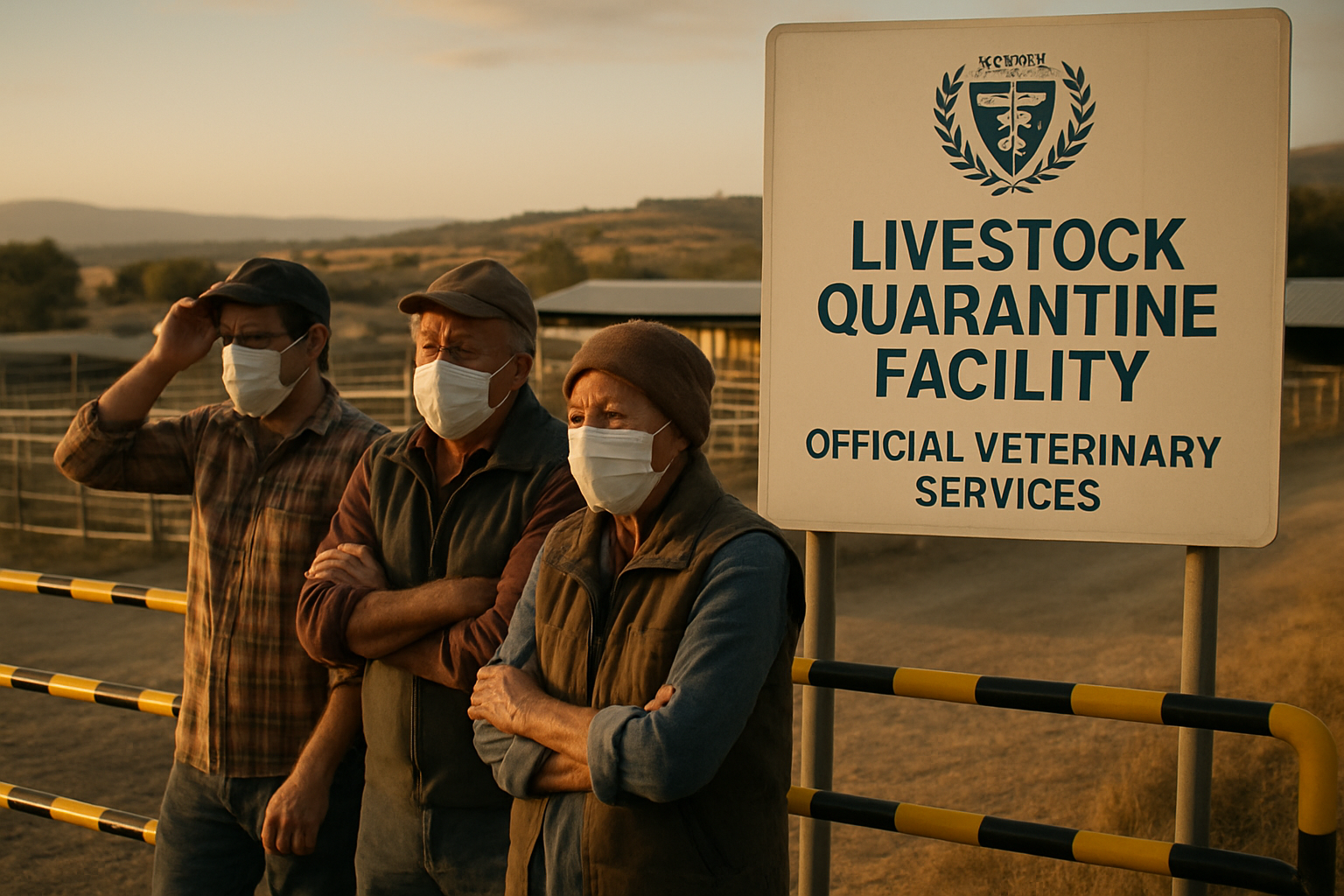
Cyprus authorities have launched criminal proceedings against farmers in Oroklini who concealed foot-and-mouth disease symptoms in their herds for approximately two weeks, allowing the virus to spread across the Larnaca district and triggering the most severe agricultural crisis in decades.
Laboratory results dated February 21, 2026 indicate the virus entered the Oroklini farms—identified by authorities as ground zero—roughly two weeks before it was officially declared. Cyprus is now racing to vaccinate more than 170,000 animals in what authorities describe as a make-or-break effort to contain the outbreak that threatens the island's disease-free status.
The concealment has sparked a major investigation by Larnaca CID, with criminal proceedings initiated under Article 6 of the Animal Health Law against farmers who failed to report the disease. Investigators are taking statements from farm owners, veterinarians, and other animal health professionals, though the probe remains at an early stage.
Religious Controversy Compounds Crisis
The crisis has taken an extraordinary turn with the Agriculture Ministry launching a full investigation after priests from the True Orthodox Christians Church—known as Old Calendarists—breached strict biosecurity restrictions to enter livestock units in Aradippou.
Metropolitan of Kition of the Old Calendarists, Gerasimos, along with hierodeacon Chrystosomos and priest Kyriacos, entered affected farms on Wednesday night to bless goats and read prayers "for the protection of animals and the prevention of the disease." The priests visited facilities under strict quarantine, raising serious concerns about potential virus transmission through their robes and religious objects.
Agriculture Minister Maria Panayiotou has ordered Veterinary Services to investigate how the religious delegation bypassed biosecurity checks at farm entrances, whether farm owners who allowed the visit bear legal responsibility, and whether the virus could have been carried between farms via the priests' clothing and ceremonial items.
Massive Vaccination Campaign Underway
With the virus having circulated undetected for at least two weeks, Cyprus faces its most serious animal health emergency in recent memory. Veterinary Services Director Christodoulos Pipis is overseeing an unprecedented vaccination campaign targeting over 170,000 animals within a three-kilometer protection zone around infected areas.
The outbreak epicenter in Oroklini has already spread to multiple facilities, with linked infections confirmed at Livadia cattle farm where 300 animals are scheduled for culling. All 260 animals at the ground-zero farm face destruction and burial under Animal Health Regulations of 2004.
Daily inspections and sampling are being conducted across 23 livestock premises under strict quarantine within the protection zones. Any positive cases within protection zones trigger automatic culling of all animals at affected premises, highlighting the severity of the containment efforts.
Police Investigate Illegal Feed Smuggling
Authorities are examining suspected illegal animal feed smuggling from northern Cyprus as the potential source of the outbreak. The geographic location of the Livadia farm—far from the buffer zone—suggests contaminated feed supply rather than natural transmission, according to investigators.
Police are focusing on illegal hay trade from occupied areas, with the pattern of infection suggesting the virus spread through livestock networks rather than typical geographical transmission. This investigation adds a cross-border dimension to what has become Cyprus's most serious agricultural crisis in decades.
Threat to Cyprus's Agricultural Reputation
The outbreak threatens Cyprus's previously maintained disease-free status, which is crucial for agricultural exports and international trade relationships. The halloumi industry, which depends on 80% of Cyprus's milk production, faces unprecedented challenges with potential long-term impacts on both domestic production and international export markets.
European Union emergency protocols have been activated, with Cyprus working closely with EU officials to maintain international support while implementing unprecedented biosecurity measures. The country had been benefiting from the European Commission's provision of 500,000 foot-and-mouth vaccine doses to areas outside effective control, demonstrating the regional approach to disease prevention.
Community Impact and Support Measures
Recognizing the severe psychological toll on farming communities, Larnaca municipality has launched a dedicated hotline in cooperation with state health services. Support is available at 24 818706 (weekdays 7:30 AM-3 PM) and 94 069682 (24/7), acknowledging the mental health impacts of what represents many farmers' livelihoods being destroyed.
President Christodoulides has established a coordinating body including permanent secretaries of agriculture and interior, national guard, police, fire brigade, and forestry departments. Enhanced biosecurity measures include disinfection tanks at strategic locations, mandatory vehicle decontamination, and seven designated farm entry/exit points.
The crisis has also affected cultural life, with Green Monday celebrations cancelled in both Oroklini and Voroklini due to proximity to infected facilities, demonstrating the outbreak's impact extending far beyond agricultural operations.
Critical Window for Containment
The next phase of the response will be crucial in determining whether Cyprus can contain the outbreak or face a larger agricultural catastrophe. The rapid spread from Oroklini to Livadia demonstrates the virus's transmission potential through livestock networks, making the success of containment efforts dependent on sustained political commitment and adequate resources.
Compensation proposals have been prepared for affected farmers, though the economic implications extend to tourism concerns with potential restrictions ahead of peak season. The crisis tests Cyprus's evolution from reactive disease management to proactive resilience building while managing the immediate emergency.
With hunting banned in affected areas and the Game Service integrated into the response, the comprehensive nature of the containment effort reflects the serious threat to Cyprus's agricultural sector and international reputation. Success will depend on continued international cooperation, transparent governance, and community compliance with unprecedented biosecurity measures during this narrow window for effective containment.