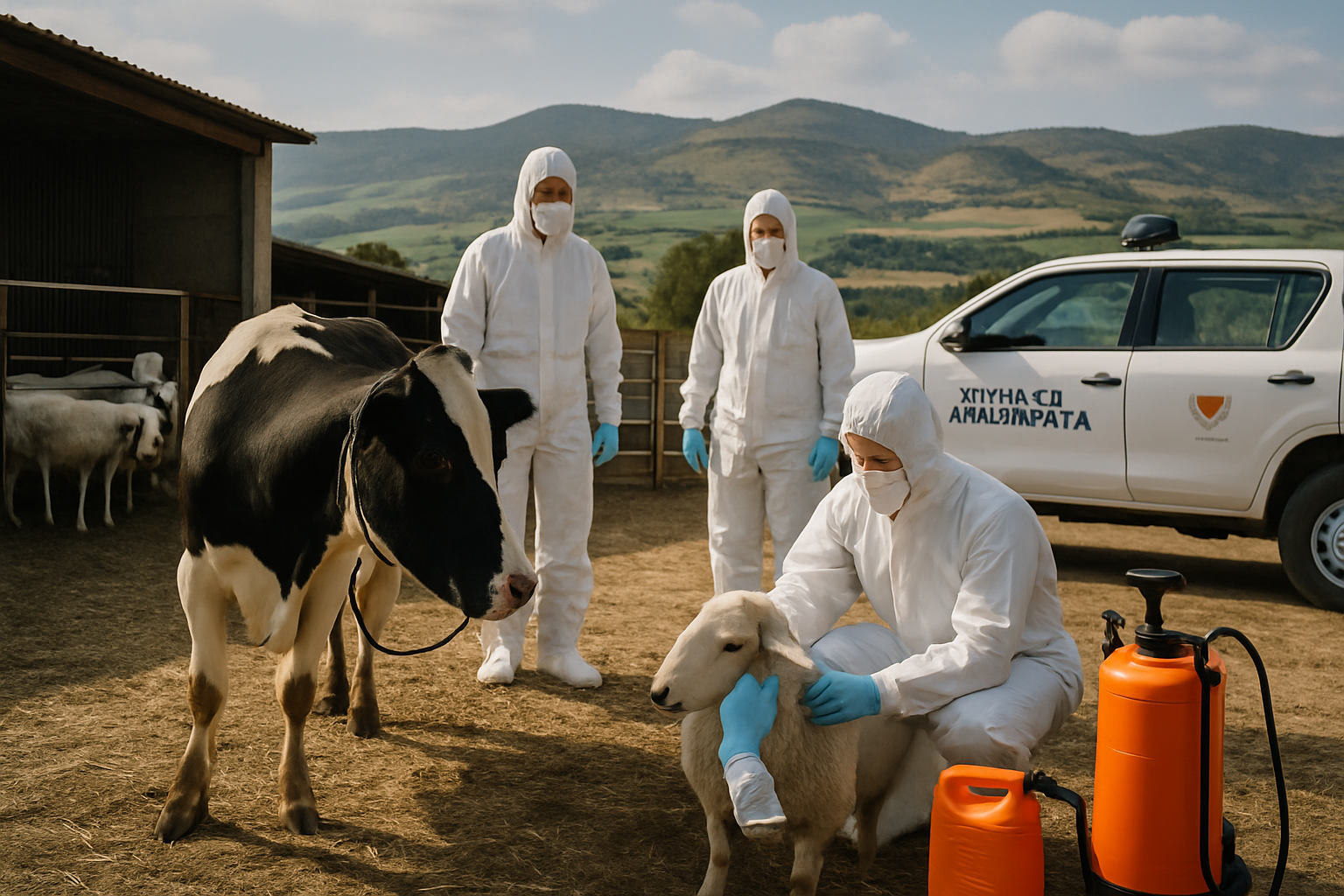
Cyprus faces its most severe agricultural crisis in decades as foot-and-mouth disease has broken through the established containment zone in Larnaca district, spreading to the crucial dairy farming areas of Dali and Geri in Nicosia district, with new cases confirmed at livestock facilities that form the backbone of the island's halloumi cheese production.
The veterinary emergency has escalated dramatically from its original epicenter in Oroklini, where the disease was first detected in February 2026. What began as a localized outbreak affecting 38 farms in Larnaca district has now expanded beyond the 10-kilometer surveillance zone, forcing authorities to establish new protection and surveillance zones around the Idalion livestock area, one of Cyprus's most important dairy production centers.
New Cases Confirm Containment Failure
According to veterinary sources, new cases have been confirmed at a large goat and sheep unit in Dali belonging to a livestock trader, as well as at a cattle farm in Geri. The spread to these facilities represents a critical escalation, as the Geri and Idalion area houses some of Cyprus's most significant dairy operations, with 80% of the island's milk production dedicated to halloumi manufacturing.
Farmers in the Idalion area have expressed profound concern about the situation. Local livestock producers told media outlets they fear for their livelihoods as the disease threatens not only immediate animal welfare but also Cyprus's international reputation as a reliable supplier of dairy products to European markets.
The Veterinary Services must now establish a new 3-kilometer protection zone and a 10-kilometer surveillance zone around the affected Idalion livestock area, expanding the geographic scope of containment measures significantly. Culling operations are already underway at the affected units, with strict restrictions on the movement of live animals and animal products implemented across all affected areas.
Unprecedented Agricultural Crisis
This outbreak represents the most serious agricultural emergency Cyprus has faced in modern history. Since the initial detection, authorities have already culled over 17,000 animals, including 14,000 sheep and goats and 1,100 cattle, despite extensive vaccination efforts. Laboratory tests revealed that many animals showed virus infection rather than protective antibodies from vaccines, indicating the aggressive nature of the current strain.
"The situation has become extremely critical with the disease spreading beyond our initial containment efforts. We are implementing enhanced biosecurity measures across all affected regions."
— Veterinary Services Spokesperson
The economic implications extend far beyond the immediate livestock losses. Cyprus had maintained its disease-free status, which was crucial for agricultural exports and international trade relationships. The island's halloumi industry, which represents a significant portion of Cyprus's agricultural economy, now faces unprecedented challenges as international buyers may impose import restrictions.
Enhanced Biosecurity Measures
Veterinary Services have activated comprehensive European protocols, declaring affected areas under a state of emergency. The response includes establishing checkpoints and disinfection points across the region, with mandatory vehicle decontamination procedures for anyone entering or leaving livestock areas.
Agricultural Minister Maria Panayiotou has been coordinating with European Union officials to maintain international support while implementing unprecedented biosecurity measures. The EU previously provided 500,000 vaccine doses to areas outside Cyprus's effective control, demonstrating the international dimension of animal health management in the region.
Enhanced surveillance protocols now include daily inspections and sampling across dozens of livestock premises under strict quarantine. Any positive cases within protection zones trigger automatic culling of all animals at affected premises, following established Animal Health Regulations.
Investigation into Outbreak Origins
Larnaca police have formed a specialized investigative team probing the outbreak's origins, focusing on suspected illegal animal feed smuggling from northern Cyprus. The geographic distribution of cases suggests contaminated feed transmission rather than natural disease spread patterns.
Investigators are examining illegal hay trade from occupied areas, as the virus appears to have spread through livestock networks rather than through direct animal contact. The Livadia farm's location, far from the original buffer zone, particularly supports the contaminated feed supply theory versus natural transmission.
Community Impact and Support Measures
The crisis has severely impacted farming communities across the affected regions. Larnaca municipality has launched a dedicated psychological support hotline in cooperation with state health services, recognizing the severe psychological toll on farming families facing the destruction of their livestock.
Local farming communities have voluntarily implemented additional safety measures beyond mandatory requirements, including enhanced disinfection protocols and restricted access to their properties. Hunting has been banned in affected areas, with the Game Service integrated into the coordinated response effort.
President Nikos Christodoulides established a coordinating body following emergency meetings, including permanent secretaries from agriculture and interior ministries, along with representatives from the national guard, police, fire brigade, and forestry departments. This multi-agency approach demonstrates the government's recognition of the crisis's scope and potential consequences.
Climate and Environmental Context
The outbreak occurs during unprecedented climate conditions, with January 2026 marking the 18th consecutive month of global temperatures exceeding 1.5°C above pre-industrial levels. These sustained elevated temperatures create optimal conditions for pathogen survival and transmission, disrupting traditional seasonal disease patterns that veterinary systems were designed to handle.
Climate change is functioning as a threat multiplier, allowing pathogens that typically peak at different times to co-circulate, overwhelming systems designed for sequential rather than simultaneous challenges. This environmental context adds urgency to containment efforts, as traditional approaches may be less effective under altered climatic conditions.
International Cooperation and EU Response
Cyprus has activated European Union emergency protocols, working closely with EU officials to maintain international support during this critical period. The European Commission has provided technical expertise and resources, building on previous cooperation that included vaccine distribution to Turkish Cypriot areas.
The crisis tests Cyprus's evolution from reactive disease management to proactive resilience building, incorporating lessons from previous European agricultural challenges. Success depends on sustained political commitment, adequate resources, and continued international cooperation during this narrow window for effective containment.
Economic and Tourism Implications
Beyond agricultural impacts, the outbreak raises concerns for Cyprus's tourism industry ahead of the peak season. International perception of disease outbreaks can affect visitor confidence, particularly given the island's reputation as a safe, clean destination for European tourists.
Compensation proposals have been prepared for affected farmers, though the full economic impact will depend on the duration and geographic extent of the outbreak. The tourism sector is closely monitoring the situation, as any perception of health risks could affect booking patterns for the crucial spring and summer seasons.
Looking Ahead: Critical Containment Phase
The next few days will be crucial for determining whether the enhanced containment measures can prevent further spread or whether Cyprus faces a larger agricultural crisis. The rapid expansion from Oroklini to Livadia and now to the Nicosia district demonstrates the virus's transmission potential through interconnected livestock networks.
Veterinary authorities emphasize that success depends on rigorous adherence to biosecurity protocols, continued international cooperation, and sustained community commitment to containment measures. The establishment of new protection zones around the Idalion area represents both a recognition of the spread and a determination to prevent further expansion into Cyprus's remaining livestock regions.
As Cyprus faces this unprecedented challenge to its agricultural sector, the response will likely serve as a template for other small European nations dealing with disease outbreaks in an era of climate change and increased global connectivity. The outcome will determine not only the immediate future of Cyprus's livestock industry but also the island's long-term reputation as a reliable partner in European agricultural markets.