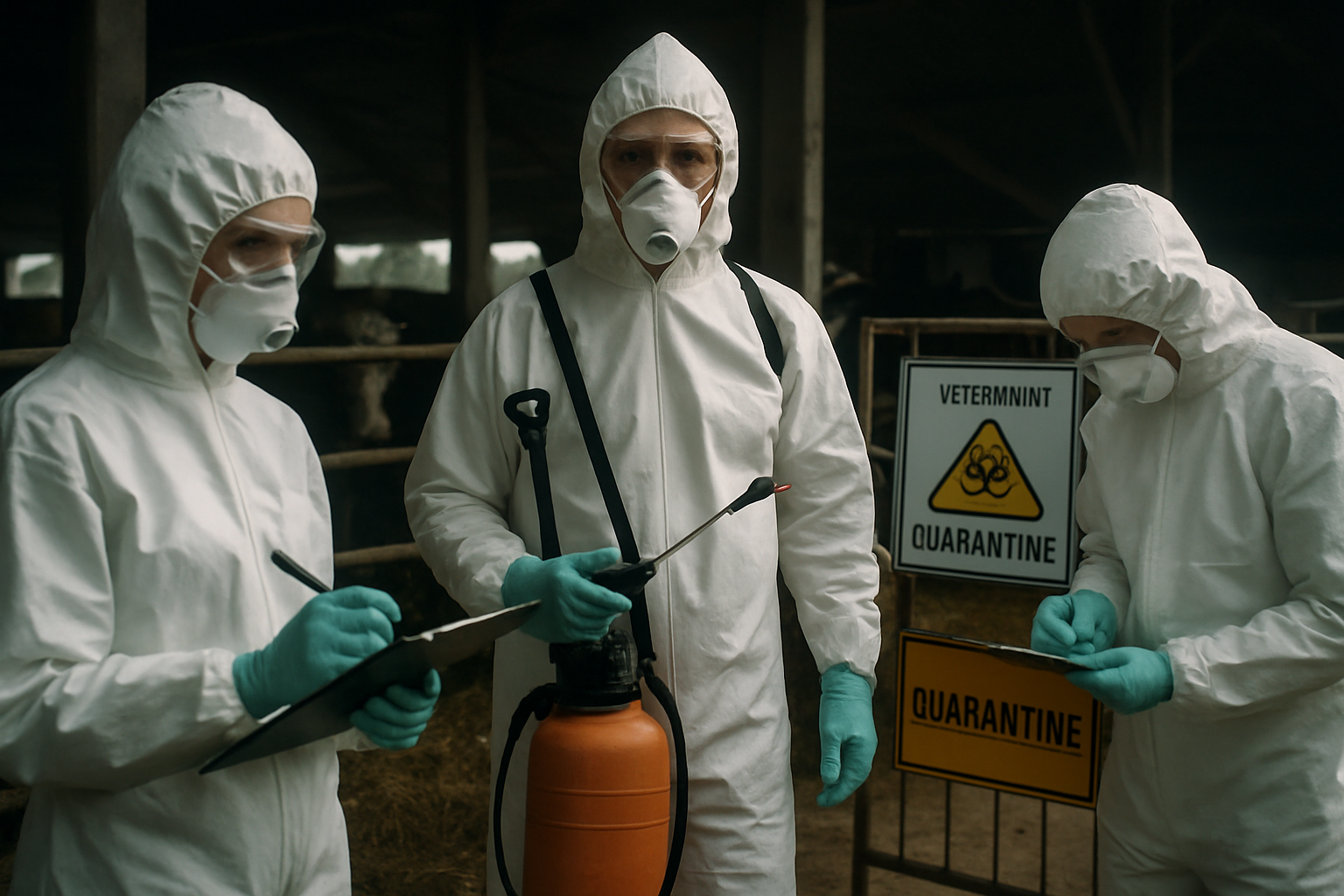
Cyprus has established a comprehensive coordinating body and launched a police investigation as the island's first foot-and-mouth disease outbreak in government-controlled areas continues to spread across the Larnaca district, prompting unprecedented biosecurity measures and quarantine protocols.
Following instructions from President Nikos Christodoulides, a high-level coordinating body has been established under the director of veterinary services after a broad meeting of all competent authorities at their headquarters in Nicosia on Monday. The meeting brought together key officials including the permanent secretary of the agriculture ministry Andreas Gregoriou, interior ministry permanent secretary Elikkos Elia, and representatives from the national guard, police, fire brigade, game and fauna service, forestry department, and veterinary services.
Coordinated Emergency Response Framework
"The aim was to ensure the effective implementation of measures to prevent the spread of the disease to other livestock units," stated Gregoriou after the emergency meeting. The newly formed coordinating body represents Cyprus's most comprehensive response to an animal health crisis, drawing on lessons learned from previous outbreaks across Europe and international best practices in disease containment.
Simultaneously, police in Larnaca have formed a specialized investigative team to probe the outbreak's origins, focusing on potential illegal animal feed smuggling from northern Cyprus as a possible transmission vector. The geographic distribution of affected farms suggests contaminated feed supplies rather than natural disease transmission patterns.
Intensive Biosecurity Implementation
Preventive measures are being rapidly deployed across livestock units in Aradippou, Athienou, Livadia, and Dromolaxia-Meneou following confirmed cases at premises in Livadia and Oroklini. Aradippou Mayor Christodoulos Partou reported that two of seven planned disinfection tanks had been completed as of Monday, with farmers expected to install necessary disinfectant solutions to ensure all vehicles entering livestock zones undergo mandatory decontamination.
"Because the two livestock areas have multiple access points, certain roads have already been closed to ensure farmers enter and exit through the seven designated points," Partou explained, highlighting the comprehensive nature of the containment strategy.
Where disinfection tanks cannot be installed, state officials in cooperation with the Game Service are conducting manual vehicle spraying operations. Farmers have also implemented additional protective measures including treating pathways around their facilities and restricting unauthorized access to livestock areas.
Historical Context and International Implications
This outbreak represents Cyprus's first confirmed case of foot-and-mouth disease in government-controlled areas since maintaining its disease-free status, making the crisis particularly significant for the island's agricultural sector and international trade relationships. The disease had been circulating in the original Oroklini facilities for at least two weeks before detection, according to agricultural authorities.
The outbreak follows a concerning pattern documented across Europe in recent months. Previous memory records from February 2026 indicate Cyprus has been coordinating with European Commission initiatives, including the provision of 500,000 foot-and-mouth vaccine doses to areas outside effective control as part of broader regional prevention strategies.
The current crisis occurs during an 18-month period of consecutive global temperature increases exceeding 1.5°C above pre-industrial levels, creating additional stress on agricultural systems and potentially altering traditional disease transmission patterns.
Economic and Trade Consequences
Cyprus's disease-free status has been crucial for its agricultural exports and international trade relationships. The outbreak threatens not only immediate livestock losses but also the island's reputation as a reliable agricultural partner within European and Mediterranean markets.
The coordinated response involves implementing European Union emergency protocols, with Cyprus activating established frameworks for international support and coordination. The sophisticated multi-agency approach demonstrates the evolution from reactive disease management to proactive resilience building, incorporating lessons from previous European agricultural challenges.
Agricultural Minister Maria Panayiotou and Veterinary Services head Christodoulos Pipis are coordinating the emergency response with EU officials, working to maintain international support while implementing unprecedented biosecurity measures designed to prevent further transmission.
Scientific and Operational Challenges
The outbreak exposes the complex challenges facing modern agricultural systems operating under climate change pressures. Traditional farming cycles and disease patterns are being disrupted by sustained warming trends, requiring rapid adaptation in disease surveillance and prevention protocols.
Veterinary officials are implementing daily inspections and sampling procedures across 23 livestock premises within the established protection zones. The comprehensive monitoring system represents a sophisticated integration of European veterinary science with local agricultural knowledge, ensuring both immediate containment and long-term system strengthening.
Movement restrictions have been implemented across affected areas, with all animal and product transfers requiring veterinary approval. The protocols reflect international standards while adapting to Cyprus's unique geographic and agricultural characteristics.
Community and Industry Response
Local farming communities have demonstrated remarkable cooperation with authorities, implementing voluntary additional safety measures beyond mandatory requirements. The response reflects deep understanding of the potential consequences for Cyprus's agricultural sector if the outbreak expands beyond current containment zones.
The establishment of designated entry and exit points for livestock areas has required significant coordination between municipal authorities, farmers, and emergency services. Road closures and access restrictions represent substantial disruptions to normal agricultural operations but have been accepted as necessary for disease containment.
Industry representatives acknowledge that success in containing this outbreak will determine Cyprus's ability to maintain its agricultural export markets and disease-free certification with international partners.
Looking Forward: Prevention and Resilience
The current crisis serves as a critical test of Cyprus's agricultural resilience and emergency response capabilities. Success depends on sustained political commitment, adequate resources, and continued international cooperation during the narrow window for effective containment.
Lessons learned from this outbreak will inform future disease prevention strategies, particularly as climate change creates new challenges for traditional agricultural practices. The integration of advanced surveillance technology with community-based prevention measures offers a model for other agricultural regions facing similar threats.
As Cyprus continues to implement comprehensive biosecurity measures, the international community is closely monitoring the effectiveness of the coordinated response. The outcome will have implications not only for Cyprus's agricultural sector but also for European disease prevention frameworks and international cooperation in agricultural health management.
The establishment of the coordinating body and police investigation represents Cyprus's commitment to transparency and comprehensive response, ensuring that all aspects of the outbreak are thoroughly examined and that prevention measures are continuously refined based on emerging evidence and international best practices.