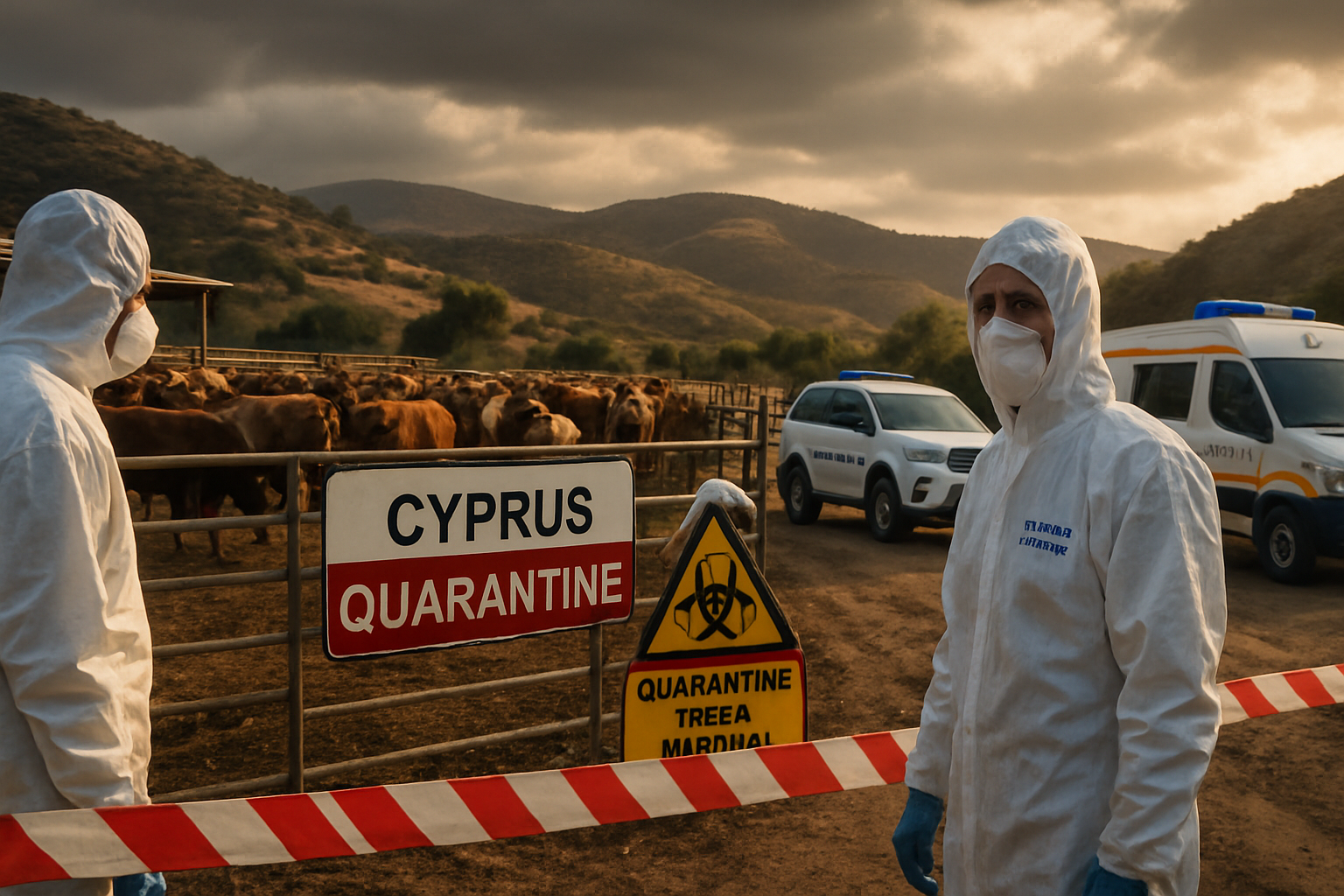
Cyprus faces its first foot-and-mouth disease outbreak in government-controlled areas, prompting immediate emergency protocols, mass livestock culling, and investigations into suspected illegal animal feed smuggling as the epicenter spreads across multiple farms in the Larnaca region.
Veterinary Services confirmed the outbreak's epicenter lies in two large sheep and goat units in Oroklini, with linked infections discovered at a cattle farm in nearby Livadia. Laboratory results indicate the virus had been circulating in the Oroklini facilities for at least two weeks before detection, highlighting the insidious nature of this highly contagious disease.
Emergency Response and Quarantine Measures
Following an emergency meeting on Friday involving Agriculture Minister Maria Panayiotou and key stakeholders, authorities finalized comprehensive containment protocols. The head of Veterinary Services, Christodoulos Pipis, announced that all 260 animals at the affected Livadia farm will be culled immediately, with disposal following established safety protocols.
A three-kilometer protection zone has been established around the outbreak sites, placing 23 livestock premises under strict quarantine. Within this radius, the movement of animals and animal products is prohibited without prior approval from veterinary authorities. Daily inspections and sampling are being conducted to monitor the spread of the virus.
"We are implementing the most stringent containment measures to prevent any further spread of this disease," Minister Panayiotou stated during the emergency briefing. The total number of animals scheduled for culling across all affected premises is approximately 300, representing one of the largest emergency livestock culling operations in Cyprus's recent history.
Suspected Smuggling Investigation
Police and veterinary services are investigating whether the outbreak was caused by animal feed smuggled illegally from northern Cyprus. According to reports obtained by Phileleftheros, authorities are discreetly examining claims of illegal hay trade from the occupied areas.
The location of the affected Livadia farm, situated far from the buffer zone, has reinforced suspicions that the virus entered through unregulated commercial activities rather than natural transmission. This geographic anomaly suggests a direct link to contaminated feed supplies originating from areas outside government control.
The investigation focuses on potential violations of livestock feed regulations and cross-border agricultural trade restrictions that have been in place to prevent exactly this type of disease transmission.
Expanded Quarantine Zone
Large swathes of the Larnaca district are now under strict quarantine as the outbreak's scope becomes clearer. Clinical findings suggest the virus had established itself in the Oroklini sheep and goat operations well before the initial detection at the Livadia cattle farm, indicating a more extensive contamination timeline than initially suspected.
The quarantine measures affect not only livestock operations but also agricultural supply chains, transportation routes, and local economic activities. Farmers within the protection zone face immediate restrictions on animal movement, feed delivery, and product sales while veterinary teams conduct comprehensive health assessments.
All positive cases within the protection zone will trigger automatic culling of all animals at affected premises, following European Union emergency protocols for foot-and-mouth disease containment.
Economic and Agricultural Impact
The outbreak strikes at a critical time for Cyprus's agricultural sector, which has been adapting to climate pressures and evolving market demands. The mass culling operation represents significant economic losses for affected farmers, who will require compensation and support to rebuild their operations.
Beyond immediate livestock losses, the outbreak threatens Cyprus's disease-free status for international trade. Export restrictions and enhanced surveillance requirements could affect the broader agricultural economy, particularly for producers seeking to access European and international markets.
The tourism sector, while not directly affected, faces potential reputational challenges as foot-and-mouth disease outbreaks can influence international perceptions of food safety and agricultural standards.
Disease Characteristics and Transmission
Foot-and-mouth disease is one of the most contagious animal diseases, affecting cloven-hooved animals including cattle, sheep, goats, and pigs. The virus spreads rapidly through direct contact, contaminated feed, equipment, and even airborne particles under certain weather conditions.
While rarely fatal to adult animals, the disease causes severe economic losses through reduced milk production, weight loss, and breeding complications. The virus can survive in the environment for extended periods, making thorough disinfection and quarantine measures essential for effective containment.
Human transmission is extremely rare, but the disease poses no direct threat to public health. However, the economic and agricultural implications make it one of the most feared livestock diseases globally.
Historical Context and Prevention
Cyprus had maintained foot-and-mouth disease-free status in government-controlled areas, making this outbreak particularly significant. The island's Mediterranean location and agricultural practices had previously provided natural protection against the disease, which has affected other European Union member states in recent years.
The European Commission has been supporting regional disease prevention efforts, including the provision of 500,000 foot-and-mouth disease vaccine doses to areas outside Cyprus's effective control. This coordinated approach demonstrates the recognition that animal diseases require cross-border cooperation regardless of political divisions.
Previous international experience shows that rapid detection, immediate culling, and comprehensive quarantine measures are essential for containing foot-and-mouth disease outbreaks before they spread beyond manageable boundaries.
International Coordination and Support
The outbreak occurs within a broader context of European agricultural challenges, including recurring disease outbreaks affecting cattle and poultry across multiple member states. Cyprus is coordinating closely with EU veterinary authorities and international organizations to ensure its response meets the highest standards.
International expertise and resources are being mobilized to support the containment effort, including specialized veterinary equipment, diagnostic capabilities, and compensation mechanisms for affected farmers. The European Union's common agricultural policy framework provides financial support for emergency disease response measures.
The incident underscores the importance of robust biosecurity measures and international cooperation in preventing cross-border disease transmission, particularly in regions with complex political and territorial arrangements.
Future Implications and Recovery
The successful containment of this outbreak will determine Cyprus's ability to maintain its agricultural sector's international competitiveness and food security. Recovery efforts will require comprehensive herd replacement, facility decontamination, and enhanced biosecurity protocols to prevent future incidents.
Veterinary authorities are already developing long-term surveillance programs to monitor for any residual virus presence and ensure complete eradication before lifting quarantine restrictions. The process could extend for several months, requiring sustained political and financial commitment.
The investigation into suspected feed smuggling may lead to strengthened border controls and enhanced penalties for violations of agricultural trade regulations. These measures aim to prevent similar incidents while maintaining legitimate agricultural commerce.
As Cyprus confronts this agricultural emergency, the response demonstrates both the vulnerabilities of modern livestock systems and the effectiveness of coordinated emergency protocols when implemented rapidly and comprehensively. The coming weeks will prove crucial in determining whether the outbreak can be contained within the current boundaries or whether additional measures will be necessary to protect the island's agricultural heritage.