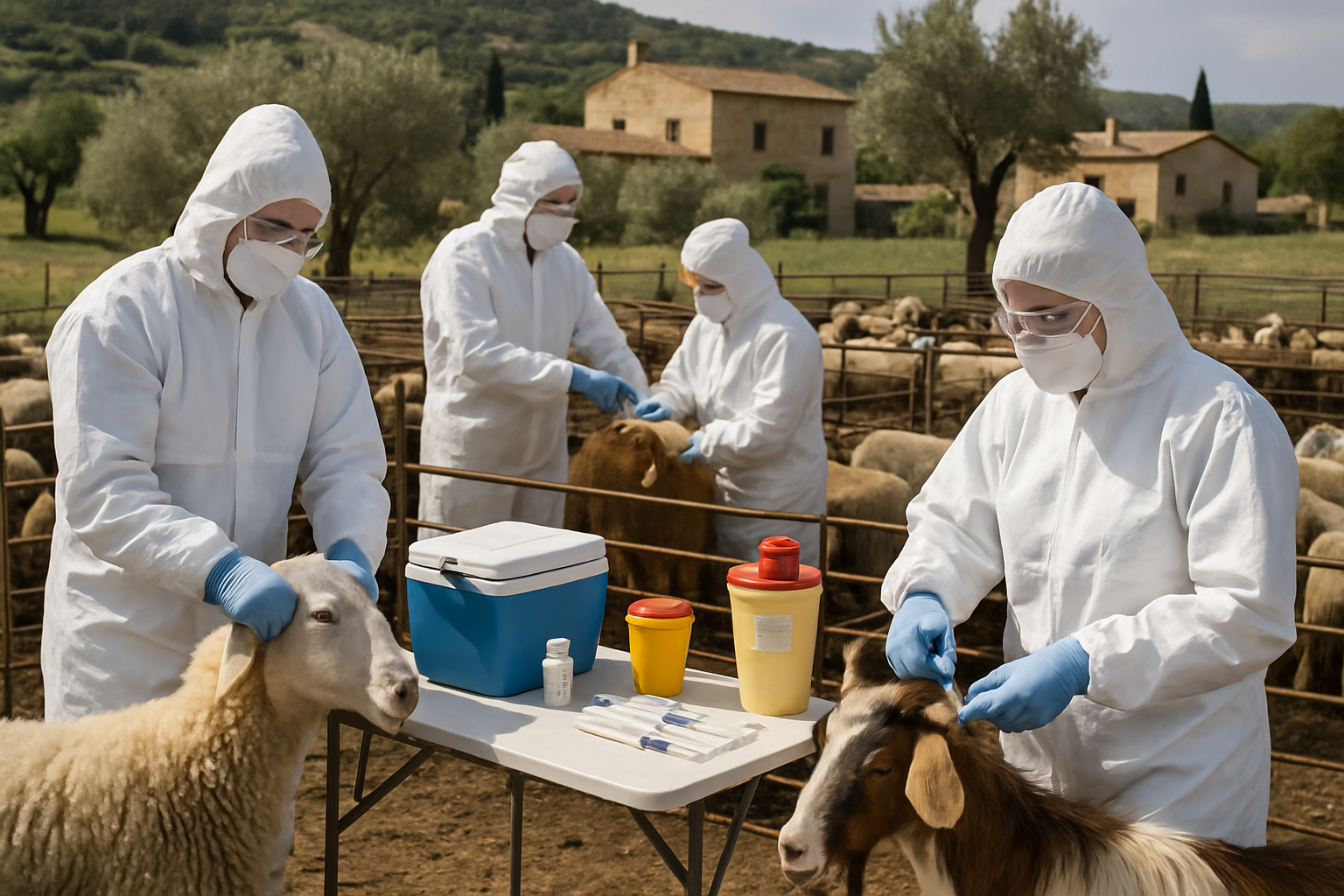
Cyprus has achieved remarkable progress in its battle against foot-and-mouth disease, with vaccination coverage reaching 98% of the cattle population and 76% of sheep and goats, while authorities report no new cases have been recorded in the ongoing containment effort.
The Agriculture Ministry's latest update reveals substantial advancement in the vaccination campaign that began following the outbreak's detection in February 2026. First-dose vaccinations have been administered to an overwhelming majority of livestock across the island, marking a critical milestone in what has become one of Cyprus's most significant agricultural health crises in decades.
Vaccination Campaign Shows Strong Progress
The vaccination program has demonstrated impressive reach across different livestock categories. While 98% of cattle have received their first dose, the coverage for sheep and goats at 76% represents substantial progress given the larger population and logistical challenges in reaching remote farming areas.
For second-dose administration, the ministry reports that 37.6% of cattle and 10.6% of sheep and goats have completed their vaccination schedule. This phased approach ensures maximum protection across the livestock population while maintaining the strict biosecurity protocols established during the initial outbreak response.

Comprehensive Culling Operations Completed
Authorities have completed extensive culling operations as part of the containment strategy, with a total of 28,516 sheep and goats and 1,910 cattle having been culled according to ministry figures. These measures, while devastating for affected farmers, represent standard international protocols for preventing disease spread in livestock populations.
The ministry confirmed that all animals at farms in Livadia that tested positive for the disease have been culled as part of the comprehensive containment measures. This decisive action follows the outbreak's initial detection at multiple livestock facilities across the Larnaca district, which later spread to additional areas including Nicosia district.
No New Cases Signal Containment Success
The absence of new confirmed cases represents a significant achievement in the ongoing response effort. This positive development indicates that the combination of vaccination campaigns, culling operations, and strict biosecurity measures may be effectively containing the outbreak.
"The vaccination coverage we've achieved, particularly among cattle, demonstrates the commitment of our farming community and the effectiveness of our coordinated response."
— Agriculture Ministry Official
The success comes after months of intensive coordination between veterinary services, livestock farmers, and international partners. The outbreak initially caused significant tensions between farmers and authorities, particularly when culling operations were implemented at affected premises.
Broader Agricultural Impact and Recovery
The foot-and-mouth disease outbreak has posed serious threats to Cyprus's agricultural sector, particularly the halloumi cheese industry, which relies on approximately 80% of the island's milk production. The successful containment effort is crucial for maintaining Cyprus's disease-free status, which is essential for agricultural exports and international trade relationships.
The crisis highlighted the vulnerability of agricultural systems to transboundary animal diseases, with investigations focusing on suspected contaminated animal feed from northern Cyprus as the potential source of the outbreak. Police continue their specialized investigation into possible illegal feed smuggling that may have triggered the crisis.
International Cooperation and Support
The response has benefited from significant international cooperation, including support from European Union partners. The European Commission provided crucial assistance, including vaccine supplies and technical expertise, demonstrating the importance of coordinated responses to agricultural health emergencies.
President Nikos Christodoulides established a comprehensive coordinating body involving multiple ministries and agencies, ensuring a whole-of-government approach to the crisis. This coordination has been essential in managing the complex logistics of vaccination campaigns while maintaining strict biosecurity protocols.
Climate and Disease Challenges
The outbreak occurred during a period of unprecedented climate stress, with January 2026 marking the 18th consecutive month of global temperatures exceeding 1.5°C above pre-industrial levels. These conditions can affect disease transmission patterns and agricultural system resilience, making effective response measures even more critical.
Lessons for Agricultural Resilience
Cyprus's experience offers valuable insights for agricultural disease prevention and response. The high vaccination coverage achieved demonstrates the effectiveness of coordinated government action combined with farmer cooperation. The integration of traditional veterinary practices with modern biosecurity measures has proven essential for containing transboundary animal diseases.
The psychological support services established for affected farming communities, including dedicated hotlines, recognize the human dimension of agricultural crises. These support systems acknowledge that disease outbreaks affect not only livestock and economic systems but also the well-being of farming families and rural communities.
Looking Forward: Prevention and Preparedness
While the current data suggests successful containment, authorities continue monitoring efforts and maintain readiness for any potential resurgence. The experience has highlighted the importance of robust surveillance systems, rapid response capabilities, and strong international cooperation in protecting agricultural systems.
The success in achieving high vaccination coverage while completing necessary culling operations represents a model for other nations facing similar challenges. Cyprus's approach demonstrates that effective disease containment requires not only technical measures but also community engagement, transparent communication, and sustained political commitment.
As the island continues its recovery from this agricultural health crisis, the lessons learned will inform future preparedness efforts and contribute to building more resilient farming systems capable of withstanding both disease threats and the increasing challenges posed by climate change.