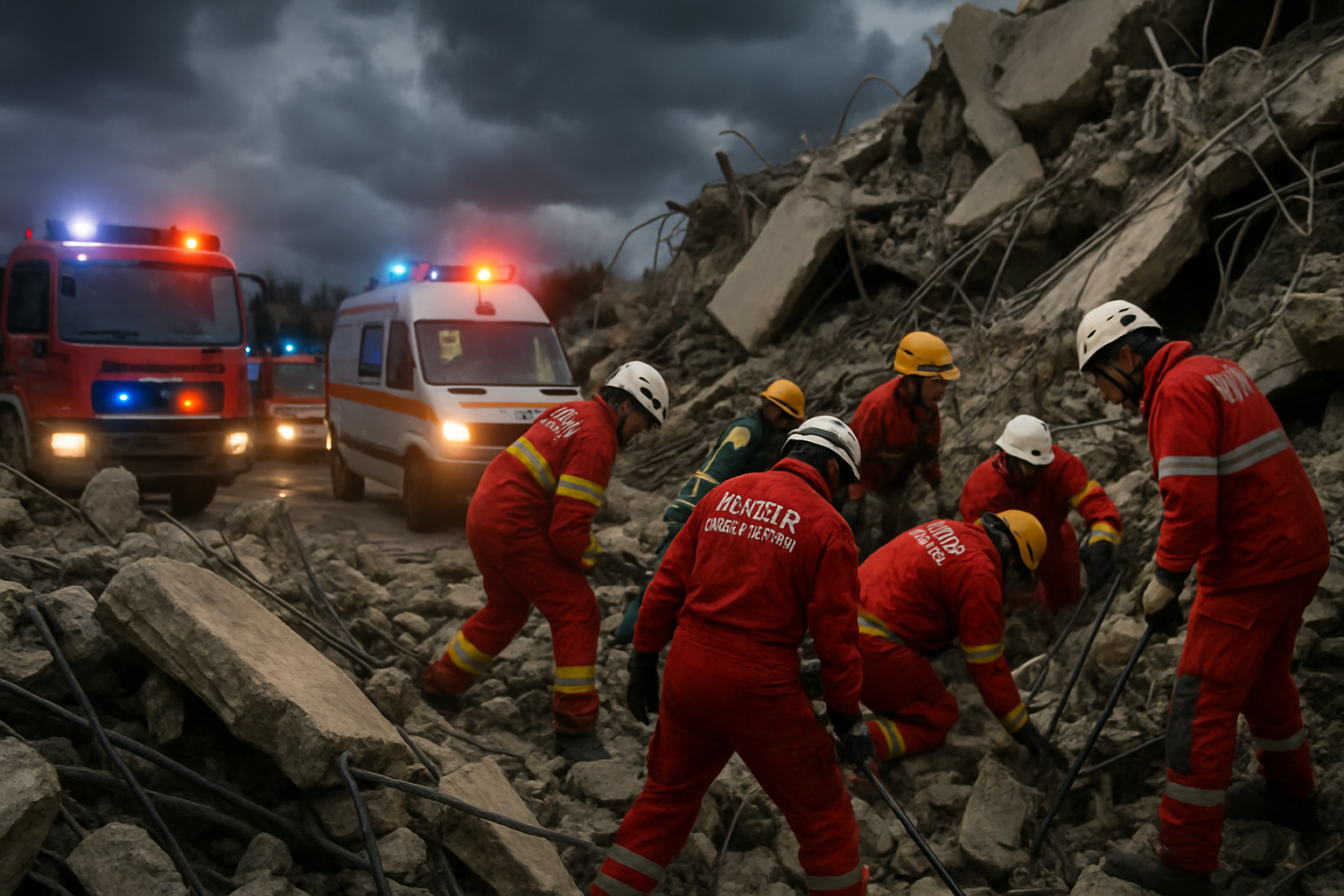
A deadly building collapse in the Germasogeia area of Cyprus claimed at least two lives on Holy Saturday, as rescue crews worked through the night to search for survivors while authorities launched investigations into years of ignored safety warnings that may have contributed to this preventable tragedy.
The eastern section of a more than 40-year-old apartment block collapsed at midday like "a house of cards," according to witnesses, prompting a massive emergency response involving Cyprus Fire Service, police, and specialized urban search and rescue teams. Two victims were confirmed dead after being pulled from the rubble during extensive rescue operations that stretched into the evening hours.
Warning Signs Ignored for Years
The building had already been classified as dangerous by the Limassol District Local Government Organisation, raising serious questions about how unsafe structures are managed in Cyprus. According to reports, the property owners had received letters several years ago from the former Germasogeia municipality warning that the building had structural problems and required urgent renovation work.
These warnings appear to have been ignored, highlighting critical gaps in the enforcement of building safety regulations. After responsibility for dangerous buildings was transferred to district local government organizations, the Limassol authority carried out an on-site inspection following information from Amathounta municipality and formally classified the building as dangerous.
"The state will provide practical support to the families of the victims,"
— Government Spokesperson, Official Statement
The Cyprus government has expressed deep condolences to the families of victims while calling for a thorough investigation into the causes of the collapse and accountability for those responsible. In a written statement, the Government Spokesperson emphasized the need for comprehensive examination of the circumstances that led to this preventable tragedy.
Rescue Operations and Emergency Response
The first victim was pulled from the rubble at approximately 5:30 p.m. and pronounced dead at the scene, while a second body was recovered around 7:30 p.m. after hours of intensive rescue efforts. Three people were transported to hospital by ambulance, though their conditions are not believed to be life-threatening.
Emergency services deployed heavy machinery and specialized urban search and rescue equipment to the scene. The area was cordoned off and nearby buildings were evacuated as a precautionary measure, demonstrating Cyprus's evolved emergency response capabilities developed following recent regional security challenges.
Broader Infrastructure Crisis Context
This tragedy occurs within a broader pattern of building safety concerns affecting aging infrastructure in Mediterranean countries during a period of heightened global infrastructure challenges. Cyprus has been implementing enhanced building safety protocols and emergency response capabilities as part of ongoing preparations for various crisis scenarios.
The Germasogeia incident follows similar building collapses documented globally throughout 2026, including recent tragedies in Lebanon, Pakistan, and other countries where aging infrastructure and inadequate maintenance have combined with limited regulatory oversight to create dangerous conditions for residents.
The building housed primarily foreign nationals, including residents of African and Egyptian origin, according to witness accounts. This demographic detail highlights concerns about vulnerable populations often living in substandard housing conditions due to economic constraints and limited housing options.
Investigation and Accountability
Authorities have launched a comprehensive investigation into the structural failure, focusing on building maintenance records, safety standards compliance, and the effectiveness of existing regulatory frameworks. The investigation will examine why repeated warnings about the building's dangerous condition failed to result in corrective action.
Several residents managed to escape the collapse as it occurred, while others were fortunately away from the building at the time. Witnesses described hearing "a very loud noise" before the structure "split in half," with the collapse happening within seconds.
"A thorough investigation and accountability for those responsible is necessary,"
— Government Statement
Implications for Building Safety Standards
The Germasogeia collapse has intensified discussions about building safety standards and regulatory enforcement in Cyprus. The case highlights shortcomings in how dangerous buildings are managed, particularly the gap between identifying risks and taking effective action to protect residents.
Cyprus authorities face pressure to strengthen inspection procedures, enhance enforcement mechanisms, and improve communication between different levels of government responsible for building safety oversight. The tragedy demonstrates the urgent need for proactive rather than reactive approaches to structural safety.
Community support networks have been activated for displaced residents, while emergency services have demonstrated their capacity to respond effectively to complex urban rescue scenarios. However, questions remain about prevention measures and whether adequate resources are devoted to identifying and addressing dangerous buildings before tragedies occur.
Regional Pattern of Infrastructure Challenges
The Cyprus building collapse fits within a concerning global pattern of infrastructure failures documented throughout 2026, coinciding with ongoing climate pressures and resource constraints affecting building maintenance and safety oversight worldwide.
Similar incidents have been recorded across multiple countries, highlighting the need for international cooperation in developing best practices for aging infrastructure management and emergency response protocols. The tragedy underscores the importance of sustained investment in building safety and regular structural assessments.
As rescue operations conclude and investigations begin, the focus turns to preventing future tragedies through improved regulatory frameworks, enhanced enforcement capabilities, and stronger protections for vulnerable populations living in potentially dangerous structures.
The Germasogeia building collapse serves as a sobering reminder that building safety cannot be treated as an optional expense, but rather as a fundamental responsibility requiring coordinated action from property owners, government agencies, and community organizations to protect human life and prevent avoidable tragedies.