A transformative wave of environmental conservation initiatives is sweeping across continents, with Cyprus and Kazakhstan emerging as unlikely leaders in the global fight for ecological preservation during what scientists confirm as the 18th consecutive month of temperatures exceeding 1.5°C above pre-industrial levels.
As the world grapples with unprecedented climate challenges, these two nations are pioneering innovative approaches that blend traditional ecological knowledge with cutting-edge technology, offering hope and practical templates for environmental protection on a planetary scale.
Cyprus: From Zoo to Revolutionary Biodiversity Hub
After years of delays and mounting criticism, Limassol Zoo is undergoing a radical transformation that represents far more than simple renovation. The ambitious project, spearheaded by the Cyprus Centre for Environmental Research and Education of the Limassol Metropolis (KYKPEE), will convert the aging animal enclosure into a state-of-the-art Biodiversity and Urban Environment Centre named "Fysi" – the Greek word for nature.
The proposal, currently under public consultation with encouraging early responses, marks what planners are calling "a new chapter for the city." An online consultation process is gathering community input, while an in-person session scheduled for March 4 at the Panos Solomonidis Cultural Centre demonstrates the project's commitment to public engagement.
This transformation reflects a broader shift in environmental thinking – moving beyond traditional wildlife exhibition toward comprehensive ecosystem education and research. The center will serve as a living laboratory for Mediterranean conservation strategies, integrating urban planning with biodiversity protection in ways that could influence similar projects across Europe.
Kazakhstan's Water Security Revolution
Meanwhile, in Central Asia, Kazakhstan's National Hydrogeological Service (Kazhydrogeology) has completed an unprecedented nationwide inventory, identifying 711 potential springs across the country's vast territory. The Ministry of Water Resources and Irrigation announced this groundbreaking initiative on February 23, highlighting the strategic importance of these newly catalogued water sources.
The springs represent more than just additional water supplies – they embody Kazakhstan's proactive approach to water security in an era of increasing scarcity. As climate change alters precipitation patterns across the region, these natural resources could prove crucial for communities, agriculture, and ecosystem health.
The comprehensive mapping effort demonstrates sophisticated integration of traditional knowledge with modern hydrogeological science. Local communities have long known about many of these springs, but systematic scientific documentation now provides the foundation for sustainable management and protection strategies.
Technology Meets Tradition: The New Conservation Paradigm
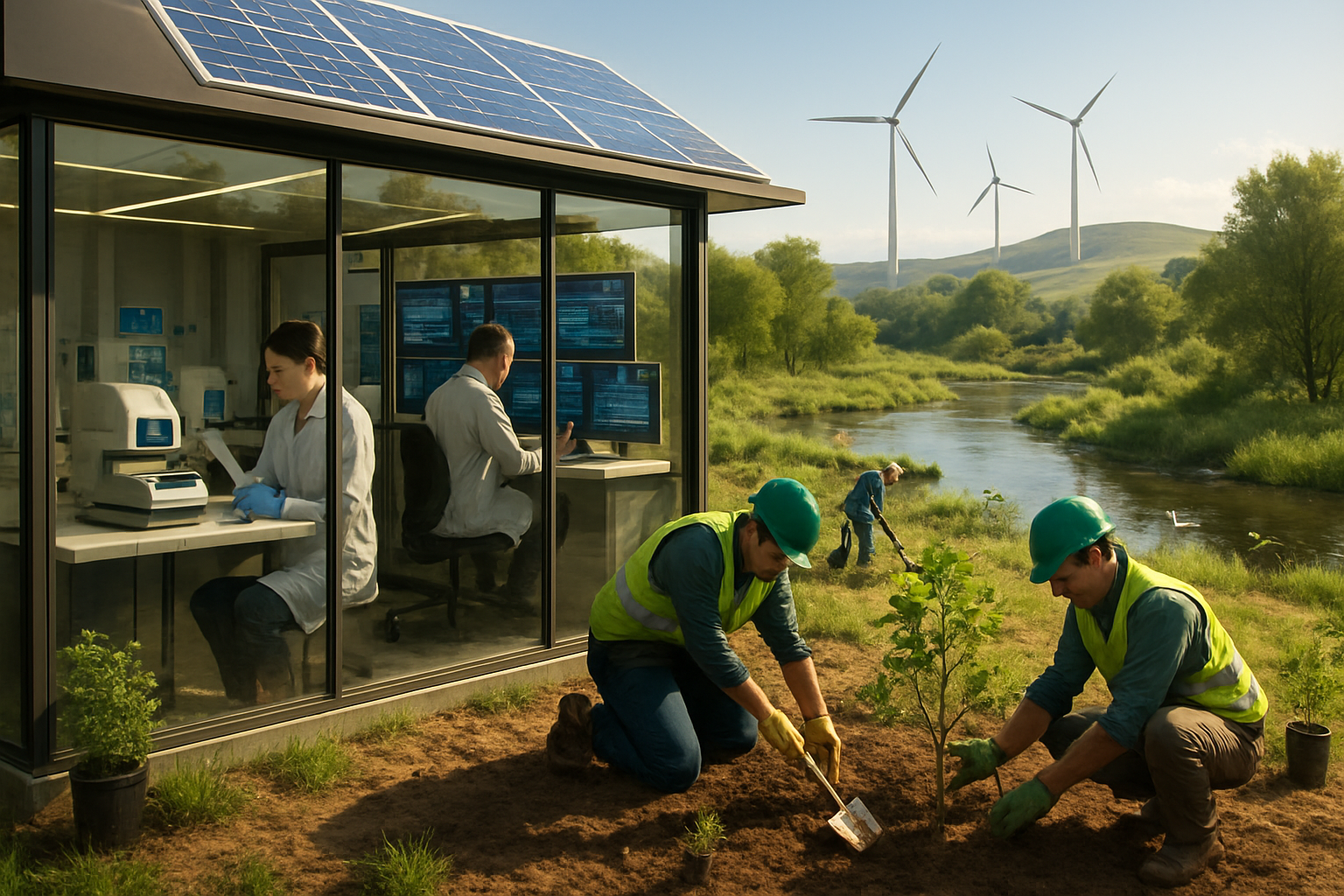
Both initiatives exemplify a crucial evolution in environmental protection strategies. Rather than relying purely on technological solutions or traditional methods alone, these programs demonstrate the power of synthesis – combining cutting-edge monitoring capabilities with community-based stewardship that has sustained natural resources for generations.
Cyprus's biodiversity center will employ advanced environmental DNA sampling, digital monitoring systems, and satellite tracking while honoring Mediterranean traditional ecological knowledge. Similarly, Kazakhstan's spring inventory utilizes sophisticated hydrogeological analysis enhanced by local community wisdom about seasonal water patterns and historical usage.
This integration represents what conservation scientists are calling "the new paradigm" – acknowledging that effective environmental protection requires both scientific innovation and cultural sensitivity.
Economic Engines of Environmental Protection
Crucially, both nations are demonstrating that environmental protection functions as an economic development strategy rather than a regulatory burden. Cyprus's transformation positions the island as a regional leader in sustainable tourism and environmental research, potentially attracting significant international investment and scientific collaboration.
The Fysi center is expected to become a major draw for eco-tourists, educational institutions, and researchers, generating substantial revenue while serving its conservation mission. This approach aligns with broader trends showing that comprehensive environmental protection enhances economic resilience and attracts sustainable investment.
Kazakhstan's water resource mapping similarly creates economic value by providing the scientific foundation for sustainable water management, agricultural planning, and industrial development. Understanding and protecting these springs could prevent costly water crises while supporting long-term economic stability in water-dependent sectors.
Global Climate Context: Urgency Meets Innovation
These initiatives emerge during a critical period in Earth's climate history. January 2026 marked the hottest month ever recorded, extending an unprecedented streak of 18 consecutive months exceeding the crucial 1.5°C threshold above pre-industrial levels. This sustained warming demonstrates that human-induced climate change has fundamentally altered atmospheric systems beyond natural recovery mechanisms.
The persistence of extreme temperatures, overriding even La Niña cooling effects that typically moderate global temperatures, creates additional stress on vulnerable ecosystems worldwide. In this context, projects like Cyprus's biodiversity center and Kazakhstan's water mapping become not just beneficial improvements but essential infrastructure for planetary sustainability.
International Cooperation and Knowledge Sharing
The success of both initiatives relies heavily on international partnerships and knowledge exchange. Cyprus's project involves collaboration with European Union environmental agencies, Mediterranean conservation networks, and international research institutions. This cooperation provides access to funding, expertise, and best practices while contributing to broader regional conservation strategies.
Kazakhstan's spring inventory connects with international water security initiatives and benefits from partnerships with global hydrogeological organizations. The country's position between Europe and Asia makes it a crucial link for continental water management strategies.
These partnerships represent the evolution from traditional North-South environmental aid toward peer-to-peer cooperation, where developing nations become environmental solutions providers, leveraging local innovations and resources to address global challenges.
Implementation Challenges and Success Strategies
Both nations face significant implementation challenges common to ambitious environmental projects. Funding sustainability remains a critical concern, particularly for developing countries where immediate economic pressures can override long-term environmental considerations.
Technical capacity building requires sustained investment in education, training, and institutional development. Climate change itself disrupts project timelines and operational conditions, requiring adaptive management approaches that can respond to rapidly changing environmental circumstances.
However, the diversity of approaches provides resilience against single-solution dependencies. Cyprus focuses on urban biodiversity integration, while Kazakhstan emphasizes water resource protection – together offering multiple pathways for environmental adaptation that can be adapted across different geographic and cultural contexts.
Templates for Global Environmental Action
Perhaps most significantly, these projects provide practical templates for scaling environmental protection efforts globally. Cyprus demonstrates how existing infrastructure can be transformed rather than abandoned, showing cities worldwide how to reimagine outdated facilities as modern conservation centers.
Kazakhstan's comprehensive resource mapping offers a model for nations seeking to understand and protect their natural water systems. The systematic approach, combining traditional knowledge with scientific methodology, could be replicated in water-stressed regions worldwide.
Both initiatives emphasize community engagement as essential for long-term success. Public consultation processes, educational components, and economic benefits for local communities ensure that environmental protection aligns with human needs rather than conflicting with them.
The Path Forward: Scaling Conservation Success
As February 2026 represents what many scientists consider a critical juncture for global environmental protection, the choice between reactive crisis management and proactive ecosystem service management may determine whether conservation efforts can keep pace with accelerating environmental change.
The tools, knowledge, and cooperation frameworks demonstrated by Cyprus and Kazakhstan exist for comprehensive environmental protection. Success depends on rapid scaling through enhanced international cooperation, sustained financial commitments, and recognition of environmental protection as essential infrastructure for both human prosperity and planetary sustainability.
The window for effective environmental action continues to narrow as ecological systems approach critical thresholds. However, the coordinated response emerging in February 2026, exemplified by these diverse but complementary initiatives, offers hope that humanity can develop the adaptive capacity necessary to protect the essential environmental systems upon which all life depends.
From the Mediterranean shores of Cyprus to the vast steppes of Kazakhstan, a new generation of environmental leaders is demonstrating that effective conservation requires not just scientific expertise or policy frameworks, but the integration of technology with tradition, local knowledge with global cooperation, and immediate action with long-term sustainability planning.
Their success may well determine whether the conservation renaissance of 2026 becomes the turning point that enables environmental protection to keep pace with the unprecedented challenges of our rapidly changing planet.