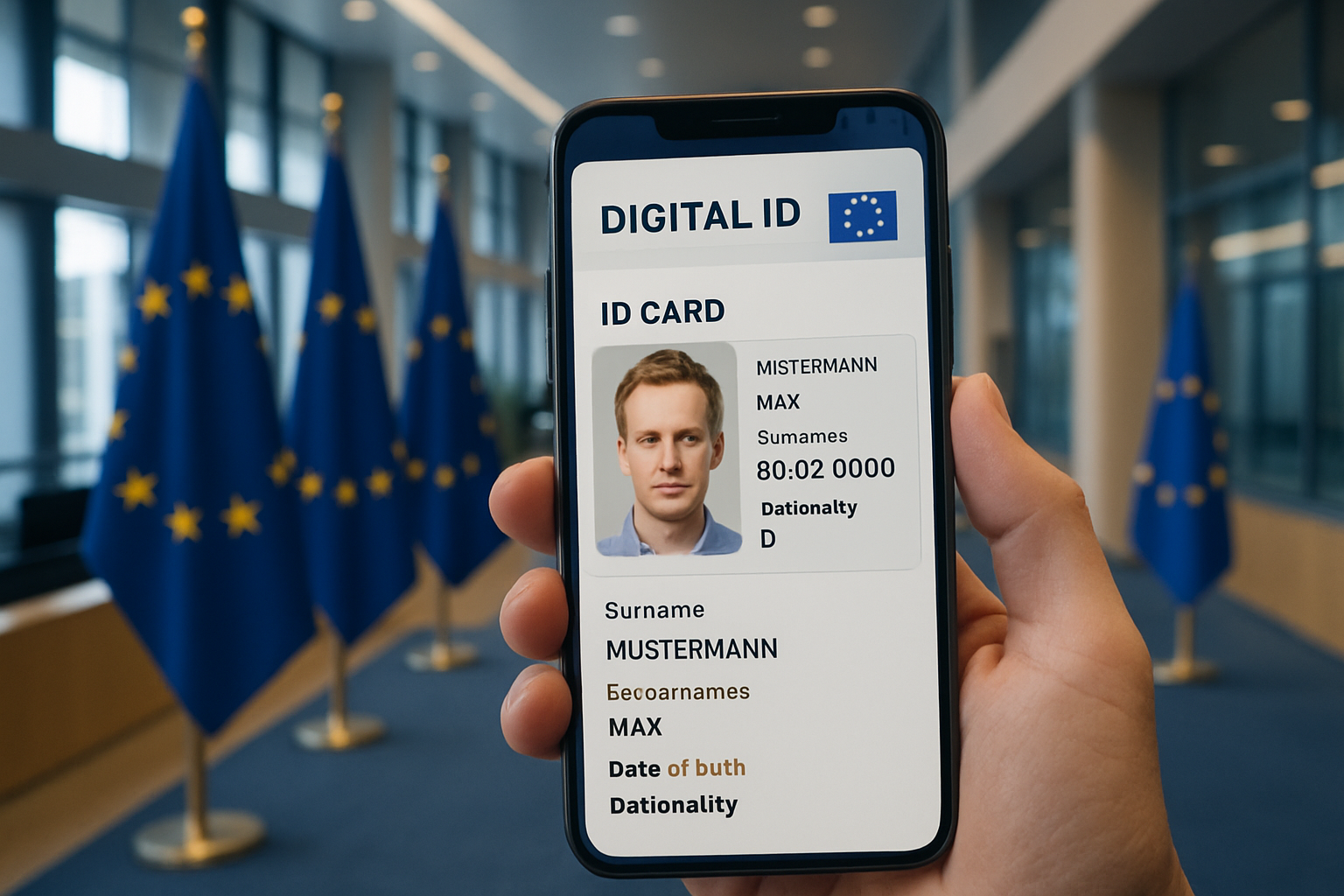
Cyprus and Latvia are simultaneously implementing groundbreaking digital identity systems that transform smartphones into legally binding identification documents, representing Europe's most significant digital governance advancement since the launch of the European Digital Single Market strategy.
The Deputy Ministry of Research, Innovation and Digital Policy in Cyprus issued an urgent reminder this week that digital documents stored on the government's official Digital Citizen app carry the same legal weight as physical documents and must be accepted without exception by all organizations, companies, and service providers across the Republic. Refusal to accept these digital documents is legally equivalent to turning away physical identification itself.
Cyprus Establishes Digital ID Legal Framework
The Digital Citizen application allows Cypriot citizens with a CY Login account to store digital versions of public documents directly on their smartphones. The system currently supports national ID cards, driving licenses, vehicle MOT certificates, and Fan Cards, with additional documents—including those for foreign nationals—scheduled for integration throughout 2026.
Cyprus government sources emphasize that digital public documents stored on the application carry "absolute equivalence" to their physical counterparts for any legal use within the republic. Citizens can present these digital documents without exception for identification or verification purposes in all in-person transactions.
"Refuting these digital documents is equivalent to refuting the corresponding physical form. We call on businesses, services and professionals to immediately take the necessary actions to comply."
— Cyprus Deputy Ministry of Research, Innovation and Digital Policy
The system has been operational since May 2025, but the government's renewed emphasis on mandatory acceptance indicates some organizations have been reluctant to recognize digital identification methods, prompting this official clarification of legal requirements.
Latvia Introduces Enhanced Smart-ID+ Authentication
Simultaneously, Latvia is advancing digital identity infrastructure through SK ID Solutions' introduction of the "Smart-ID+" system, designed for more secure authentication in digital services. This enhanced version builds upon Latvia's existing Smart-ID platform, incorporating advanced biometric verification and multi-factor authentication protocols specifically designed to resist emerging cyber threats while maintaining user convenience.
The Smart-ID+ system represents Latvia's positioning as a digital security leader, following Estonia's pioneering work in digital citizenship and e-governance. The enhanced authentication capabilities address growing cybersecurity concerns affecting digital identity systems across Europe, particularly in light of the 20.6% surge in cyber incidents documented in Q4 2025.
Latvia's digital identity innovations extend beyond domestic applications. In a historic precedent, Latvia became the world's first nation to legally recognize Ukrainian e-signatures through its State Administration and Regional Development Ministry (VARAM), establishing unprecedented cross-border digital identity verification frameworks during conflict and displacement situations.
European Digital Identity Renaissance
These developments occur within what experts are calling the "2026 Digital Government Renaissance"—a coordinated global movement toward comprehensive e-governance systems representing the most significant public administration transformation since post-World War II government service expansion.
Cyprus achieved 70.66% digital government services usage among residents aged 16-74, nearly matching the EU average of 71.9% according to recent Eurostat data. This represents dramatic progress in closing the digital divide with European counterparts, with Greece recording 71.99% usage and Malta achieving 73.69% adoption rates, demonstrating strong Mediterranean regional performance.
Italy has announced comprehensive IT-wallet expansion to include all government documents within 12 months, building on current driver's license and health card availability. Belgium's Sint-Agatha-Berchem implemented the first social services AI chatbot providing 24/7 support, while Australia's Brisbane processes over half of parking transactions through pay-by-app systems.
Implementation Challenges and Security Concerns
The digital identity revolution faces significant technical and security challenges. A global semiconductor crisis has driven memory chip prices up sixfold, affecting Samsung, SK Hynix, and Micron production until new facilities come online in 2027. This creates bottlenecks for the sophisticated verification infrastructure required for comprehensive digital identity systems.
Cybersecurity remains a critical concern, particularly following major data breaches across Europe. The Netherlands' Odido breach affected 6.2 million customers—nearly one-third of the population—exposing location data, communication patterns, and personal identification information. Such vulnerabilities demonstrate the risks associated with centralized digital identity repositories.
Maria Christofidou, Cyprus's Personal Data Protection Commissioner, emphasized that "personal data has become the currency of the digital age," highlighting the importance of robust security frameworks protecting citizen information in digital government systems.
International Cooperation and Standards
The success of Cyprus and Latvia's digital identity initiatives depends heavily on international cooperation and standardization. Estonia continues leading European digital governance with the highest e-government service adoption rates, serving as a template for comprehensive digital transformation strategies alongside Denmark, Finland, and Sweden.
Slovakia's €1.3 billion digital euro pilot program and Nigeria's 43% digital fuel sales processing demonstrate government-backed digital solution momentum versus speculative alternatives. These implementations provide evidence that systematic, government-supported digital infrastructure can achieve mainstream adoption while maintaining security and user trust.
The European Union's regulatory response includes coordination to prevent jurisdictional shopping, with Spain's criminal executive liability framework for tech platforms spreading across Europe. This creates accountability mechanisms ensuring digital identity systems meet stringent privacy and security standards.
Economic and Social Implications
The digital identity transformation generates substantial economic benefits beyond immediate technological improvements. Enhanced community resilience, reduced social service demands, and improved international competitiveness create multiplier effects throughout the economy.
Prevention-first approaches offer superior outcomes through decreased crisis costs and improved productivity. Countries implementing comprehensive digital government services report enhanced community resilience and competitive advantages in attracting international investment and talent.
The systems also address accessibility concerns, with universal design principles ensuring barrier-free access for citizens with disabilities and comprehensive multilingual support reflecting the diverse populations of modern European societies.
Future Implications for European Integration
The simultaneous advancement of digital identity systems in Cyprus and Latvia establishes precedents for 21st-century governance that could influence EU-wide digital identity standards. Success requires balancing technological advancement with democratic accountability and citizen-centered service delivery.
These initiatives demonstrate that smaller EU member states can achieve technological leadership through strategic digital infrastructure investments. The coordination between Cyprus and Latvia, along with recognition of Ukrainian digital signatures, suggests emerging frameworks for cross-border digital cooperation that could transform European integration.
As Europe faces challenges from demographic changes, climate adaptation needs, and global economic competition, sophisticated digital identity systems provide essential infrastructure for responsive, efficient governance while maintaining the democratic principles and privacy protections that define European values.
The March 2026 implementations in Cyprus and Latvia represent more than technological upgrades—they mark a fundamental transformation in how citizens interact with government services and how European nations coordinate digital governance in an interconnected world. Success will be measured not only by technical functionality but by citizen trust, security effectiveness, and the systems' ability to enhance rather than complicate the relationship between governments and the people they serve.