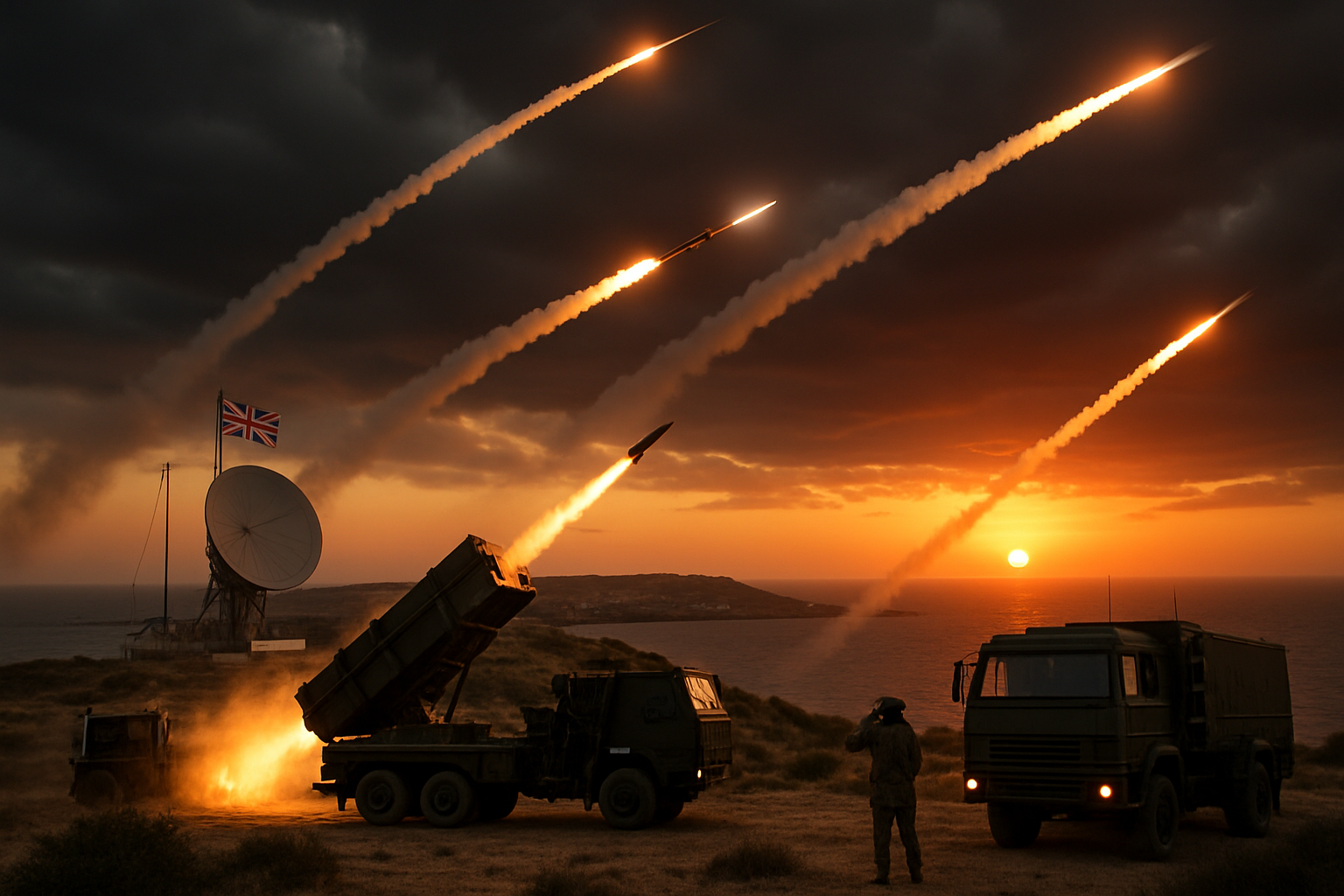
British Defense Secretary John Healey revealed on Sunday that Iran fired two missiles in the direction of Cyprus during Saturday's retaliatory strikes, though Cyprus government officials categorically denied reports of any direct threat to the Mediterranean island nation that hosts two British sovereign military bases.
The conflicting statements emerged as international tensions escalated following coordinated US-Israeli "Operation Epic Fury" strikes against Iran, which prompted massive Iranian retaliation across the Middle East region. Cyprus, strategically positioned in the Eastern Mediterranean and home to Britain's Akrotiri and Dhekelia Sovereign Base Areas, found itself at the center of disputed claims about missile targeting.
British Officials Confirm Missile Activity
Speaking to Sky News, Defense Secretary Healey stated: "We are pretty sure they weren't targeted at our bases," while confirming that two Iranian missiles had been launched toward the direction of the island. The Defense Secretary emphasized that when UK military aircraft operate from Cyprus, "they're doing the same for Cyprus" in terms of protection against missiles and drones.
Healey's revelation came as part of broader British confirmation that UK military planes were actively defending both Cyprus and Qatar from Iranian missiles and drones during the weekend's escalation. "When they fly from Cyprus, they're protecting against any missiles or drones directed towards Cyprus," he explained.
The British position was supported by multiple international sources, with Italian media reporting that Minister Healey stated he was "abbastanza sicuri che non fosse intenzionale" (quite sure it was not intentional), suggesting the missiles may not have been deliberately targeting British installations.
Cyprus Government Issues Strong Denial
Cypriot government spokesman Konstantinos Letymbiotis moved quickly to contradict British reports, issuing an unequivocal denial via social media. "Regarding statements and reports referring to the launching of missiles towards Cyprus, it is clarified that this is not true and there is no indication whatsoever that there was a threat to the country," Letymbiotis stated.
The spokesman emphasized that competent authorities continue monitoring the situation and coordinating with international partners, but maintained that Cyprus itself was never under direct threat. This position was echoed across Greek media, with sources suggesting that while missiles may have been fired "in the direction" of Cyprus, they did not specifically target the island.
Strategic Significance of British Bases
Cyprus hosts two British Sovereign Base Areas - Akrotiri and Dhekelia - which serve as critical strategic assets for UK military operations in the Middle East. These installations house approximately 3,000 British military personnel and their families, and serve as launching points for operations across the region.
The bases have been particularly important during recent Middle East tensions, with UK military aircraft conducting defensive missions to protect both Cyprus and other regional partners. The facilities provide Britain with a permanent foothold in the Eastern Mediterranean, making them potential targets during regional conflicts.
Norwegian media confirmed similar reports, with NRK stating that British Defense Minister John Healey said two Iranian missiles were fired toward Cyprus, though officials believed "they were not directed at Cyprus." This suggests the missiles may have been part of broader retaliatory strikes rather than specific targeting of the island.
Regional Context of Iranian Retaliation
The disputed missile reports emerged from Iran's massive retaliatory campaign following US-Israeli "Operation Epic Fury" strikes. The Iranian Revolutionary Guard Corps (IRGC) declared "no red lines remain" and launched coordinated attacks across multiple Gulf states, targeting US military installations and civilian infrastructure.
Confirmed casualties from Iranian retaliation included one civilian killed in Abu Dhabi from missile debris, employee injuries at Kuwait Airport from drone strikes, and damage to Dubai International Airport. Qatar successfully intercepted 65 ballistic missiles and 12 drones using Patriot systems, though eight people were injured by fragments.
The scale of Iranian retaliation represented the most significant regional military escalation since the June 2025 Iran-Israel conflict, with over 18,000 flights cancelled worldwide as multiple Middle Eastern nations closed their airspace.
Historical Context of Cyprus-Iran Relations
Cyprus has historically maintained a careful balance in Middle Eastern affairs, often serving as a neutral mediator while hosting British military assets. The island nation has experience managing regional tensions, having navigated previous Middle East crises while protecting both its sovereignty and its role as host to international military facilities.
The current incident highlights the complex position Cyprus occupies - geographically positioned near conflict zones while hosting Western military assets, yet maintaining diplomatic independence. This balancing act has become increasingly challenging as regional tensions escalate and military technology extends operational ranges.
Information Warfare and Verification Challenges
The conflicting accounts between British and Cypriot officials illustrate the broader challenges of information verification during active military operations. Modern conflicts often feature competing narratives, with different nations interpreting the same events through various strategic and diplomatic lenses.
British officials may have broader intelligence resources monitoring missile trajectories across the region, while Cyprus authorities focus specifically on threats to their national territory. The distinction between missiles fired "toward" an area versus missiles "targeting" specific locations has become crucial in diplomatic communications.
International Diplomatic Implications
The Cyprus incident demonstrates how regional conflicts can create diplomatic complications for nations not directly involved in the primary dispute. Cyprus must balance its role as host to British military bases with its desire to avoid becoming a target in Middle Eastern conflicts.
Multiple European nations have issued travel warnings and conducted embassy evacuations following the weekend's escalation, while the UN Security Council convened emergency sessions to address the crisis. Russia condemned what it termed "reckless actions by Washington and West Jerusalem," while regional coalition partners expressed concerns about escalating violence.
Future Security Implications
The disputed reports about missiles near Cyprus underscore the island's vulnerable position in an increasingly volatile regional security environment. As military technology advances and operational ranges extend, traditionally safe locations find themselves potentially within reach of regional conflicts.
The incident also highlights the importance of clear communication and coordination between allies during crisis situations. Conflicting public statements between British and Cypriot officials, while understandable given different strategic perspectives, can create confusion and complicate diplomatic responses.
As the broader Middle East crisis continues to evolve, Cyprus will likely need to navigate carefully between its obligations as host to British military facilities and its desire to maintain neutrality in regional conflicts. The island's strategic location ensures it will remain relevant to regional security calculations, regardless of diplomatic preferences.
The weekend's events serve as a reminder that in modern conflicts, the distinction between direct participants and regional bystanders is increasingly blurred, with implications extending far beyond primary combatants to affect allies, neighbors, and strategic locations throughout affected regions.