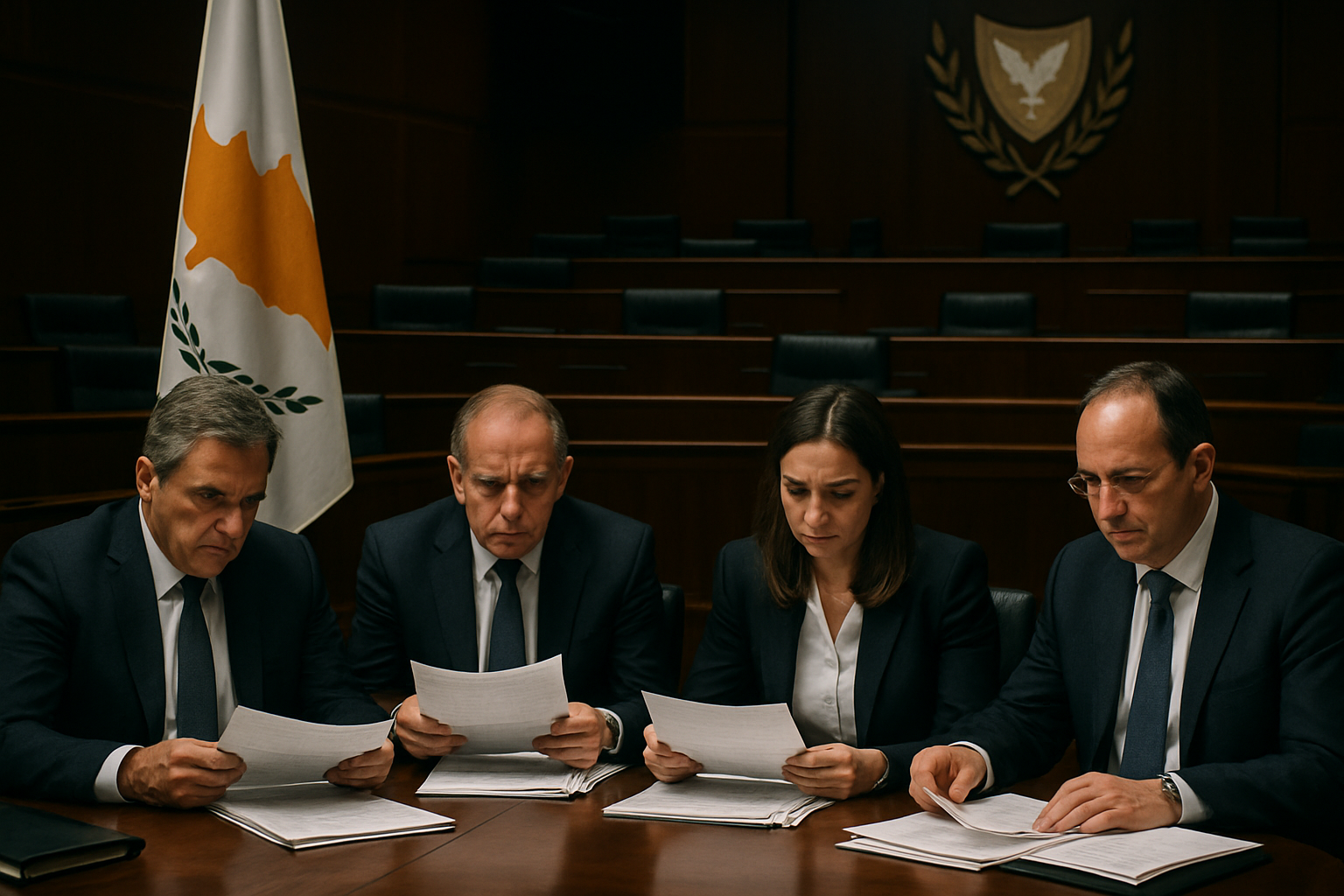
A damning parliamentary investigation has exposed critical failures in Cyprus's response to the devastating July 2025 wildfires, formally censuring Agriculture Minister Maria Panayiotou for systematic avoidance of accountability while revealing that official response claims were significantly understated.
The 46-page joint parliamentary committee report, being tabled in plenary tomorrow, documents that the first response to the fires that devastated mountainous Limassol and Paphos on July 23, 2025, took 15 minutes—not the six minutes publicly claimed by officials in the days following the disaster.
The comprehensive investigation by the parliamentary Committees on Interior, Agriculture and Environment reveals the staggering scale of destruction: two deaths, the burning of 1.3% of the island's total area, and the destruction of more than 120 square kilometres of land in the Malia fire alone. The report documents that 96.11% of the burned area was private land, with 14,250 donums of agricultural land lost, while the Paphos fire originated from a rubbish dump.
Response Timeline Discrepancies Exposed
Perhaps most damaging to the government's credibility, the report reveals a significant discrepancy between official claims and reality regarding response times. While authorities publicly stated that first responders reached the scene within six minutes, the parliamentary investigation found this figure to be grossly inaccurate.
The actual timeline shows it took fifty minutes from initial fire detection to the first aerial water drop—a delay that proved catastrophic as the fires spread rapidly through the drought-affected mountainous terrain. This timeline failure represents one of the most serious operational breakdowns in Cyprus's emergency response history.
Minister's Systematic Avoidance of Accountability
The report delivers particularly harsh criticism of Agriculture Minister Maria Panayiotou's conduct during the parliamentary investigation. According to the findings, Panayiotou "systematically avoided answering questions" during joint sessions of the House interior, agriculture and environment committees convened to examine the state's response.
Instead of taking responsibility for coordination failures, the report states that she "tried to transfer the responsibility of coordination" to fire brigade chief Nikos Longinos. This attempt to shift blame has drawn sharp parliamentary criticism, with the report characterizing her behavior as an abdication of ministerial responsibility during a national emergency.
The committee found that Panayiotou "refused to justify the absence" of key coordination mechanisms that should have been in place during the emergency response. Her failure to provide adequate explanations for systemic breakdowns has resulted in formal parliamentary censure—a rare and significant rebuke in Cyprus politics.
Broader Systemic Failures Identified
Beyond individual accountability, the report identifies "serious weaknesses and shortcomings in the existing fire management system" that contributed to the scale of the disaster. These systemic failures encompass coordination between agencies, response time protocols, and resource deployment strategies.
The investigation reveals that Cyprus lacked adequate coordination mechanisms between the fire service, forestry department, and other emergency response agencies. This institutional fragmentation proved costly when rapid coordination was essential to contain the spreading fires.
The report also highlights infrastructure deficiencies, including inadequate early warning systems and insufficient aerial firefighting capacity for an island increasingly vulnerable to extreme weather events amid climate change.
Environmental and Economic Impact Assessment
The wildfires' environmental devastation extends far beyond the immediate burn area. The loss of 14,250 donums of agricultural land represents a significant blow to Cyprus's farming sector, particularly affecting olive groves and vineyards in the Limassol mountains that had been cultivated for generations.
The ecological impact includes damage to endemic species habitats and soil erosion risks that will affect the region for years to come. The report documents how the fires disrupted traditional farming communities, forcing some families to reconsider their livelihoods.
Tourism infrastructure in the affected areas also suffered damage, though the report notes that quick action prevented more extensive losses to the sector that remains crucial to Cyprus's economy.
International Context and Climate Considerations
The July 2025 fires occurred during a period of extreme weather across the Eastern Mediterranean, with temperatures reaching record levels and drought conditions creating tinderbox environments across the region. Cyprus was not alone in facing severe wildfire challenges during this period, with Greece, Turkey, and other Mediterranean countries all battling similar blazes.
However, the parliamentary report emphasizes that extreme weather conditions do not excuse inadequate preparation or poor response coordination. Other countries facing similar challenges maintained more effective response times and coordination mechanisms.
Calls for Reform and Accountability
The parliamentary report includes recommendations for comprehensive reform of Cyprus's emergency response systems. These include establishing clearer chains of command, improving inter-agency coordination protocols, and investing in additional aerial firefighting capabilities.
Opposition parties are calling for Minister Panayiotou's resignation, arguing that formal censure is insufficient given the scale of the failures under her oversight. The minister has yet to respond publicly to the report's findings, though sources close to the ministry suggest a detailed response will be provided when the report is debated in parliament.
The report also calls for annual emergency preparedness reviews and regular training exercises to test coordination between agencies. These recommendations come as Cyprus faces increasing wildfire risks due to climate change and extended drought periods.
Implications for Future Emergency Response
The parliamentary investigation represents a watershed moment for Cyprus's approach to emergency management. The detailed documentation of failures provides a roadmap for necessary reforms, while the formal censure of a cabinet minister sends a clear message about accountability expectations.
Fire experts note that Cyprus must significantly upgrade its emergency response capabilities as climate change increases the frequency and intensity of extreme weather events. The island's size and terrain make rapid response even more critical than in larger countries with more distributed risks.
The report's findings will likely influence budget allocations for emergency services and may prompt legislative changes to clarify ministerial responsibilities during crisis situations. The timing is particularly relevant as Cyprus enters another fire season with many of the identified deficiencies still unaddressed.
As the parliament prepares to debate these findings, the July 2025 wildfires serve as a sobering reminder of the consequences when emergency response systems fail. The formal censure of Minister Panayiotou marks a rare moment of parliamentary accountability, though whether it leads to meaningful reform remains to be seen.