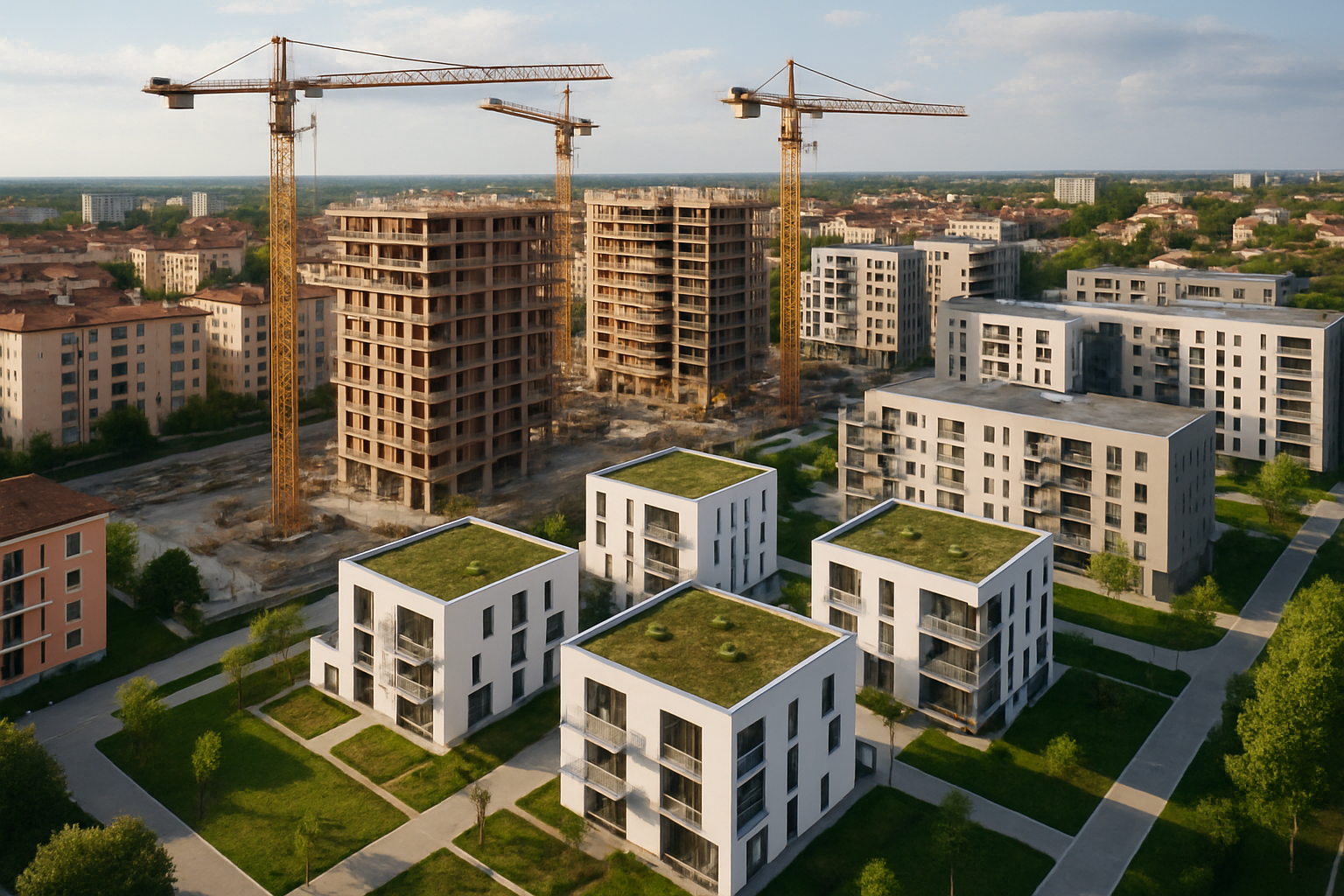
European housing markets are undergoing a fundamental transformation as Cyprus advances ambitious residential delivery targets while Romania pioneers a new definition of urban luxury centered on tranquility and quality of life, reflecting broader continental shifts in housing development priorities amid persistent affordability challenges.
The Cyprus Land Development Organisation (Koag) announced expectations to deliver 244 residential units by year-end 2026, marking a significant milestone in the Mediterranean island's housing development strategy. General Director Eleni Symeonidou outlined the organization's comprehensive three-pillar approach during budget discussions before the House finance committee, emphasizing traditional construction, affordable housing initiatives, and strategic urban planning incentives.
Cyprus: Strategic Housing Development Framework
Koag's 2026 budget provisions encompass €41.9 million in anticipated revenues against expenditures of €41.96 million, demonstrating careful fiscal planning amid European housing pressures. The organization's revenue structure includes €21 million from property sales encompassing houses, apartments, and developable land parcels, while capital expenditures account for €33 million in strategic infrastructure investments.
The second pillar of Cyprus's housing strategy targets affordable accommodation through two major projects: 138 units in Limassol valued at €16 million and a €12 million development featuring 54 houses in Strovolos. These initiatives represent direct government intervention addressing housing affordability concerns that have affected Mediterranean markets throughout 2025-2026.
Cyprus's third strategic pillar involves managing state-announced housing projects based on urban planning incentives, with generated funds supporting affordable housing initiatives. This innovative financing mechanism demonstrates the integration of market-based development with public housing objectives, creating sustainable funding streams for ongoing residential development.
Romania: Redefining Urban Luxury Through Tranquility
Meanwhile, Bucharest's housing market reflects a fundamental philosophical shift in defining urban success and residential desirability. The Romanian capital's real estate narrative has evolved beyond the traditional "closer to center means better" paradigm, with quiet becoming an increasingly valuable and scarce commodity in dense urban environments.
This transformation particularly resonates among high-demand professionals including entrepreneurs, doctors, lawyers, pilots, IT specialists, and senior managers whose intense, unpredictable careers create greater appreciation for peaceful residential environments. Many of these residents have lived abroad or worked in cities where green space, silence, and natural light are considered basic living conditions rather than luxury amenities.
The shift represents a broader European trend where urban professionals prioritize daily well-being over prestigious addresses, seeking homes that serve as genuine retreats from demanding professional lives. Romanian developers are responding by creating residential communities that emphasize calm, space, and quality of life as primary selling points rather than proximity to commercial centers.
European Housing Context: Regional Coordination and Challenges
These developments occur within broader European housing market dynamics documented throughout February 2026. The Mediterranean region has implemented coordinated policy responses addressing housing affordability crises, with Croatia targeting 600,000 empty homes through affordable rental schemes, Cyprus advancing foreign real estate investment restrictions, and Greece experiencing significant regional price variations between Athens and Thessaloniki markets.
Construction industry pressures affect both Cyprus and Romania, with rising material costs creating negative profit margins for developers across the region. These challenges compound supply bottlenecks while increasing project costs, requiring innovative financing and partnership models to maintain development momentum.
"The housing crisis demands integrated solutions that balance market dynamics with community needs. What we're seeing in Cyprus and Romania represents different but complementary approaches to addressing 21st-century housing challenges."
— Housing Policy Expert, European Union Regional Development Fund
Technology Integration and Sustainable Development
Both Cyprus and Romania are incorporating advanced urban planning technologies and sustainable development principles into their housing strategies. Cyprus's urban planning incentives encourage environmentally conscious development, while Romania's emphasis on quality-of-life amenities aligns with broader European sustainability goals including reduced energy consumption and enhanced green spaces.
The integration of smart city technologies, sustainable building materials, and community-centered design principles reflects lessons learned from global housing development successes and failures. These approaches prioritize long-term livability over short-term development gains, creating more resilient urban communities.
Economic Implications and Investment Patterns
The housing developments in Cyprus and Romania demonstrate different financing models that could influence broader European approaches. Cyprus's public-private partnership model leverages government planning authority with market-driven development, while Romania's quality-focused approach attracts premium investment from professionals willing to pay higher prices for enhanced living conditions.
These models provide alternatives to traditional volume-based development strategies that have contributed to housing affordability challenges across Europe. By emphasizing quality, sustainability, and community amenities, both approaches create value propositions that support sustainable pricing structures while meeting genuine housing needs.
Regional Integration and Future Prospects
Cyprus and Romania's housing initiatives contribute to broader European Union objectives for regional development, sustainable urbanization, and housing accessibility. The success of these different approaches provides valuable data for other European markets facing similar challenges with housing supply, affordability, and quality-of-life priorities.
The Mediterranean coordination trend suggests increasing policy knowledge sharing between European Union members, with successful models potentially adapted to different national contexts. This cooperation could accelerate solutions to continent-wide housing challenges while respecting national sovereignty and local market conditions.
As European housing markets continue evolving, the Cyprus delivery-focused approach and Romania's quality-centered development represent important case studies for sustainable urban development that balances economic viability with community needs. Their success could influence broader European housing policy discussions and provide templates for addressing similar challenges across the continent.
The February 2026 developments in Cyprus and Romania demonstrate that housing solutions require diverse approaches tailored to specific market conditions and community priorities, while maintaining coordination with broader European objectives for sustainable, accessible, and high-quality residential development.